Portuguese
  Spanish


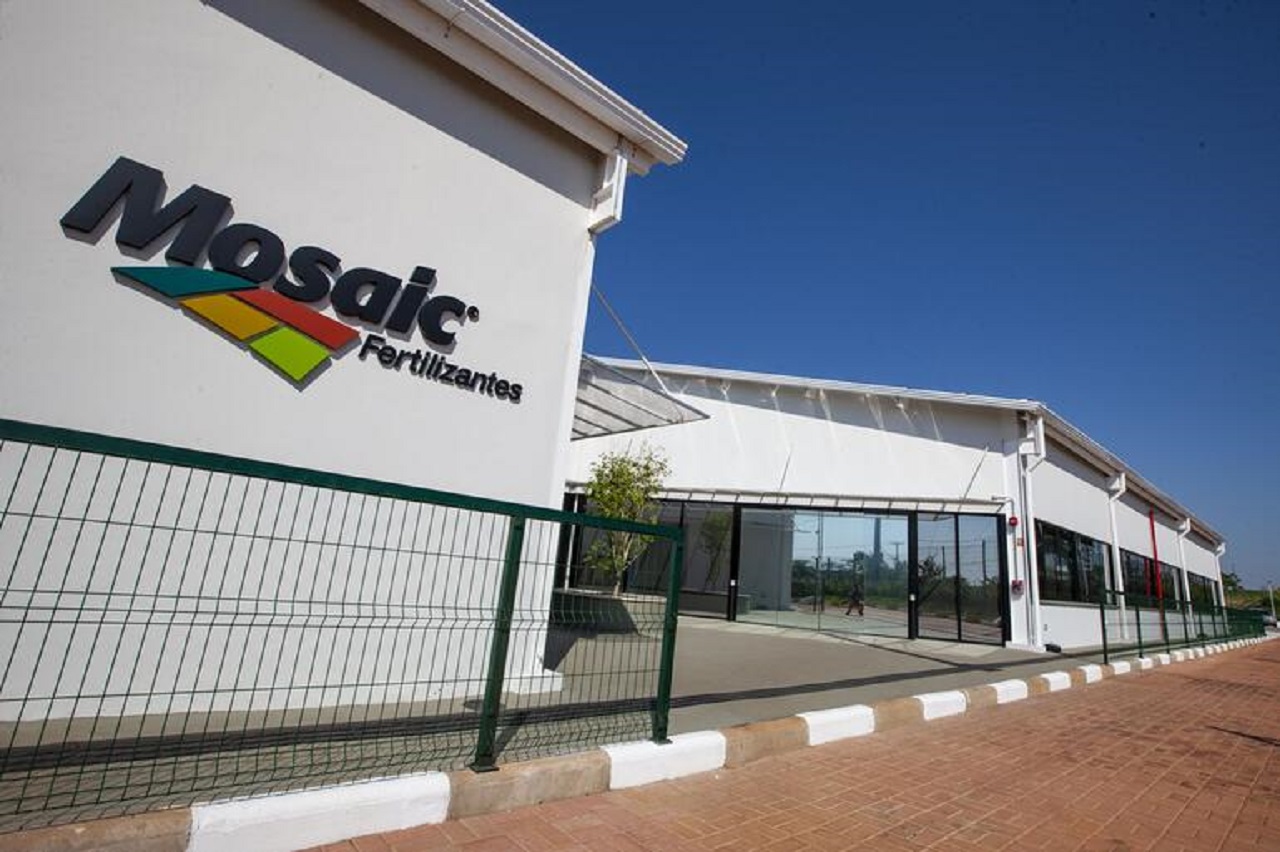

Mosaic Fertilizantes Just Announced a New Investment in Its Distribution Unit in Tocantins, With a Production Capacity of 500 Thousand Tons Per Year.
Mosaic Fertilizantes will invest R$ 400 million in the development of a new blending, distribution, and storage unit at the Palmeirante (TO) railway terminal. The investment of the Brazilian unit of the multinational Mosaic had already been announced by the state government, according to reports from local media.
Unit Will Produce 500 Thousand Tons Per Year
With the new investment, the company will expand its presence in Maranhão, Tocantins, Piauí, and Bahia, states that are part of the region known as MATOPIBA, an important agricultural frontier, potentially expanding its service to the Araguaia Valley (MT) and northern Goiás region.
The facility will commence operations in 2025, generating jobs for approximately 200 people. In the first year, the Mosaic Fertilizantes unit will have the capacity to produce 500 thousand tons, reaching an annual production capacity of one million tons by 2028. According to Mosaic Fertilizantes’ Commercial Vice President, Eduardo Monteiro, this is a region that is experiencing significant growth.
-
It’s official: Petrobras takes 75% of block 3 in São Tomé and Príncipe and debuts as an offshore operator outside South America.

-
US$ 1.5 billion dam project on the Rio Indio promises water for the Panama Canal for 50 years, but it could flood rural areas and displace 2,000 residents from 38 farming communities.

-
At 14 years old, she worked in a factory in Hong Kong, studied economics abroad, and then entered the Chinese real estate market, which helped change the landscape of Beijing.

-
While NATO secured more than $10 billion in missiles and space surveillance at a single forum, Brazil still spends 1.1% of its GDP on defense and is stalling its own anti-aircraft system.



Palmeirante has a differentiated logistical infrastructure and, with the new unit, it will be possible to expand services to the Araguaia Valley (MT) and northern Goiás, in addition to MATOPIBA. Furthermore, Eduardo mentioned that Mosaic Fertilizantes is pleased to announce a major investment in Brazil, contributing to the development of the Brazilian agribusiness sector and helping the world produce the food it needs.
The new unit in Tocantins will also facilitate the unloading of trucks and railcars, as well as the storage of raw materials and blending of products for final customers.
Unit Will Have a Warehouse of Up to 100 Thousand Tons
The project will be located within the Palmeirante Integrator Terminal (TIPA), managed by VLI Multimodal in partnership with the Itaqui Port Operating Company (COPI), which has direct rail connections to the port of Itaqui (MA), where imported raw materials for fertilizer production will arrive.
Mosaic Fertilizantes will also serve the demand for raw materials from its industrial clients in Tocantins and Mato Grosso, leveraging its scale and the greater competitiveness of the new logistics corridor. All steps required to commence physical construction in the first half of this year are already well underway.
The new unit in Tocantins will feature a warehouse for up to 100 thousand tons of fertilizers and mixing and packaging systems, with the capability to ship bulk mixed products and bagged products in 50-kilogram bags or 1-ton big bags, boxes for segregating various raw materials, providing flexibility and increased usage rates, a conveyor belt system that connects the unit to the TIPA railway system, and a road unloading system with a capacity of 300 tons per hour. Additionally, it will have infrastructure including truck parking, with two 30-meter weighbridges.
Mosaic Fertilizantes Project Utilizes Lean Manufacturing Concepts
The entire project in Tocantins was designed using the principles of lean manufacturing, which aim to optimize processes and reduce non-productive times, defining the best internal flow for the movement of materials and sacks. In terms of innovation, it will feature automated loading systems for trucks and cutting-edge technology for quality control of raw materials, generating total quality in delivering fertilizers.
According to the Vice President of Operations, Elias Lima, the choice of the investment location is linked to Mosaic Fertilizantes’ ESG strategy, as it will reduce the environmental impacts of transporting products and raw materials. Due to the railway, it will be possible to optimize the circulation of 27 thousand trucks annually for the delivery of raw materials.