






 Portuguese
  Spanish


The city of Xuchang, in China, produces about 60% of the world’s wigs and hosts the largest manufacturer in the sector, turning imported human hair into a billion-dollar business that supplies more than 120 countries
There is a city in China where hair has become a billion-dollar industry, and almost no one outside the field has heard of it. The wig capital of the world is called Xuchang, located in the heart of Henan province, and it alone manufactures a huge portion of all the wigs and hairpieces used worldwide, from costumes to prosthetics for those who have lost their hair.
The numbers are impressive. According to Africanews, Xuchang produces about 60% of the world’s wigs, gathers more than 4,100 companies in the hair sector, and employs 300,000 people. It is a classic case of a city that specialized in a single product and came to dominate it on a global scale, even while being unknown to the general public.
How the city became the wig capital of the world
The secret is the same as other Chinese industrial hubs: total concentration. Thousands of workshops and factories in the same region create a complete ecosystem, with hair suppliers, dyeing facilities, wig assemblers, and exporters all nearby. This cuts costs and speeds up production in a way that’s hard to replicate elsewhere.
-
Despite declining smoking rates in the U.S., Zippo’s windproof lighter factory sees record sales in over 180 countries, remaining the largest employer in its region for decades.

-
Brazilian Driver Accidentally Becomes Millionaire for 7 Hours, Returns $25 Million and Now Seeks $2.5 Million Reward in Court

-
McDonald’s Ice Cream Machines Often Break Due to a Single U.S. Manufacturer, Error Codes, and a Lucrative Repair Model
-
WD-40’s Secret Formula: How a $620 Million Business Thrives Without a Patent


Over time, the whole world started buying from there. Anyone selling wigs at retail in any country probably sources, directly or indirectly, from this city, without even knowing its name. The wig capital of the world succeeded precisely by turning a niche product into an assembly line of planetary proportions.
Human hair imported from India
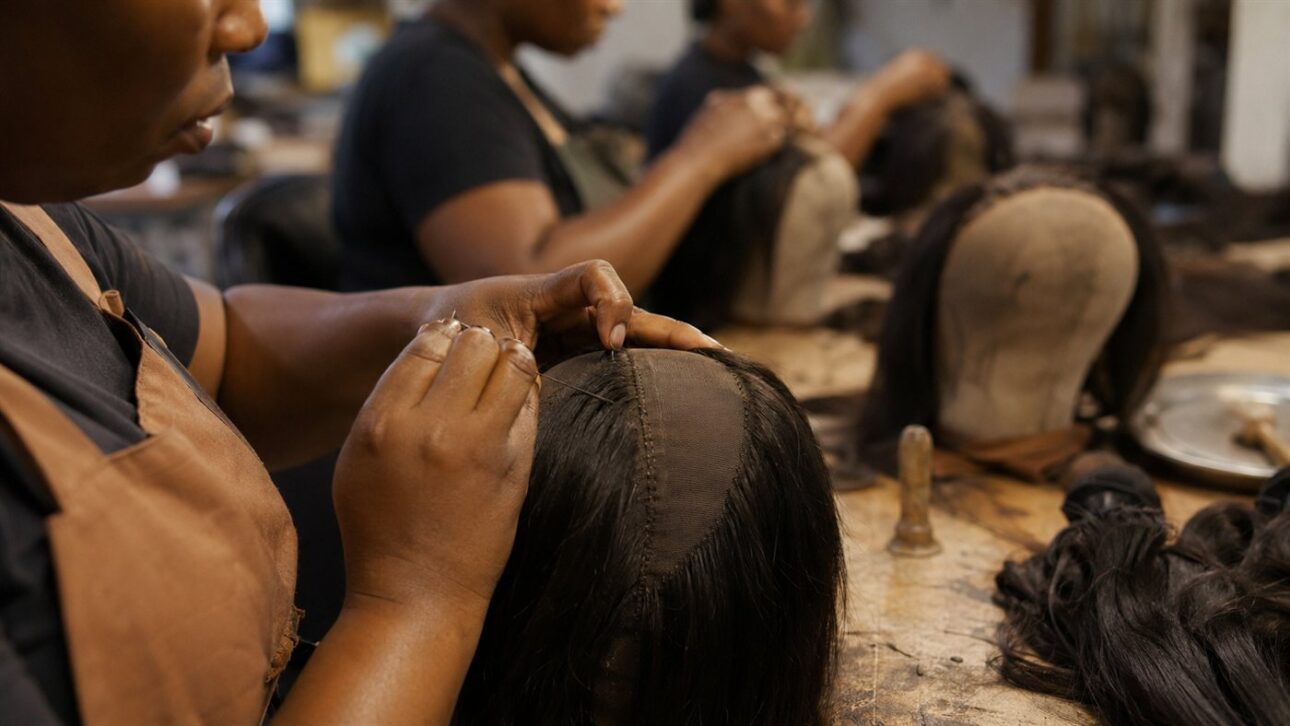
Here is a detail that almost no one imagines. As fewer and fewer Chinese people sell their own hair, the local industry has started importing the raw material from abroad. According to the People’s Daily, many manufacturers in the city have started buying hair from countries like India and Myanmar, and the largest company in the sector claims that more than 60% of its hair comes from India.
Thus, strands cut in India cross the continent to become wigs assembled in China and sold worldwide. A single strand of hair can cross two continents before reaching someone’s head, in a surprising global chain for such a personal product. Hair has become an international commodity, bought, classified, and resold by weight.
300,000 people and thousands of companies
The human scale of the sector is enormous. According to the People’s Daily, more than 4,100 hair product companies operate in the city, employing around 300,000 people at some point in the chain, from raw hair treatment to the final wig stitching.
It’s practically a city built around a single product, as happens with buttons, socks, or pens in other Chinese regions. When an entire community lives from manufacturing the same thing, it accumulates expertise that becomes an almost insurmountable barrier for competitors. This specialized workforce is one of the local wig industry’s greatest assets.
From an ancient tradition to the world’s largest manufacturer
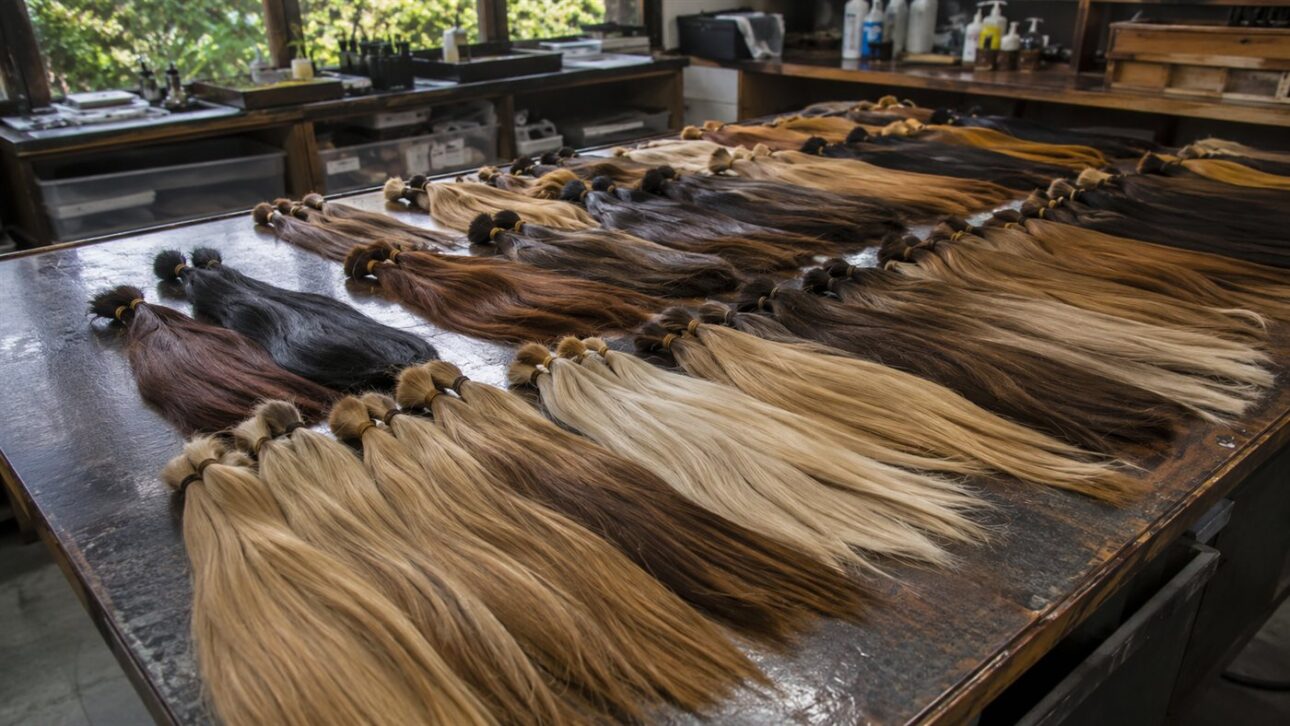
The hair tradition of the region is older than it seems. According to Africanews, the city is now the largest wig producer in the world, with a tradition of working with hair that spans generations and gained strength in recent decades until it dominated the global market of the sector.
It was during this period that local entrepreneurs gathered small workshops and created large manufacturers, including Rebecca Hair, which grew to become the largest wig manufacturer in the world. From an informal hair trade to a multinational in the sector, the city built an empire on human vanity and necessity. What was bartering turned into high-value export.
The “black gold” that drives the city
It’s no wonder that hair has earned the nickname “black gold” in the city. The best hair, long and untreated, reaches very high prices and is sought after by buyers who travel the world in search of raw material. A good natural hair wig can cost the equivalent of an entire salary.
This appreciation transformed something that many people throw away into a coveted item. While the hair that falls into the drain is trash for most, for this industry it is precious raw material, carefully sorted by length, color, and texture. The business logic is the same as any commodity: the rarer and better the quality, the higher the price.
From Aristocratic Luxury to Mass Consumption
The wig has a long history of status. In the past, it was an accessory of nobles and a symbol of power, worn by kings and judges to impose respect. Today, it has become a mass consumption item, linked to fashion, beauty, entertainment, and also health, in the case of those who lose hair due to illness or treatment.
This diversity of uses fuels constant demand. The same factory produces the colorful party wig, the fashion extension, and the hair prosthesis that restores a patient’s self-esteem, which gives the sector a rare resilience. As long as there are people who want to change their look or recover lost hair, the wig industry will have customers.
Why the World, and Brazil, Depend on This Hair
The reach of this Chinese city strongly impacts the Brazilian market. Brazil has a huge market for extensions, megahair, and wigs, widely used in beauty salons, and a large part of this material comes precisely from China, if not from the very capital city of the sector. Consumers rarely know the origin of what they put on their heads.
This shows how even beauty and fashion depend on invisible global industrial chains. An extension bought in a neighborhood salon may have started as hair cut in India and assembled in a Chinese factory, crossing the planet before arriving there. In the end, vanity is also supplied by hidden giants of the industry.
Why the Wig is a Surprisingly Global Business
In the end, the story of this city reveals how a product as intimate as hair hides a global industrial mechanism. The city has transformed human vanity into an assembly line, connecting imported hair, Chinese factories and beauty salons across all continents into the same chain.
It is yet another case of a hidden giant shaping everyday life without appearing. The next time you see someone with an impeccable wig or perfect megahair, it’s worth remembering the journey it made. Did you imagine that most of the world’s wigs are born in a single Chinese city?


