Portuguese
  Spanish


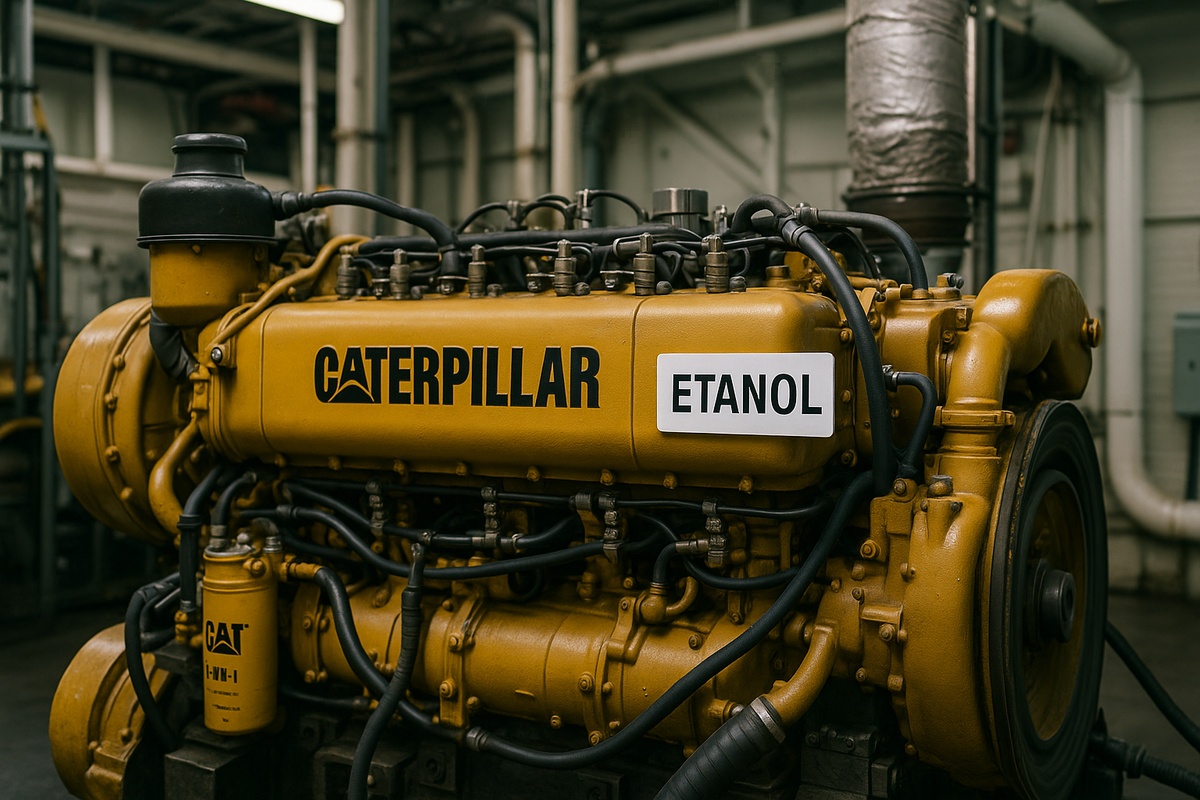

In Partnership With CBO, Sotreq Adapts Caterpillar Engine to Operate With Ethanol and Positions Brazil as a Pioneer in Clean Technology in the Maritime Sector
An unprecedented innovation in the maritime sector was announced in June 2025 and has already been provoking positive reactions in the sustainable energy market.
As a result of this advancement, Sotreq, the largest distributor of Caterpillar solutions in Brazil, presented the world’s first conversion of a maritime engine to operate with ethanol, in partnership with CBO.
For this reason, Brazil is advancing in the energy transition, establishing itself as a global reference in the development of clean technologies for medium and large vessels.
-
North Korean Fiasco: Launch of the Largest Warship Ends in Sinking

-
While giant ships still burn heavy fuel and the maritime sector races against climate targets, Maersk and Vale are starting to bet on ethanol as a new route to reduce emissions at sea.

-
China begins construction of the world’s largest LNG ship, a 344-meter giant capable of supplying 4.7 million homes for a month, carrying 271,000 m³ of gas, and placing QatarEnergy in the largest naval order ever recorded in world history.
-
China is designing a container ship with a thorium nuclear reactor that will operate for 40 years without refueling, and the 25,000-container giant from Jiangnan Shipyard will cross oceans without emitting carbon in an industry that burns 300 million tons of fuel per year.



Technical Project Initiates a New Era in Green Navigation
In this context, the converted engine belongs to the MaK line, developed by Caterpillar, and has been adapted to work with a dual-fuel system (ethanol and diesel).
According to Rodrigo Feria, engine manager at Sotreq, the conversion process required minimal interventions in the original structure, making it easier to replicate in other models.
Therefore, Feria highlights: “Ethanol is efficient, accessible, and a national resource. With this solution, we accelerate decarbonization in high-demand sectors, such as maritime”.
Furthermore, the expectation is that the converted engine will be operational by 2026, strengthening the commitment to the adoption of clean fuels.
Brazilian Ethanol Stands Out for Efficiency and Viability
Since ethanol is produced from sugarcane, it has a low environmental impact and already has an efficient logistics system established throughout the country.
According to the International Energy Agency (IEA), the use of ethanol can reduce CO₂ emissions by 80% to 90% during its life cycle.
Additionally, the country has an extensive network for production, transport, and distribution, making its adoption more practical and financially viable, even in the naval sector.
On the other hand, alternatives such as green hydrogen and green methanol, while promising, still face technical challenges, high costs, and lack of operational scale.
Clean Technology Drives Industrial Development
Due to the global pursuit of decarbonization, the conversion to ethanol aligns with the International Maritime Organization (IMO) targets, which foresee a 50% reduction in emissions by 2050.
For this reason, Sotreq’s initiative, with support from CBO and Caterpillar, strengthens Brazil’s role as a global leader in maritime biofuels and technological innovation.
Moreover, Caterpillar is already developing engines manufactured to operate natively on ethanol, which opens up opportunities for new sustainable vessels more directly.
Consequently, this advancement may also attract foreign investments, foster the creation of skilled jobs, and increase national competitiveness in the energy sector.
Brazil Takes the Lead in Green Naval Transition
According to data from the National Agency of Petroleum (ANP), Brazil is the second-largest producer of ethanol in the world, surpassed only by the United States.
For this reason, the country has a solid foundation to export technological solutions, in addition to the fuel itself, which strengthens sustainable trade ties.
Thus, the initiative among Sotreq, CBO, and Caterpillar presents itself as a scalable model that can be adopted by other countries in energy transition.
In this way, Brazil not only innovates but also transforms a sector historically dependent on oil into a global reference for environmental and industrial efficiency.
What Does the Future Hold for Marine Engines?
Considering the current scenario, experts assess that the energy transition in the naval sector depends on viable, accessible, and sustainable solutions—like the one developed in this project.
Since adapting existing engines is possible, retrofitting represents a strategic shortcut to accelerate change without significant investments in new vessels.
However, it will be essential to ensure strict oversight, as well as the creation of clear technical and environmental standards, to avoid negative impacts on the ecosystem and the market.
In the meantime, the Brazilian example may encourage new international partnerships and transform the country into a reference exporter of sustainable maritime innovation.
And what about you? Do you think we should rapidly expand the use of ethanol in ships or focus on a more cautious transition to protect the environment?