Portuguese
  Spanish


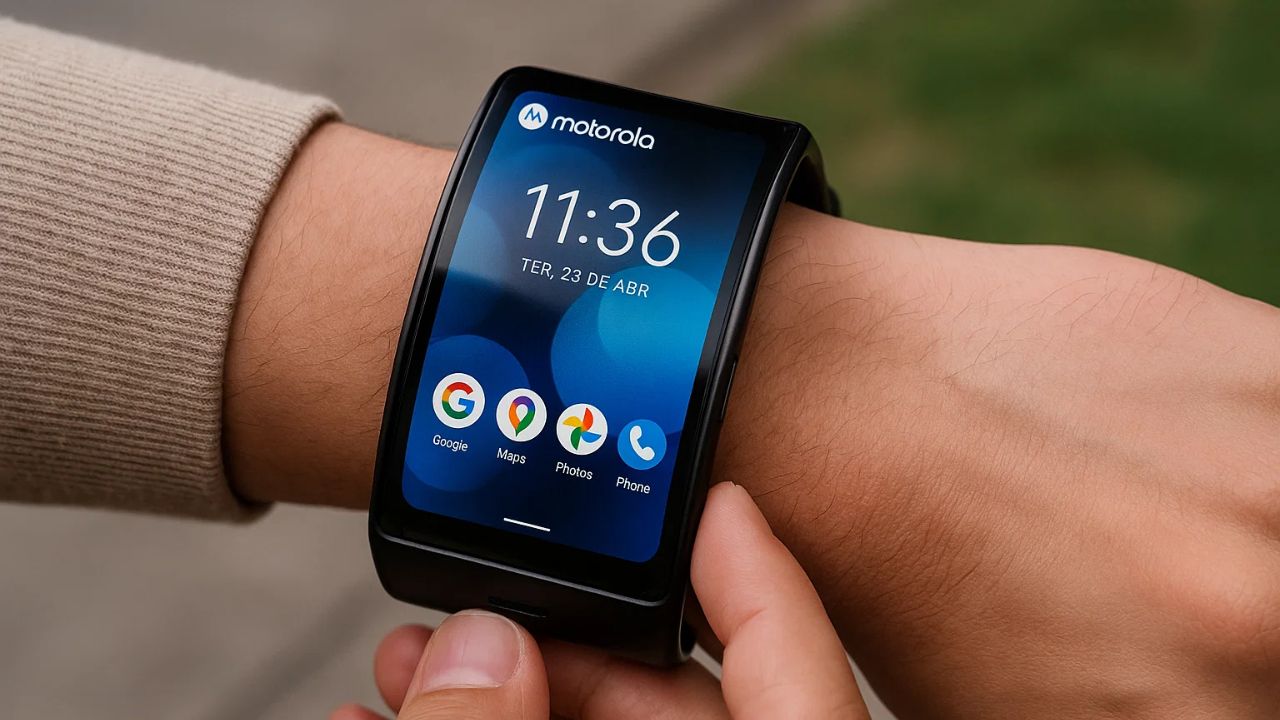

Motorola Registers New Patent for Cell Phone That Turns into Smartwatch, Combining Flexible Technology and Innovative Design to Transform the Wearable Device Market.
Motorola has taken another step towards merging mobility and wearable technology by registering a patent for a cell phone that turns into a smartwatch in the United States.
The document was filed with the USPTO (United States Patent and Trademark Office) and describes a device capable of functioning both as a smartwatch and as a compact smartphone, in a flexible and expandable format.
The registration, recently revealed, shows that the brand is investing in a concept that could redefine the use of mobile devices.
-
A newly discovered caterpillar in Hawaii wears the remains of its prey that it devoured as a macabre armor, stitching bones and insect shells to its own back for camouflage.

-
She heard for decades that space was not a place for women, became a pioneer in aviation, was part of the Mercury 13, and at 82, finally traveled with Jeff Bezos before dying at 87.
-
Scientists investigate microplastics in the airways of patients with sleep apnea and reveal a new focus for research on environmental pollution, human exposure, and possible impacts on breathing quality.
-
For the first time, scientists have seen the ocean floor open up in real-time—plates moving apart by two meters in a few days and 160 million cubic meters of lava emerging on the seafloor.



The innovation combines the convenience of a smartwatch with the wide screen of a traditional cell phone — an advancement that promises to unite practicality and innovation in a single product.
Motorola Device Would Feature Expandable Screen and Flexible Panel
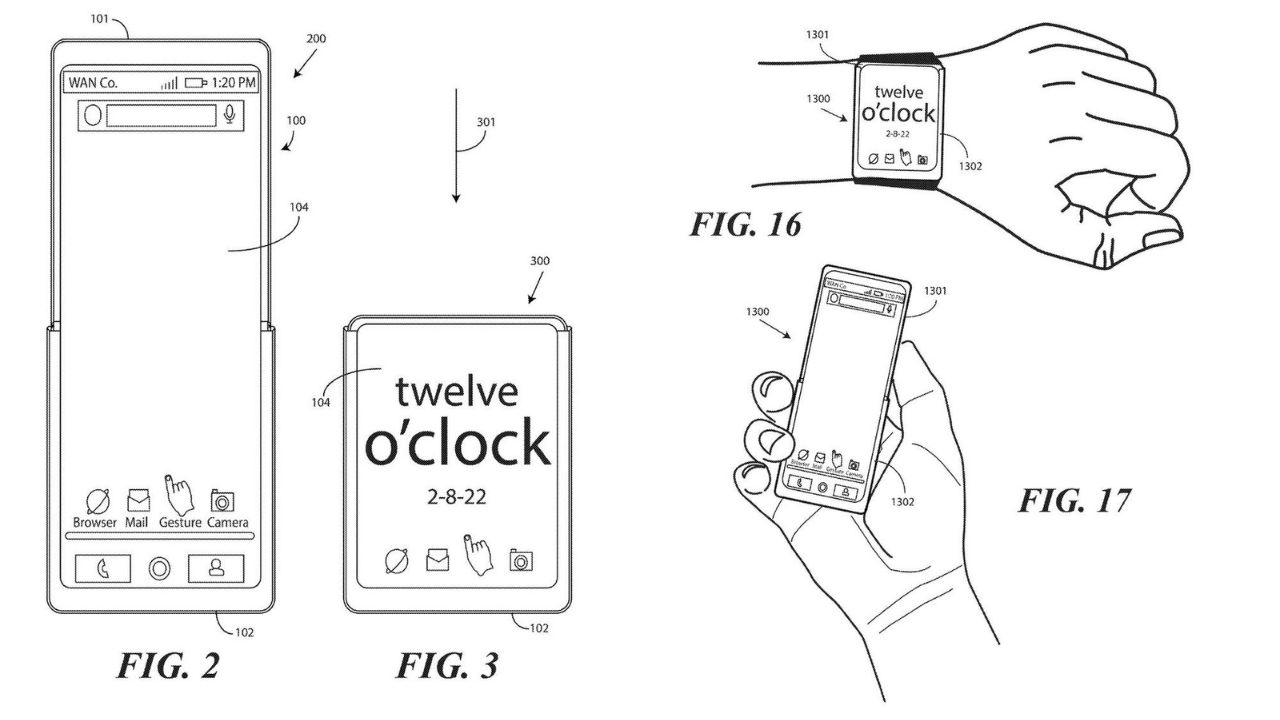
According to the Motorola patent, the model is presented with a flexible design, in which a screen can be stretched or unfolded to reach the rectangular shape of a cell phone that turns into a smartwatch.
The panel, according to the technical drawings, would be able to automatically adapt according to the size and orientation of the screen, adjusting the interface based on the mode of use.
This concept reflects the brand’s effort to create a fluid experience, where the user could access their everyday functions directly on the wrist and, with a simple movement, transform the watch into a functional smartphone.
Focus on Design and User Experience
Motorola emphasized in the patent document the operation of the expandable structure, which uses sensors to adjust the content displayed on the screen.
However, the company has not yet detailed aspects such as cameras, connectivity, or battery life.
The main focus, for now, seems to be on adapting the screen to the shape of the wrist, seeking an ergonomic and natural experience.
This attention to design shows that the brand is committed to enhancing usability and offering a truly differentiated proposal for the consumer.
Promising Idea, But No Launch Date Confirmed
Despite the excitement that the Motorola patent generates, the company has yet to confirm whether the cell phone that turns into a smartwatch will be commercially launched.
As with other experimental projects from the brand — such as the Adaptive Display Concept presented earlier — the registration mainly serves to protect the idea and demonstrate the direction of the company’s research.
Even without guarantees of market arrival, the concept attracts attention for combining mobility, design, and flexible technology in a single product.
If the project advances, Motorola could once again position itself as one of the most innovative companies in the mobile device sector.
Motorola’s Cell Phone That Turns Into a Smartwatch: A New Era for Wearable Devices?
The possible cell phone that turns into a smartwatch from Motorola reinforces the trend of integration between technology and fashion, where wearables are becoming increasingly smart and multifunctional.
With this patent registration, Motorola signals that it is prepared to explore new frontiers of design and user experience, approaching a future where devices adapt to the human body with naturalness and efficiency.
If the concept becomes reality, it could represent a true turning point in the way we interact with technology in our daily lives.
Source: Tudo Celular