






 Portuguese
  Spanish
  4 min of reading
  15 comments


With 50% U.S. Tariffs on Beef, Brazil Strengthens Exports to New Partners in 2025 and Redirects Part of Global Trade.
The year 2025 will be marked as one of the tensest in the history of international beef trade. In August, the United States imposed 50% tariffs on Brazilian beef, justifying measures to protect the domestic market. The decision directly affected one of the largest global exporters and questioned billion-dollar contracts that had been established in recent years. For Brazil, the world’s largest beef exporter, the initial impact was significant. The country, which exports to over 150 destinations, had to react quickly and seek new markets to redirect part of its production. It was in this scenario that two partners gained unexpected prominence in 2025, filling part of the gap left by the U.S.
Mexico Surpasses the U.S. as Destination for Brazilian Beef in August
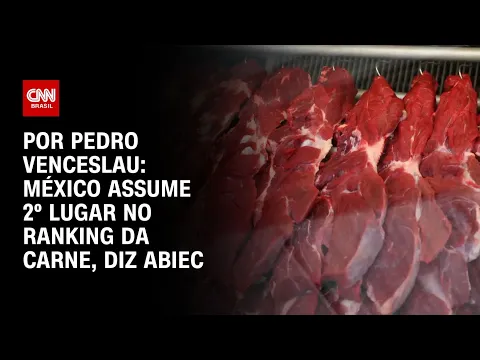
Between August 1 and 25, 2025, Mexico surpassed the United States as the second largest destination for Brazilian beef.
According to data from the Brazilian Association of Exporting Industries of Meat (Abiec) published by Reuters, Brazil shipped 10,200 tons to Mexico, generating US$ 58.8 million. During the same period, exports to the U.S. totaled 7,800 tons, worth US$ 43.6 million.
-
Brazilian Joins Homeownership Consortium, Faces Decade of Dual Payments Totaling $141,000, Surpassing Traditional Mortgage

-
Land Rover to Halt Production in July, Putting 371 Jobs at Risk, as Chinese Automaker Negotiates to Convert Factory to 100,000 Vehicles Annually by 2027

-
Mexican Pest Threatens U.S. Cattle Herds at Historic Lows, Potentially Boosting Brazilian Beef Exports as Burger Prices Soar

-
Brazilian Freight Bill Progresses in Congress with $5,000 Minimum Wage, 70% Advance Payment, and Fines Up to $1 Million, as Agriculture and Industry Warn of Rising Costs and Legal Uncertainty




From January to July 2025, Mexico imported 67,659 tons of Brazilian protein, nearly three times more than during the same period in 2024. This accelerated growth solidified the country as one of the new pillars of Brazilian beef.
Argentina Also Expands Space in Purchases
In addition to Mexico, Argentina emerged as another relevant partner in 2025. A traditional competitor of Brazil in the international meat market, the neighboring country increased selective imports of Brazilian beef to supply domestic consumption and meet specific demands from the local industry.
Even though the volumes do not compare to shipments to China, Hong Kong, or Mexico, Argentina’s presence reinforces Brazil’s commercial diversification strategy adopted after the tariffs imposed by the U.S.
China Still Leads, But Brazil Needs Alternatives
Despite the growth of Mexico and Argentina, China continues to be the largest buyer of Brazilian beef, accounting for more than 40% of exports. In August 2025, the Chinese imported over 100,000 tons, solidifying Beijing’s position as a central destination for the sector.
However, experts warn that excessive dependence on China poses a long-term risk. The move to open and strengthen other markets, such as Mexico and Argentina, is seen as essential to reduce Brazil’s commercial vulnerability.
Economic Impact of Tariffs
The imposition of 50% tariffs by the U.S. is expected to significantly reduce Brazilian exports to the American market. In 2024, the U.S. was the second-largest destination for national beef, behind only China.
According to industry analysts, the loss of the North American market could cost Brazil hundreds of millions of dollars per year in revenue, while simultaneously pressuring slaughterhouses to find quick alternatives.
Reconfiguration of the Global Meat Market
The partial embargo by the U.S. does not only affect Brazil. Analysts point out that the measure is likely to reconfigure global beef flows:
- Part of the protein that was destined for the U.S. will now be redirected to Mexico, Argentina, and other Latin American countries.
- China may take advantage of the situation to negotiate more competitive prices, given the oversupply.
- The U.S., in turn, will need to seek more beef from alternative suppliers, such as Australia and Canada, increasing its production costs.
This dispute illustrates how political and commercial decisions can quickly alter the geography of global food trade.
Brazil’s Role in This New Scenario
For Brazil, the crisis also becomes an opportunity. By creating space in markets like Mexico and Argentina, the country reinforces its strategy of diversifying destinations. In addition, it strengthens its image as a reliable and competitive supplier, even in the face of unexpected trade barriers.
Representatives of Abiec highlight that the Brazilian meat industry has the capacity to adapt and that the focus in 2025 is to consolidate stable long-term partnerships, reducing dependence on a few buyers.
The U.S. tariff on Brazilian beef in 2025 tested the resilience of one of the largest export sectors in the country. The response came quickly, with Mexico and Argentina taking on central roles as new destinations, compensating for part of the losses in the American market.
Although China still leads imports by a wide margin, the reconfiguration of trade highlights that Brazil needs to continue expanding its network of buyers to reduce future risks. The episode makes it clear that, on the global food board, beef is also a geopolitical weapon.





Mamacos Brasilis 🐒 lixos da humanidade
Ué, eu pensei que o “C” do briCs fosse a China, mas acho que deve ser o Camboja. rsrsrsrsrs
Kkkk, que palhaçada, isso que eu chamo de mentira da grossa!
**** da Pátria só vêm o que lhes convém e torcem contra o Brasil. E ainda dizem “Brasil acima de tudo”. Bando de canalhas.