






 Portuguese
  Spanish
  3 min of reading
  2 comments


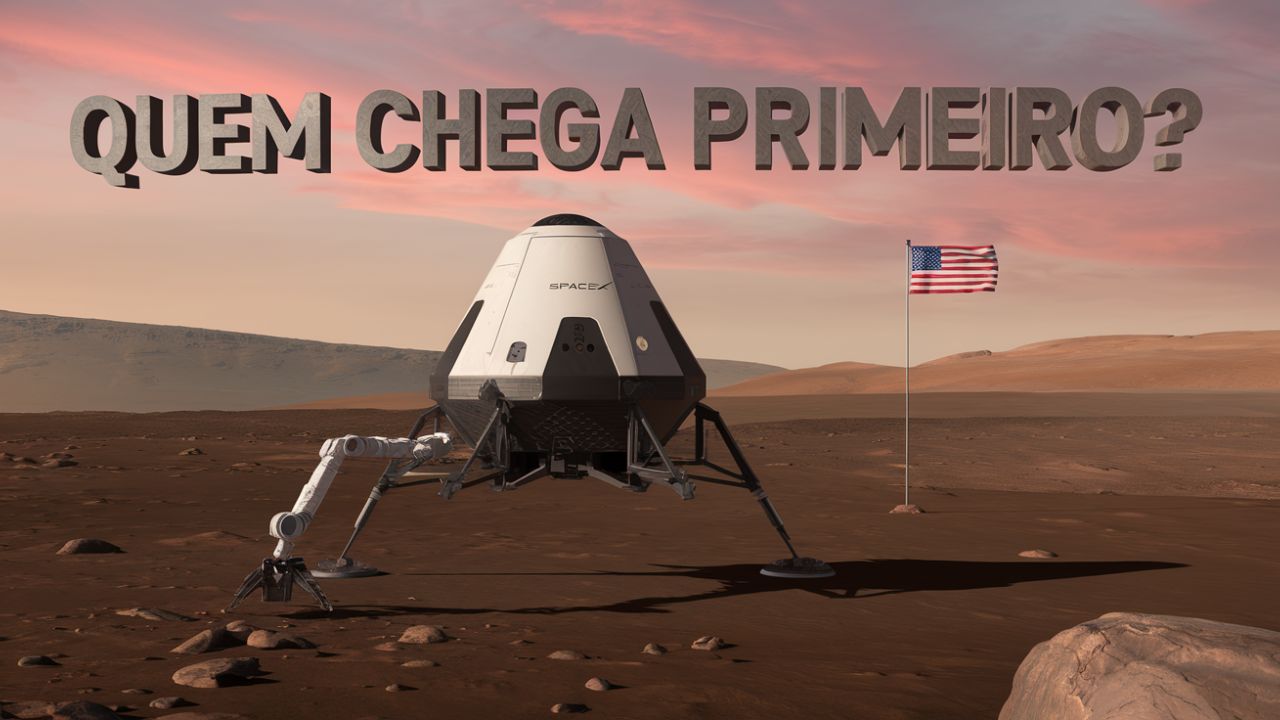


With Perseverance Already Collecting 27 Samples, NASA Studies Using SpaceX’s Starship to Beat China, Which Plans to Bring Material from Mars by 2031 with the Tianwen-3 Mission.
When it comes to exploring space, the competition between nations and private companies is a true cosmic marathon. But NASA doesn’t just want to run – it wants to win. Now, in partnership with the private sector, the agency has opened the doors to using Elon Musk’s Starship, seeking to bring Martian samples back to Earth before China does.
Why Does NASA Want to Bring Samples from Mars?
The mission to recover Martian samples is not just a matter of prestige. It is a unique opportunity to investigate Mars’ geological history, unravel mysteries about its evolution, and perhaps find evidence of past life.
Since 2020, the Perseverance rover has been collecting soil and rock samples, storing them in 27 sealed tubes. These carefully selected samples await a future mission that will bring them back to Earth for detailed analysis.
-
Europe unveils armored tank with remote turret, 1,500 horsepower, and 120-millimeter cannon

-
Old hard drives may hide neodymium, dysprosium, praseodymium, and terbium, and a United States company is expanding its network with a new 93,000-square-foot facility to recover rare earths used in electric cars, artificial intelligence, defense, and renewable energy.

-
Giant crane lifts up to 3,000 tons, requires special logistics to reach the site, and can transform 18-hour operations into just 3 hours, speeding up the hoisting of oil platforms, refineries, and plants in giant industrial projects.

-
A discarded microwave may contain 22-carat gold in internal components; study recovered a 450 mg nugget from electronic boards.


The Race Against China: Who Will Arrive First?

The United States led this race, but a setback in NASA’s budget allowed China to advance. With the Tianwen-3 mission, the Chinese plan to launch a spacecraft in 2028 and bring Martian samples back by 2031.
Meanwhile, NASA is working to decide what its definitive approach will be, with a decision expected only in 2026. The pressure is on – after all, losing this race would be a harsh blow to American space leadership.
Two Approaches for the Mars Sample Return Mission
To bring Martian samples back, NASA is considering two options:
Sky Crane: A technology already tested in missions like Curiosity and Perseverance, which uses retrorockets to land gently on Mars.
Commercial Vessel: This involves the possibility of partnering with private companies, such as SpaceX, which proposes the use of the Starship.
Each approach has its advantages, but time could be a decisive factor. Elon Musk plans to send five Starships to Mars as early as 2026, promising unbeatable timelines.
The Role of Starship in NASA’s Ambition
The Starship is not just a spacecraft – it is a true giant of space exploration. Designed to transport large payloads, it offers a potentially faster and more efficient solution for the Mars Sample Return mission.
If NASA opts for the Starship, it would mark a historic moment of collaboration between the public and private sectors, signaling a new era in space exploration.
Why Are These Samples So Important to Science?
Bringing samples from Mars to Earth is not just a symbolic victory. It is like having a piece of the red planet’s past in our hands. Analyzing these rocks and sediments can help answer crucial questions:
Has Mars ever had life?
Why did the planet become an inhospitable desert?
What lessons can we learn about planetary evolution?
These studies could provide valuable insights for future crewed missions, paving the way for humans to set foot on Mars.
The competition between NASA and China for the recovery of Martian samples is more than a technological dispute – it is a milestone in the history of space exploration. The decision to open the doors for Elon Musk’s Starship shows that NASA is willing to innovate and take risks to maintain its leadership.
What is at stake is not just the first place in this race, but also the future of planetary science and the next great step for humanity in the cosmos. The question now is: who will bring the samples back first? And what will these small Martian capsules reveal to us about the universe?





Isso é incrível!
Boa tarde como conseguir este micro crédito?