






 Portuguese
  Spanish
  7 min of reading
  0 comments


The Qingxu Cave is located in Dafang County, Bijie, in Guizhou Province, in southwest China, and draws attention for combining a natural bridge, karst formation, and a gigantic internal space. The area has become known for its monumental dimensions and tourist use during hot periods.
In a video released by the Qingyunji channel, in September 2025, according to measurements cited in sources about the formation, the natural bridge associated with the Qingxu Cave reaches almost 180 meters in height, with a maximum span of 127 meters and a large internal area. Today, the site hosts tents, tourists, and visitors seeking shade, wind, and cooler temperatures.
A natural bridge inside the mountain
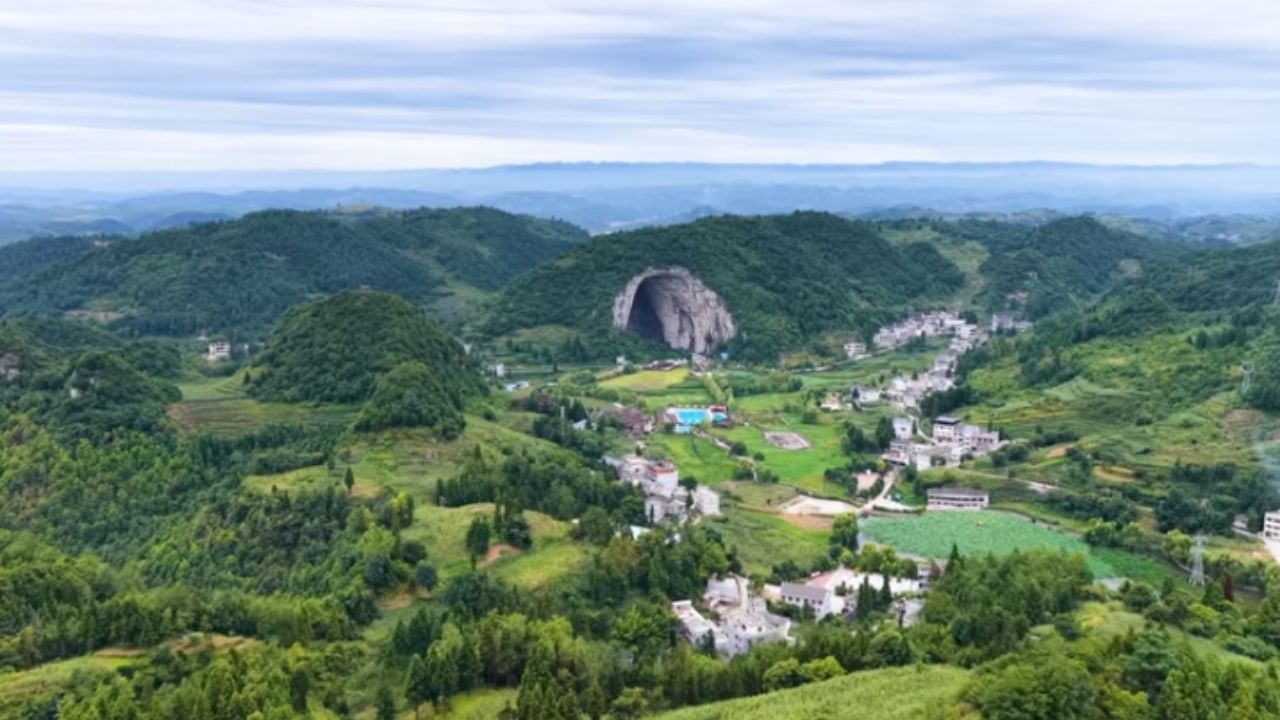
The Qingxu Cave impresses not only for being an open cavity in the rock. What makes the place unusual is the natural bridge shape, as if a mountain had been carved by time into a gigantic arch.
-
Goodbye, clothesline: new option for drying clothes utilizes walls, doors, and even room height with multiple drying levels, retractable model, and compact structure that promises to transform small laundries in 2026.

-
A discarded microwave may contain 22-carat gold in internal components; study recovered a 450 mg nugget from electronic boards.
-
Beach in the Northeast reaches a new level with a resort worth R$ 745 million, villas up to R$ 8.3 million, a complex of 2,347 hectares, and 6.5 km of beachfront in a destination still far from the hustle and bustle of Pipa.
-
Man buys abandoned luxury Mitsubishi for R$ 2,000 and performs an impossible transformation after finding the engine without oil, the car covered in mud, and even slugs; the project consumed R$ 17,000 and the final result impresses.


Seen from afar, the formation looks like a monumental opening carved by nature itself. The scale makes the cave seem closer to an impossible engineering work than a common natural space.
Guizhou is marked by karst relief
Guizhou Province is known for karst landscapes, mountains, caves, natural bridges, and deep valleys. This type of relief forms over very long periods, with the action of water on soluble rocks.
In the case of Qingxu Cave, the result is a broad, tall, and irregular structure. The karst formation creates walls, skylights, side cavities, and passages that change as the visitor moves deeper into the rock.
Almost 180 meters high
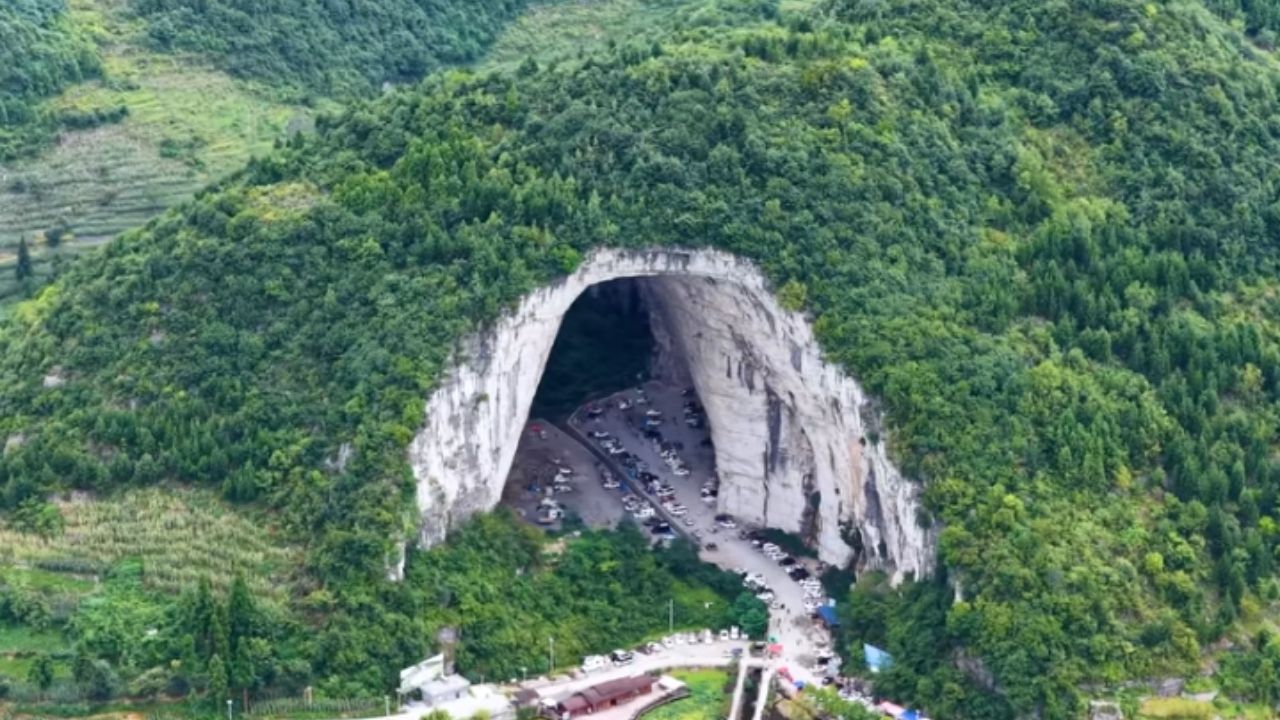
One of the most impressive numbers is the height. The formation is described with a top about 178 meters above the floor, a dimension comparable to a building of dozens of floors.
This data helps explain the visual impact. When a person enters the cave, the difference between the human body and the scale of the rock transforms the visit into an almost disproportionate experience.
Maximum span exceeds 120 meters
Besides the height, the natural bridge has a maximum span described around 127 meters. This open space enhances the feeling that the rock is not just pierced, but suspended like a natural structure.
The span also reinforces the rare character of the formation. It is not a narrow gallery: it is a huge opening, capable of making cars, people, and tents look small in front of the mountain.
Internal area accommodates even cars
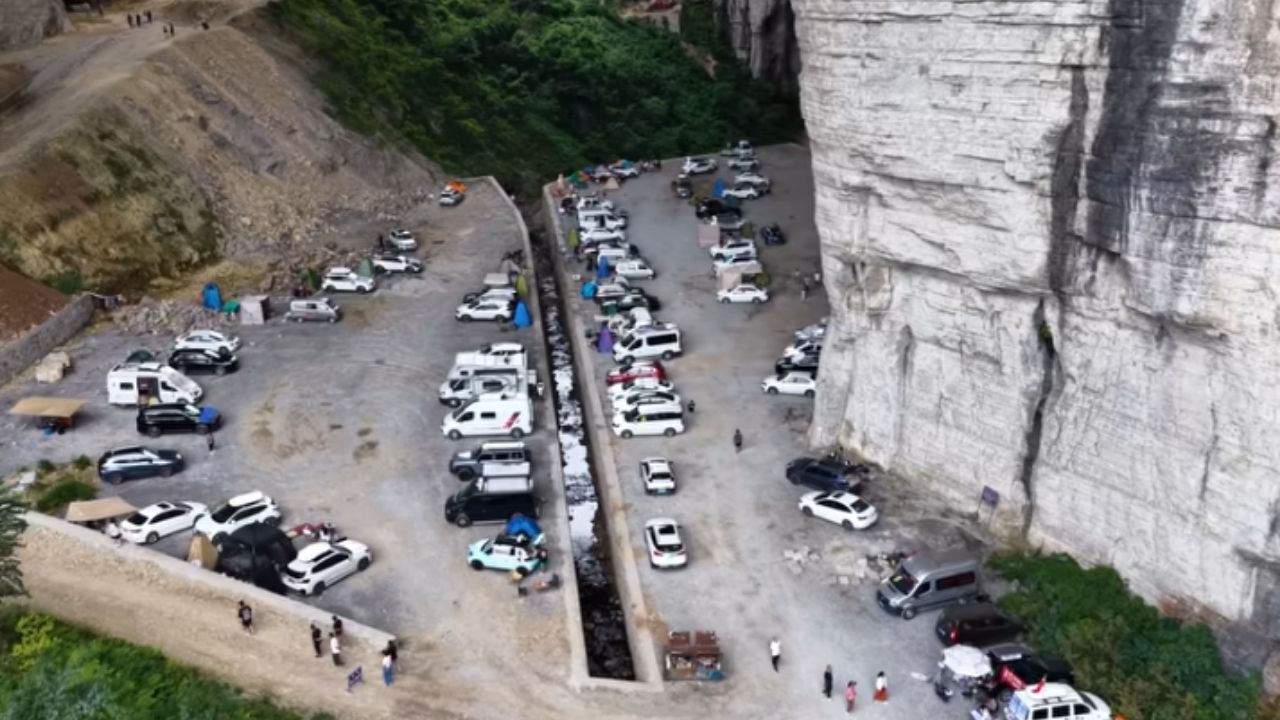
The internal area is described as about 5,000 m², large enough to accommodate vehicles. In the transcript used as a basis, visitors report cars entering directly into Qingxu Cave and parking inside.
This use draws attention because it deviates from the traditional image of a tourist cave. Instead of just narrow trails and walkways, the location has enough space for circulation, parking, and visitor support activities.
Tourism grew around the cave
The visit reported in the source shows a change in the use of the location. Where there was less movement before, now there are cars, tourists from other regions, food stalls, and small services.
This growth indicates a local economic transformation. When a natural formation of this size begins to attract visitors, opportunities arise for commerce, food, beverages, camping, and weekend tourism.
Refuge from the Summer Heat
One of the strongest attractions is the cool climate. Guizhou and Bijie are mentioned as areas with mild temperatures, and the cave itself serves as a natural shelter from the heat.
The deeper you go, the more the wind and the feeling of freshness appear. The cave ceases to be just a geological curiosity and becomes a climatic refuge for those seeking to escape the summer.
Cars, Campers, and Visitors from Outside
The transcript mentions many parked cars and the presence of campers and RVs. This suggests a more free-form type of tourism, with visitors arriving from different places and using the space as a travel stop.
This detail reinforces the uniqueness of the location. Few natural caves can combine monumental landscape, vehicle access, and pleasant climate in the same tourist experience.
Infrastructure Changed the Experience
According to the report, the ground that was once muddy and uneven has been hardened in some areas, facilitating access. There are also wider paths capable of accommodating smaller vehicles in certain sections.
These changes make the visit more practical but also raise debate. The more infrastructure enters a cave, the greater the need to balance tourism, safety, and preservation of the natural formation.
Skylights Help Illuminate the Landscape
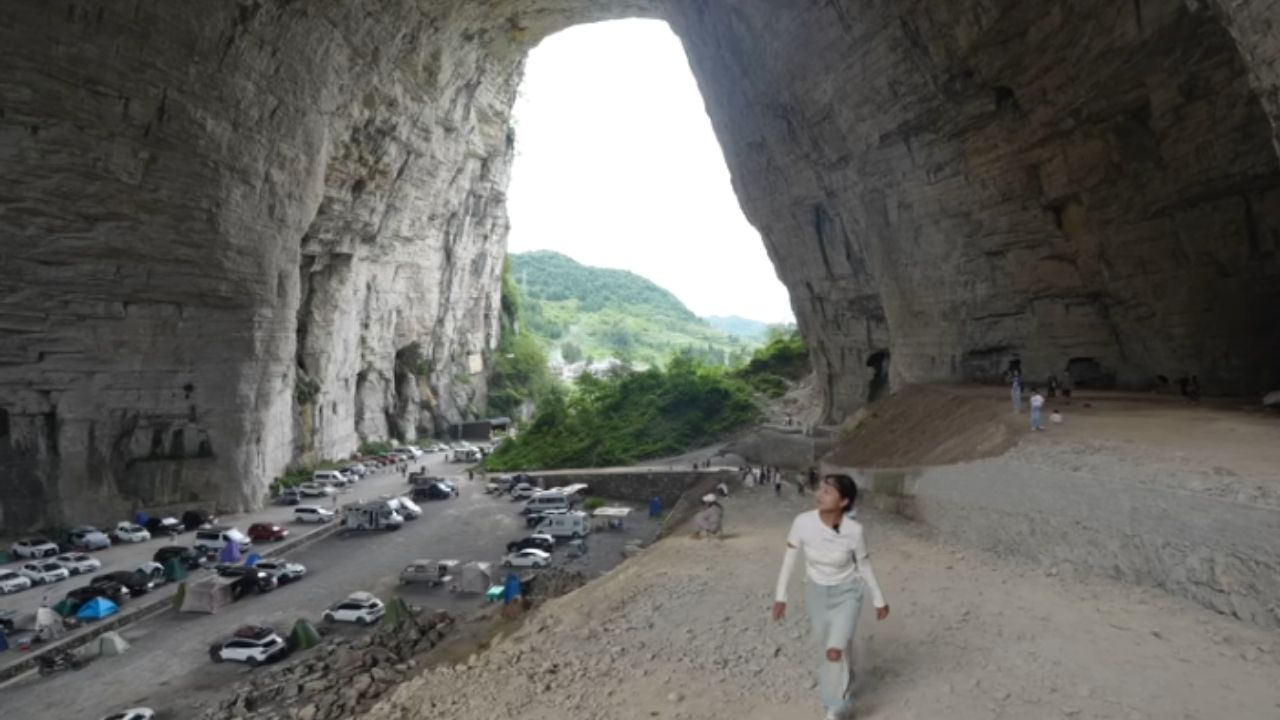
The Qingxu Cave is described as part of a system with a skylight and natural bridge. In some sections, the entry of light favors plants and creates contrast between rock, shadow, and vegetation.
This mixture makes the environment more photogenic. The natural light entering through the top opening transforms the cave into a living space, where the dark rock meets vegetation and open sky.
Lateral cavities extend the route
Besides the main opening, the site has smaller cavities on the sides. Some are deeper, others shallower, creating a sense of geological labyrinth within the larger formation.
These branches make the visit more varied. The visitor does not find just a large hall, but a sequence of spaces, passages, walls, stones, and small caves connected to the main set.
Stalactites appear inside
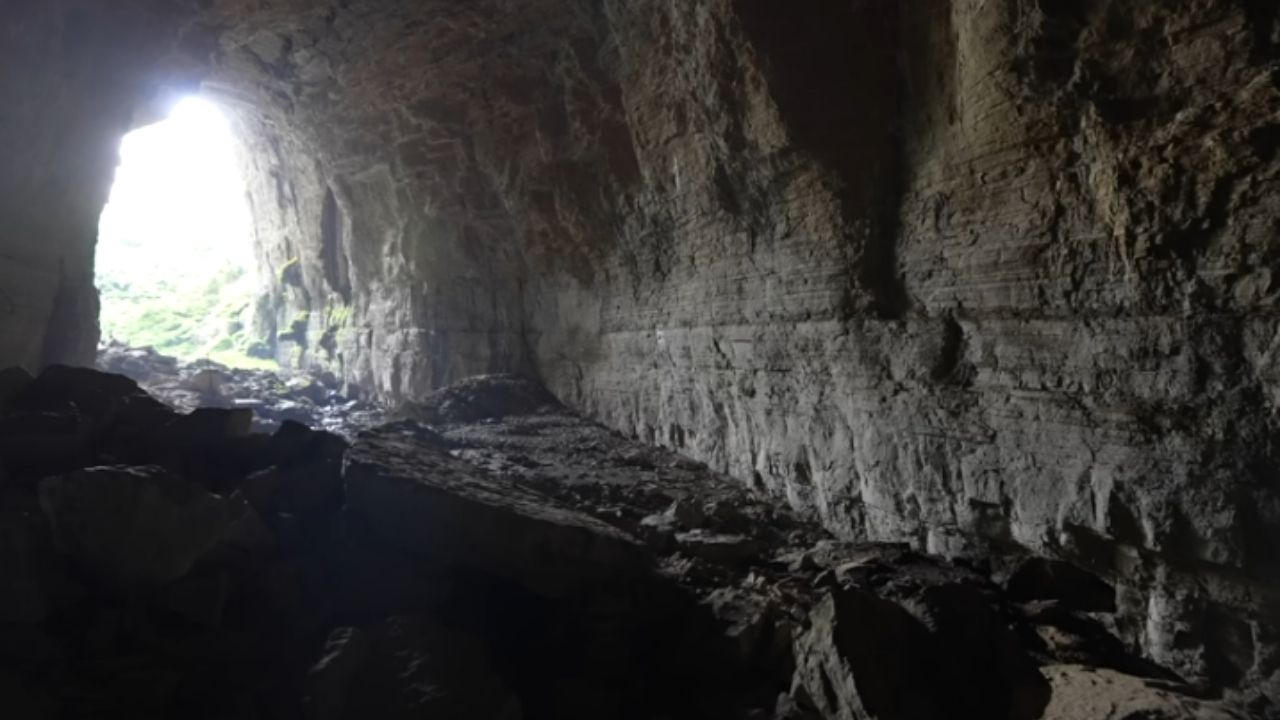
The source reports the presence of stalactites and mineral formations inside. Some catch the eye with their shine when illuminated by a flashlight, creating a strong visual effect on the walls and ceiling.
These formations need time and a stable environment to develop. Therefore, the presence of stalactites reinforces the importance of preserving the interior of the cave even with the advancement of tourism.
Underground river composes the scene
The account also mentions water flowing into the formation, with a stretch of river or spring disappearing inside the cave. This detail aligns with the logic of karst relief, where water shapes underground paths.
The presence of water increases the fascination, but also requires caution. Smooth floors, wet sections, and slippery paths can turn the visit into a risk when there is no attention to the terrain.
Fairy Stone reveals local customs
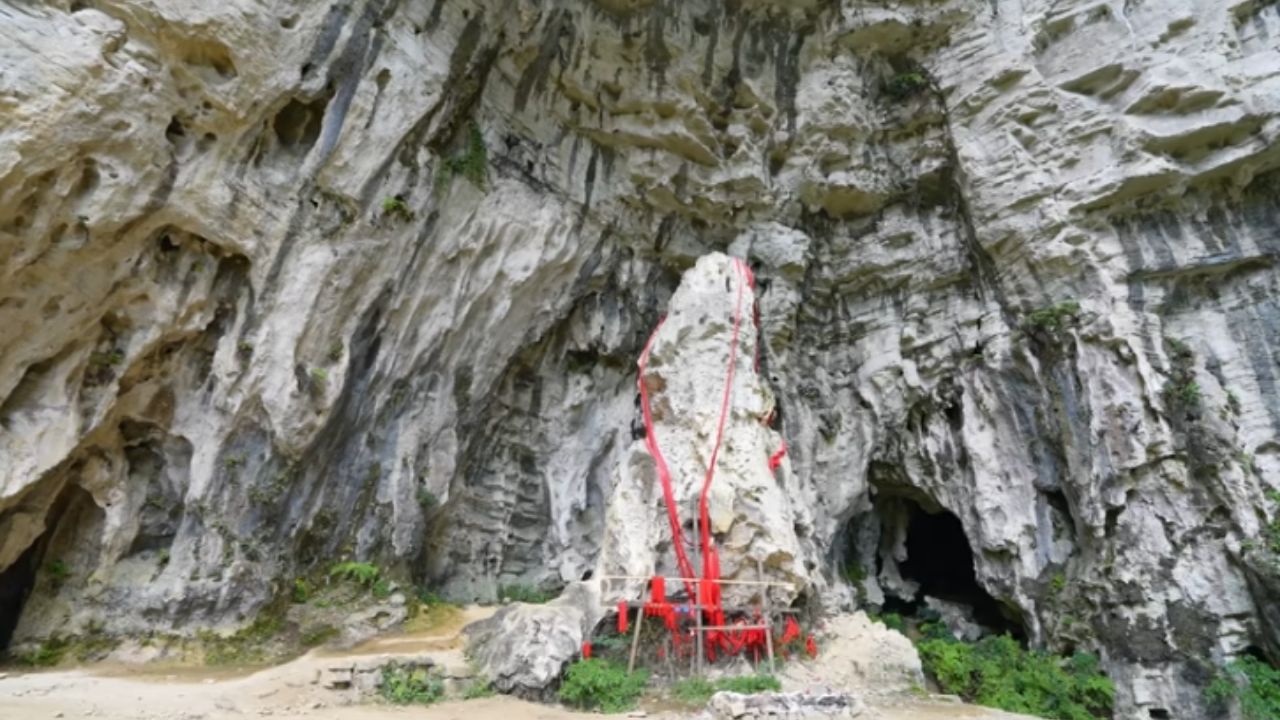
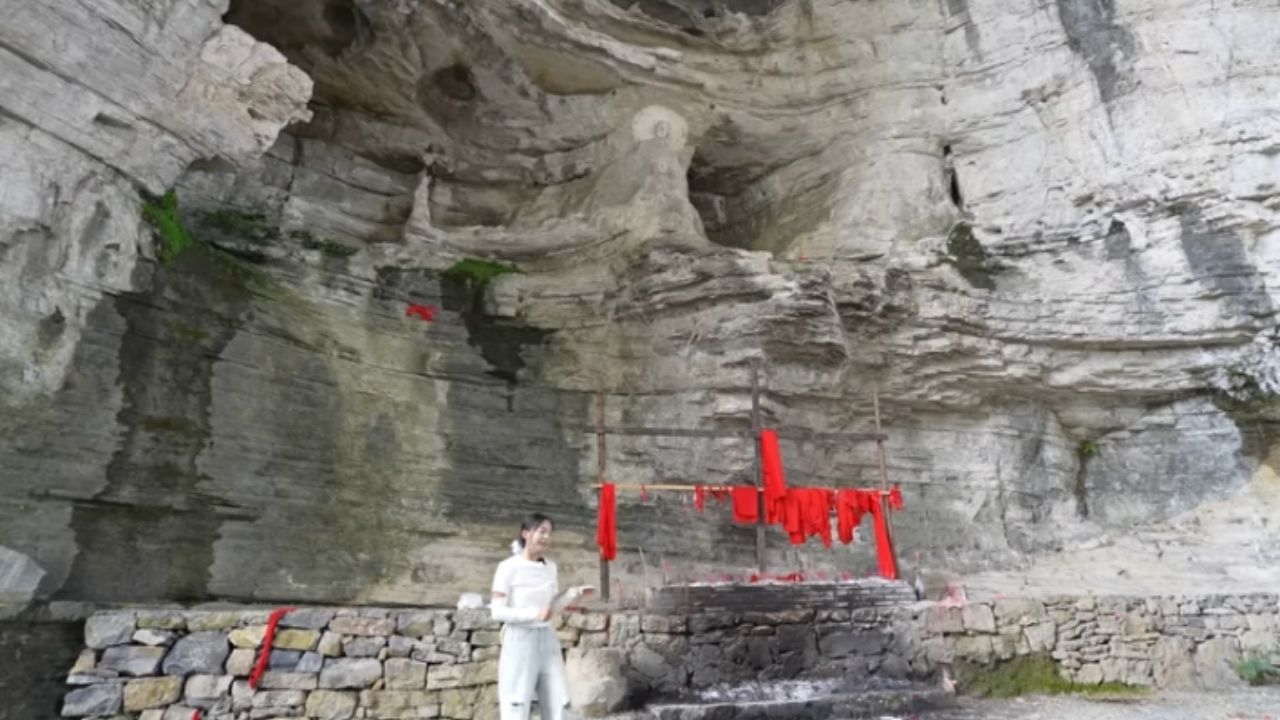
Outside and in nearby areas, the source mentions a large stone surrounded by red cloths and associated with local customs. Residents call it the Fairy Stone, treating it as a symbolic element of the landscape.
This aspect enhances the cultural value of the visit. The cave is not just a geological formation: it has also gained layers of belief, memory, and popular use over time.
Ruins remind of ancient religious use
The transcript cites information about a temple built in the cave during the Republic of China period. Over time, the structure would have declined, leaving ruins and platforms.
Even without turning the topic into a religious history, this point shows that the space has had different uses. A cave of this size can be a shelter, place of worship, tourist spot, and natural landmark at the same time.
Access facilitates weekend trips
The report states that transportation to the area is convenient and that Qingxu Cave is not far from the county seat. This helps explain why the site has started to receive more visitors.
The combination of access, cool climate, and monumental scenery is strong for regional tourism. When a giant cave can be visited without a complex expedition, it becomes a popular attraction, not just a destination for specialists.
Visual grandeur surpasses the camera
Visitors often say that images cannot fully reproduce the feeling of being at the site. This makes sense in formations with a very vertical scale, where height, echo, and depth change perception.
The camera shows the opening, but does not fully convey the physical dimension. The real experience depends on looking up, walking under the arch, and perceiving the size of the mountain suspended overhead.
Natural monument requires care


Tourism growth brings economic benefits, but it also requires management. Car traffic, commerce, trash, loud noise, trampling, and unplanned occupation can affect the experience and conservation.
In a karst formation, damage can be difficult to reverse. The same cave that attracts visitors for its beauty needs clear rules to not lose precisely what makes it special.
A mountain open from the inside
The Qingxu cave in Guizhou features almost 180 meters in height, a monumental natural bridge, a gigantic span, a wide interior area, cars inside, and a cool climate that attracts visitors in the summer. It is a rare formation, visually powerful and connected to the karst landscape of southwest China.
At the same time, the site shows how natural wonders can become spaces of tourism, commerce, and cultural memory. Would you visit a cave where cars enter, the wind cools the environment, and the mountain seems open from the inside? Share your opinion.


Be the first to react!