






 Portuguese
  Spanish
  7 min of reading
  0 comments


The hydroelectric plants of the Madeira River, Santo Antônio and Jirau, changed the river’s flow and created a wave of drought that reverses flood and ebb several times a month. The result is a 39% drop in artisanal fishing in Humaitá and fish disappearing from the tables of Amazonian riverside communities.
Where half a ton of fish used to enter the canoe in five days, today the fisherman Osvaldo de Araújo, 63, takes ten days to gather one hundred kilos in Humaitá, in the south of Amazonas. “There was so much fish it was unbearable,” he told Mongabay Brasil. Now, Osvaldo sums up what sustains the market stalls in one sentence: “If it weren’t for farmed fish, these stalls would be empty.” The abundance that seemed infinite turned into scarcity in just over a decade.
The case was mapped in detail by an investigation by the Agência Pública, published in January 2026 in partnership with Mongabay Brasil, which shows the reverse of a project sold as progress. The hydroelectric plants of the Madeira River, the Santo Antônio and Jirau plants, were built to generate clean energy on a large scale, but altered the natural pulse of the river and unleashed on the Amazonian riverside communities an unintended side effect: the fish, the main protein on the table and primary income from artisanal fishing, began to disappear.
The wave of drought that disorients the fish
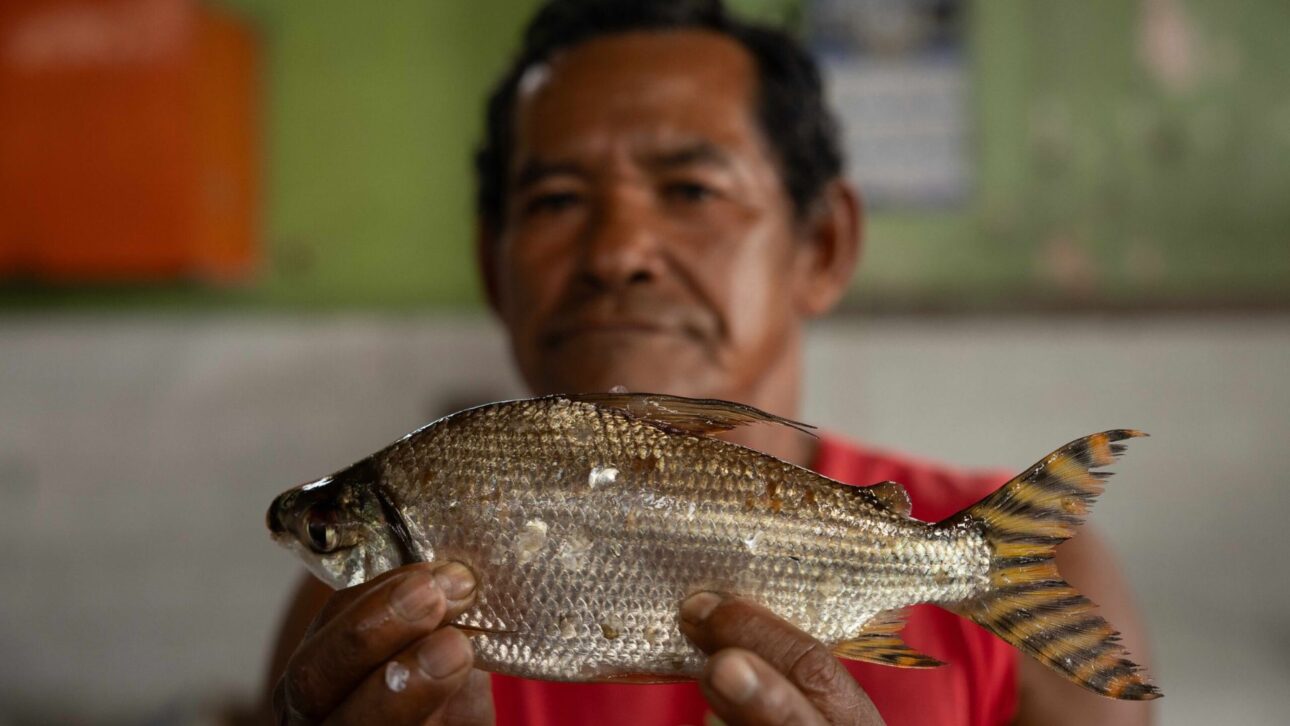
The Amazonian fish depend on the rise and fall of the waters to reproduce during the period known as piracema, and they do this following a flood that rises slowly and a recession that falls slowly. The hydroelectric plants on the Madeira River have disrupted this logic. Instead of a predictable annual cycle, the river now experiences what fishermen call a wave of drought, with floods and recessions reversing several times in the same month.
-
The Zuluk road has 32 zigzag curves at 3,400 meters in the Himalayas, originated as the Silk Route in Sikkim and became a military border where foreigners cannot pass.

-
Rio de Janeiro receives more than R$ 5.5 billion in sanitation, includes almost 1 million residents from communities in the formal customer base, and brings water, sewage, and proof of residence to regions historically neglected by urban infrastructure.

-
Via Mar promises to relieve BR-101 in Santa Catarina, but it will be the state’s first toll state highway and faces soft soil and rice fields that threaten the timeline.
-
To halt the advance of the Sahara, the 8,000 km Great Green Wall in the Sahel relies on reforestation to combat desertification, but by 2026 it remains far behind the goal of 100 million hectares.


Biologist Carolina Doria, coordinator of the Laboratory of Ichthyology and Fisheries at the Federal University of Rondônia, explains the mechanism. “The daily events of hydropsy are very frequent due to the hydroelectric plant,” Doria told Mongabay Brazil. According to the researcher, the fish reads the water level as a signal. “It knows it needs to leave the plains when the level rises gradually. If this flood and drought happen, the fish doesn’t even leave the tributary. It gets lost. Physiologically, there is a lack of control.”
Those who live off the river feel this firsthand. José Pessoa, 58, who has been fishing since he was 13 in Humaitá, explains the problem without any technical terms. “The fish need rapids to spawn,” he said. Without the right rapids at the right time, the school of fish disappears downstream. The intensity of the daily flow reversal, by the way, is greater near the plants, reaching an increase of 94% just below Santo Antônio and Jirau in Porto Velho, and still reaching the surroundings of Humaitá, 255 kilometers from the dam.
39% less: what the numbers from Humaitá show
The fishermen are not alone in this perception, and the data confirm the report. A study by the Federal University of Amazonas, supported by the Federal University of Rondônia, compared fish landings in Humaitá before and after the dams and found a 39% drop, from 267 tons per year on average from 2002 to 2010 to 163 tons between 2012 and 2016, as reported by Mongabay Brazil. The best years are all in the past, like 2011, which yielded 407 tons. Today, according to the local Fishermen’s Colony, the catch has already dropped to less than 100 tons annually.
In some areas, the collapse is almost total. In the Beem Creek, production plummeted from 164 tons to just 1.3 tons, a reduction of 99%, according to the survey cited by Agência Pública. The financial impact on the city comes close to 1.8 million reais lost per year just from artisanal fishing, and five traditional fishing spots have simply stopped producing.
What has disappeared has a name and surname in the riverside kitchen. The most affected species are precisely the most consumed, such as jaraqui, curimatã, pacu, aracu, sardine, and matrinxã, in addition to the large migratory catfish of commercial value, such as the dourada and piramutaba. Marcelo dos Anjos, coordinator of the Laboratory of Ichthyology and Fisheries Management of the Madeira River Valley at UFAM, is direct about the cause. “These species did not stop occurring there due to an environmental preference, but because they no longer have access,” he told Mongabay Brazil. The dam became a wall in the path of migration.
To understand the extent of the damage, scientists and fishermen joined forces. The biologist Igor Hister Lourenço, now at the Mamirauá Institute, led a participatory monitoring with about 120 fishermen, who began to record where, when, and how much they fished, according to Agência Pública. These riverside communities of the Amazon are, in practice, mapping their own losses.
The fish that disappeared from the table and the chicken that arrived
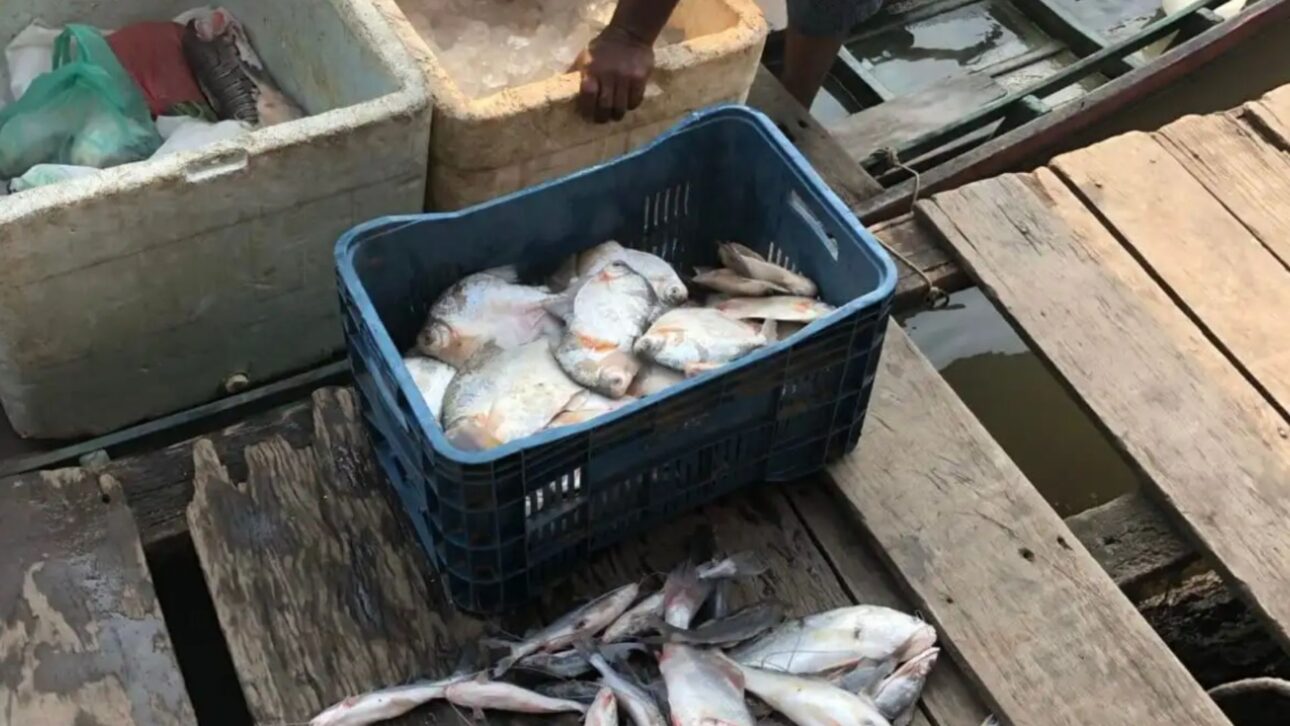
With less fish and higher prices, the staple diet of those living by the river has changed. João Mendonça, president of the association of farmers and fishermen of Paraisinho, describes the shift in few words. “Today, people come to buy chicken because it’s difficult to catch fish,” he said. In a region where eating fish every day was the norm, this is a cultural rupture, not just an economic one.
The price tells the same story. Fisherman Raimundo Dias, from Novo Aripuanã, recalls that matrinxã, once sold for five reais, now costs forty. “This hydroelectric plant ruined us,” he summarized. Allan de Barros, president of the fishermen’s association of Novo Aripuanã, goes further and talks about fish that have shrunk and fish that have disappeared. According to him, the dourada that used to weigh over 40 kilos now barely reaches 6, and the piramutaba shoal has become a memory. “We never saw a piramutaba shoal in our river again.”
Without income from fishing, some fishermen sought money where they could. Biologist Rogério Fonseca, from UFAM, warns of the chain effect. “Generations of fishermen are being forced to change professions,” he stated. Antônio Veiga, president of the fishermen’s association of Manicoré for 25 years, says that many abandoned their nets and went to mine gold, pushing the problem of the Madeira River hydroelectric plants into another Amazonian scourge, illegal mining.
Built in Rondônia, felt in Amazonas
There is a geographical injustice at the center of this story. The Santo Antônio and Jirau plants are located in Rondônia, near Porto Velho, but much of the impact traveled down the river and hit Amazonas, in cities like Humaitá, Manicoré, and Novo Aripuanã. “They were installed in Rondônia, but the impact came to Amazonas,” summarized Antônio Veiga. Those who decided and profit are on one side of the state border, those who lose the fish are on the other.
The Justice system has not yet resolved the issue. Since 2013, more than 1,500 fishermen from Humaitá have been suing the owners of the plants, seeking compensation for moral and material damages, but the local court deemed the case time-barred, and the appeal is awaiting a decision in the Court of Justice of Amazonas. Meanwhile, the climate scenario worsens the situation, with the historic drought of October 2023, when the Madeira River reached a depth of 1.10 meters, and the drop of almost three meters in just fifteen days in June 2024.
When contacted, the operators provide different versions. Axia, responsible for Santo Antônio, claims to operate sustainably and says it has invested more than 2.6 billion reais in socio-environmental programs, including fish monitoring, according to Mongabay Brazil. Jirau Energia did not respond to the report’s inquiries. Between the discourse of clean energy and the empty tables of the riverside communities of the Amazon, there remains a river that no longer follows its own calendar.
The story of the Madeira River hydroelectric plants is the perfect depiction of progress that charges the bill in the wrong place. The Santo Antônio and Jirau plants delivered energy to millions of homes, but the drought wave they created has devastated artisanal fishing, shrunk the fish, increased the cost of protein, and pushed entire families towards store-bought chicken or mining. The electricity bill that lights up the cities is being paid, in fish and food, by the riverside communities of the Amazon.
And you, do you think it’s fair to call it clean energy when it causes fish and food to disappear from the tables of those who live off the river? Share your thoughts in the comments.




Be the first to react!