






 Portuguese
  Spanish
  8 min of reading
  0 comments


The giant crane LR 13000 requires special logistics, about 100 trucks, foundations, and complex assembly to operate on oil platforms, refineries, and plants. With a capacity of 3,000 tons, it reduces lifts from 18 hours to 3 and changes costs in critical large-scale global modern industrial works.
The giant crane LR 13000 is one of the most extreme machines in heavy construction, capable of lifting up to 3,000 tons in large-scale industrial projects. Used on oil platforms, refineries, and plants, it has gained prominence for combining strength, mobility on tracks, and precision in critical lifts.
According to a video published by the channel Hard Hat Industries on YouTube, in January 2026, the equipment is associated with projects where downtime is costly and the margin for error is minimal. In operations such as loading modules for offshore platforms and assembling components in nuclear plants, the LR 13000 shows why some projects prefer to pay for a huge machine to reduce risks, operating hours, and delays.
High price is just the beginning of the bill
The estimated cost of a machine of this size can reach tens of millions of dollars, but this value does not represent the total cost of use. For specialized companies, buying or hiring a crane of this size is just the first step.
-
A discarded microwave may contain 22-carat gold in internal components; study recovered a 450 mg nugget from electronic boards.

-
Who has the highest IQ: the oldest child, the middle child, or the youngest? A study with 240,000 people published in Science reveals a difference of up to 3.2 points and indicates which position in the family tends to have an advantage.
-
A YouTuber spent almost a year transforming the failed invention into an autonomous flying umbrella: the drone uses a camera and Raspberry Pi to follow the person and protect them from the rain on its own.
-
The first trillionaire in history, Elon Musk notices Brazil and its internet, Starlink, which works even in the middle of nowhere, emerges for just R$ 600, fits in a backpack, operates via satellites, and offers dual-band Wi-Fi with WPA3 security.


The real expense appears in mobilization, transport, assembly, crew, ground preparation, and waiting time. A giant crane only makes sense when it saves more money than it consumes in logistics and operation.
Machine arrives disassembled at the site
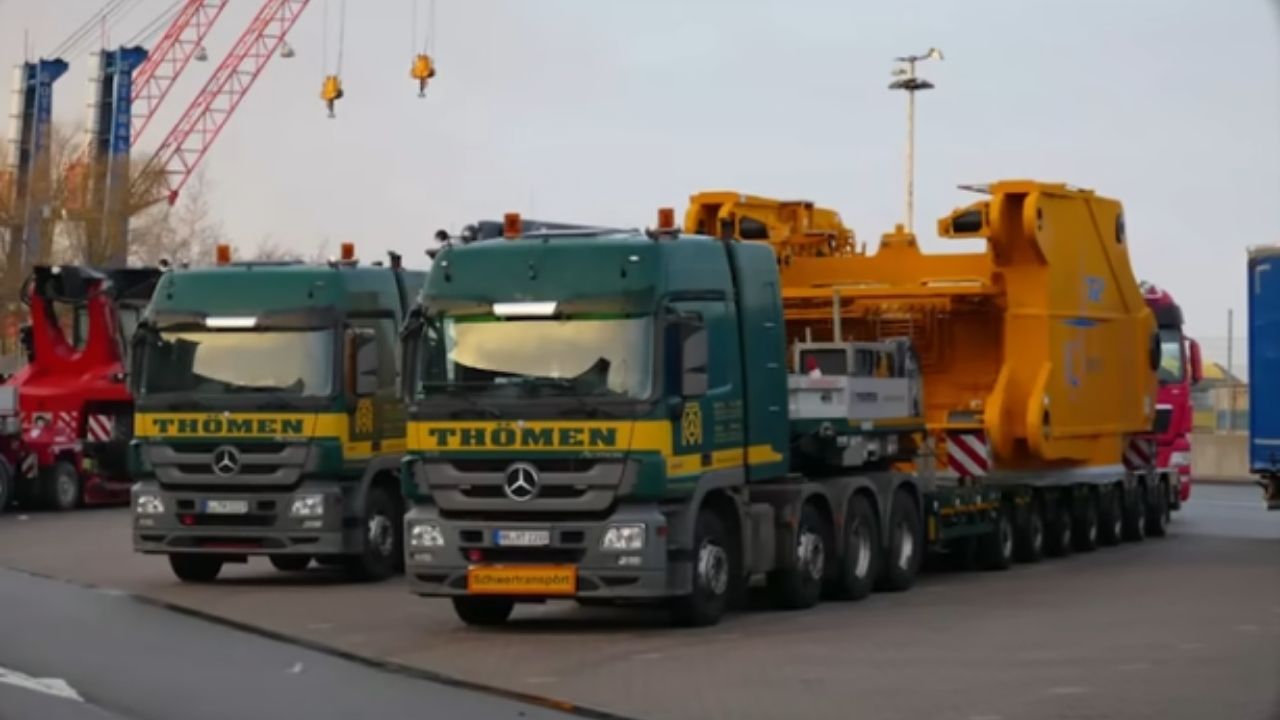
The LR 13000 does not simply appear ready at the construction site. To be transported, it needs to be dismantled into components, turning a single machine into a major fleet challenge.
The transcript used as a basis mentions about 100 heavy trucks to mobilize the equipment. Before lifting the first piece, the project already needs to resolve licenses, routes, drivers, fuel, escort, and assembly sequence.
Ground needs to be prepared before lifting
An equipment of this weight cannot be placed on just any terrain. The pressure on the ground requires tracks, load distribution plates, designed bases, or temporary foundations capable of supporting the operation.
In some cases, the ground needs to be excavated, reconstituted, and compacted before receiving the machine. If this step is ignored, the crane may settle unevenly, alter the load radius, and turn a lift into a structural risk.
Assembly also requires another fleet
Besides the trucks that carry the parts, the assembly of the crane requires auxiliary machines. Normally, another smaller crane, a specialized team, and several days of work are needed to join booms, counterweights, and systems.
During this phase, the main asset does not generate revenue. The financial clock is already ticking, but the giant crane has not lifted anything yet, making each idle day a critical part of the cost.
3,000-ton capacity changes the project
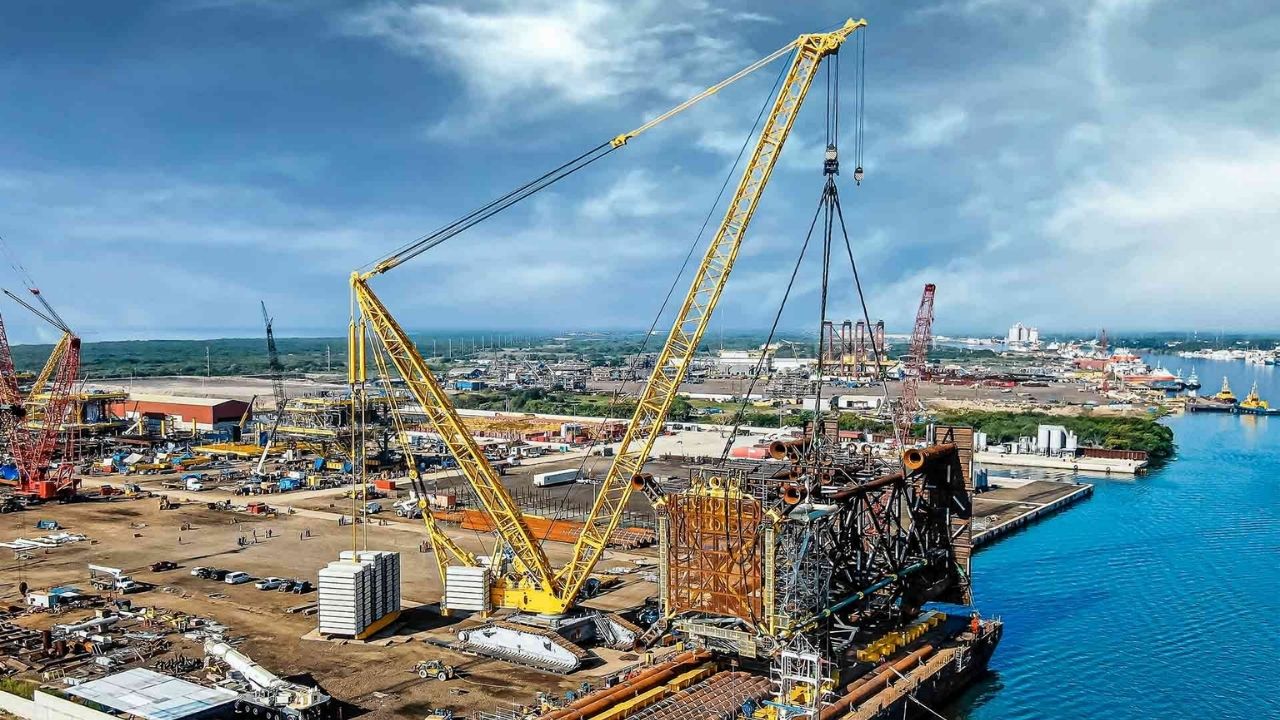
The maximum capacity of 3,000 tons allows tackling problems that smaller cranes or conventional methods do not solve with the same efficiency. The brute force paves the way for larger modules, fewer stages, and less fragmentation of construction.
This logic is linked to industrial modularization. The larger the module that can be lifted, the less assembly work tends to be required in the field, where climate, space, and safety make everything more expensive.
Mobility on tracks is a differential
The LR 13000 is a crawler crane, not a fixed structure anchored to the ground. This feature allows controlled movement on the site, depending on the configuration and operating conditions.
This mobility changes the logic of large constructions. Instead of setting up a static piece of equipment for each lifting point, the project can concentrate operations on a machine capable of serving different sectors.
Lifting replaced slow operation in Mexico
An example cited in the source involves loading components of oil platforms in Tampico, Mexico. The conventional method used self-propelled modular transporters, known as SPMTs, to carry loads to barges.
This process could take about 18 hours per component because it required barge control, gradual weight transfer, tugboat support, and partial closure of operations in the channel. It was efficient but slow and expensive.
From 18 hours to just 3 hours
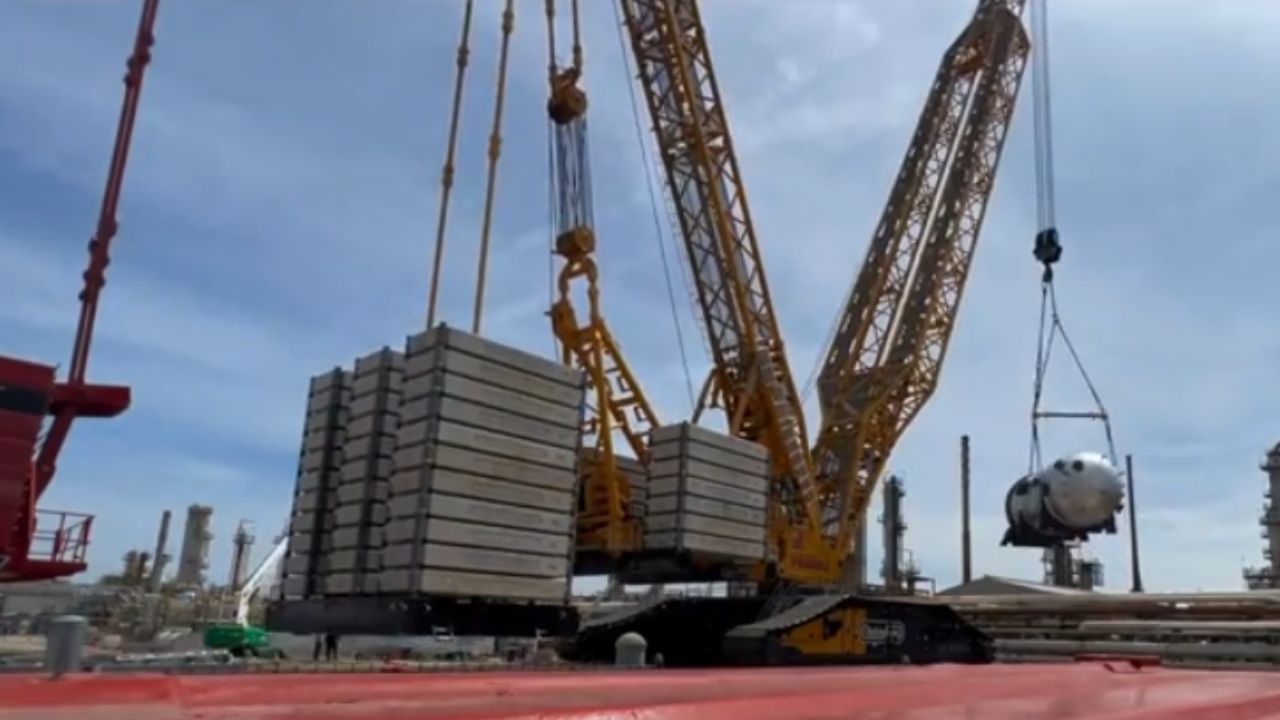
By positioning the crane on the quay and lifting components directly onto the barges, the loading time dropped to about 3 hours per unit. The change reduced exposure to weather, maritime support, and interference with waterway traffic.
This difference explains the economic logic. Even expensive, the giant crane can compensate when it eliminates dozens of hours of port operation, tugboats, crews, and risks associated with slow loading.
Oil platforms require huge parts
Offshore projects use heavy structures, bulky modules, and components that need to leave the manufacturing yard safely. Each movement involves not only weight but center of gravity, wind, stability, and precision.
In these operations, lifting time affects the entire chain. A platform stopped at the quay, a barge waiting, or a missed weather window can cost much more than hiring an extreme machine.
Refineries also enter the modular logic
Modern refineries increasingly rely on pre-fabricated modules. Instead of assembling everything piece by piece on site, large structures can be manufactured in a controlled environment and then taken to the site.
This improves quality and safety, but creates a new problem: the modules become too heavy for common cranes. The evolution of industrial works pushes engineering towards machines capable of lifting more weight in fewer steps.
Nuclear plants demand extreme precision
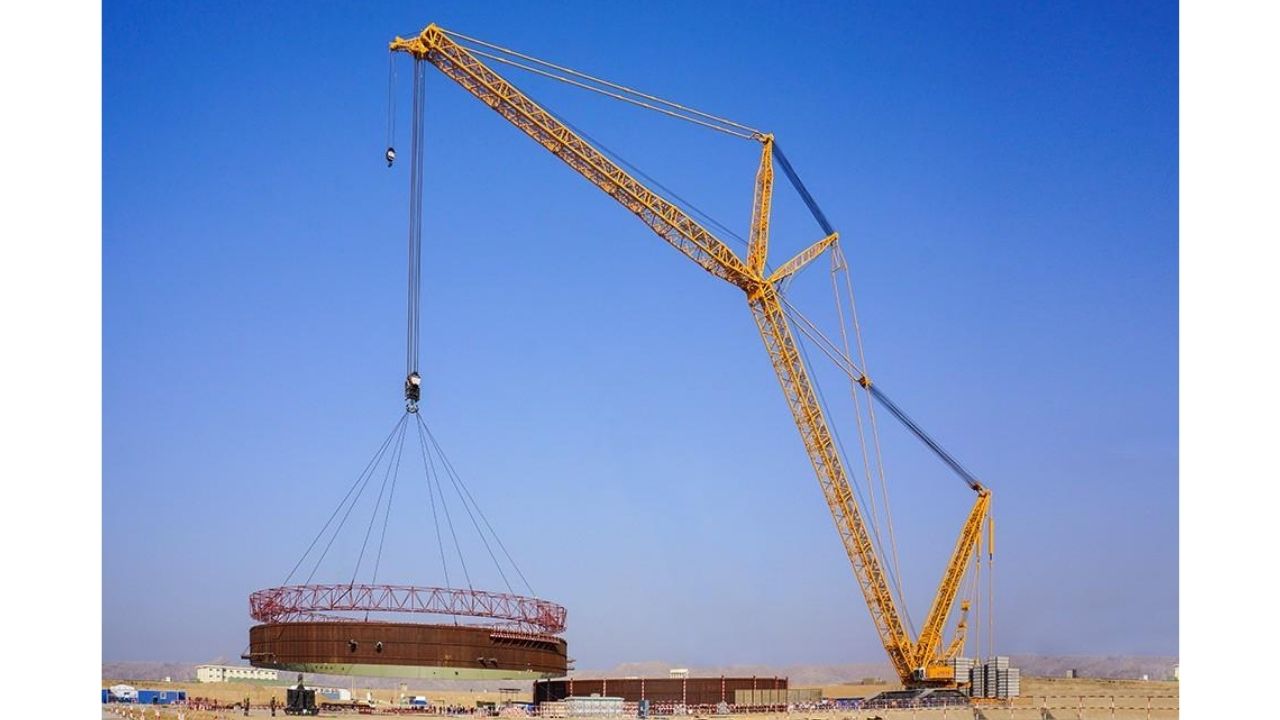
In nuclear plants, the value of the crane is not just in speed. The greatest advantage may lie in risk reduction, as critical components need to be positioned with strict control.
At the Akkuyu plant in Turkey, the LR 13000 was used to install components related to the polar crane of the reactor building. In this type of work, a mechanical failure during the lift is not just a loss: it is a risk to safety, schedule, and reputation.
Redundancy becomes part of the price
Equipment of this scale can have redundant systems to reduce single points of failure. The idea is to ensure that, even in the face of a mechanical problem, the operation can continue or the load can be safely lowered.
This type of feature justifies part of the cost. The client is not only paying for lifting strength but also for control, predictability, and the ability to reduce risks in critical stages.
Counterweights were also designed for logistics
One of the most important technical details is in the counterweights. The source highlights that concrete blocks can be designed with dimensions compatible with transport on standard container chassis.
This choice reduces operational costs over the machine’s lifespan. In a giant crane, small logistical decisions can mean great savings when hundreds of tons need to travel between works.
Without derrick in some lifts
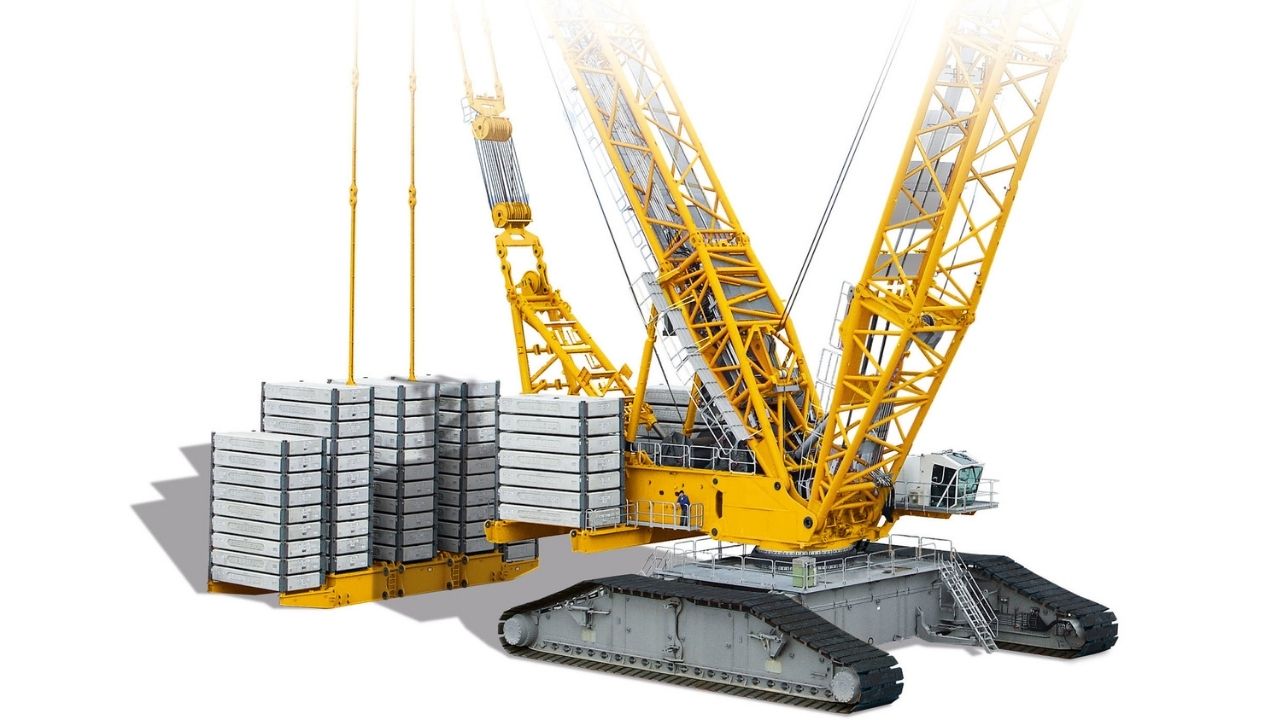
The source also highlights the ability to operate without derrick ballast in certain smaller lifts within the machine’s scale. This reduces auxiliary assembly, required space, and preparation time.
This point is relevant in intermediate phases of construction. If the crane can perform part of the lifts without configuring the entire suspended counterweight system, it gains productivity and reduces idle time.
Giant is only worth it when it works a lot
Despite the impressive capacity, the LR 13000 is not a solution for any construction. For most companies, the cost of purchase, transportation, assembly, and downtime would be too high.
It makes sense for specialists in heavy lift and projects with exceptional loads. The machine needs to be used in tasks that smaller methods cannot execute with the same speed, safety, or total economy.
Industrial construction is becoming modular
The presence of giant cranes in large fleets accompanies a change in the sector. Refineries, plants, platforms, and energy projects are using increasingly larger modules to reduce on-site work.
This change reverses part of traditional construction. Instead of thousands of pieces being slowly assembled on-site, huge blocks arrive ready and require a machine capable of placing them in the right spot.
Ring cranes lose space in some scenarios
Ring cranes can lift enormous loads, but they are usually static structures. In industrial sites spread over large areas, moving a fixed machine between lifting points can take weeks.
The crawler crane creates another possibility. When the equipment can move on-site, it reduces disassemblies, remobilizations, and bottlenecks between different fronts of the construction.
Speed can be worth more than strength
The ability to lift 3,000 tons is impressive, but the economic effect appears when this strength reduces operation time. In the case of Mexico, the drop from 18 hours to 3 hours per load demonstrated this point.
In industrial projects, time is cost. If a machine reduces risk windows, frees up docks, shortens the use of tugboats, and accelerates schedules, speed becomes part of the financial return.
Precision weighs as much as tonnage
Lifting a huge load is only part of the challenge. Positioning this load with millimetric precision, in height, radius, and limited space, is what transforms the lifting into critical engineering.
Therefore, the operation requires a detailed plan. The giant crane depends on calculations of soil, wind, radius, actual weight, movement sequence, and perfect communication between operators and teams.
Idle cost can destroy the margin
A machine of this size cannot wait indefinitely. If the project is delayed, if the ground is not ready, or if the load does not arrive, the immobilization cost accumulates quickly.
This is the contradiction of the LR 13000. It can save millions in a well-planned operation, but it can also become a financial burden if it stands idle due to scheduling failures.
The future of giant projects depends on lifting


As industrial modules grow, the demand for extreme cranes tends to follow. Platforms, refineries, petrochemical plants, and power plants require solutions capable of handling weights previously considered impractical.
This movement shows that heavy construction is changing. The modern construction site depends less on improvisation and more on logistics, prefabrication, special transportation, and precisely planned lifts.
Force that only works with planning
The giant crane LR 13000 shows that lifting up to 3,000 tons is just part of the story. To reach the site, it requires about 100 trucks, special foundations, lengthy assembly, auxiliary team, and a logistical plan capable of transforming tons of steel into productivity.
When everything works, the machine can reduce operations from 18 hours to 3 hours and accelerate oil platforms, refineries, and plants. Do you think it’s worth paying a high price for an extreme machine when it shortens weeks of work and reduces million-dollar risks? Share your opinion.


Be the first to react!