






 Portuguese
  Spanish
  4 min of reading
  1 comment


Recent Scientific Forecasts Indicate Drastic Climatic Changes That Could Transform Brazilian Regions Into Uninhabitable Areas, Causing Deep Impacts on Health and the Lifestyle of Local Populations in the Coming Decades.
A recent study by NASA presents an alarming warning for Brazil: if nothing is done to curb climate change, several regions of the country could become uninhabitable within 50 years.
The extreme increase in temperatures, combined with high humidity levels, could transform areas of the Central-West, Northeast, North, and Southeast into very hostile environments for human life, as shown by projections from the American space agency.
This trend reflects the worsening of global warming, which intensifies extreme weather events around the planet and threatens the quality of life for millions of people.
-
Mother of 4 children started as a salesperson and became the owner of 4 franchises: Pamela Oliveira took over the first unit, saw the revenue more than double, and turned a busy routine into proof that motherhood and business can grow together with organization.

-
Majestic castles of Slovakia reveal UNESCO heritage, the setting of Nosferatu, and medieval legends

-
Goodbye, iron gates: rain, sun, and moisture-resistant alternative combines low maintenance and modern look for facades
-
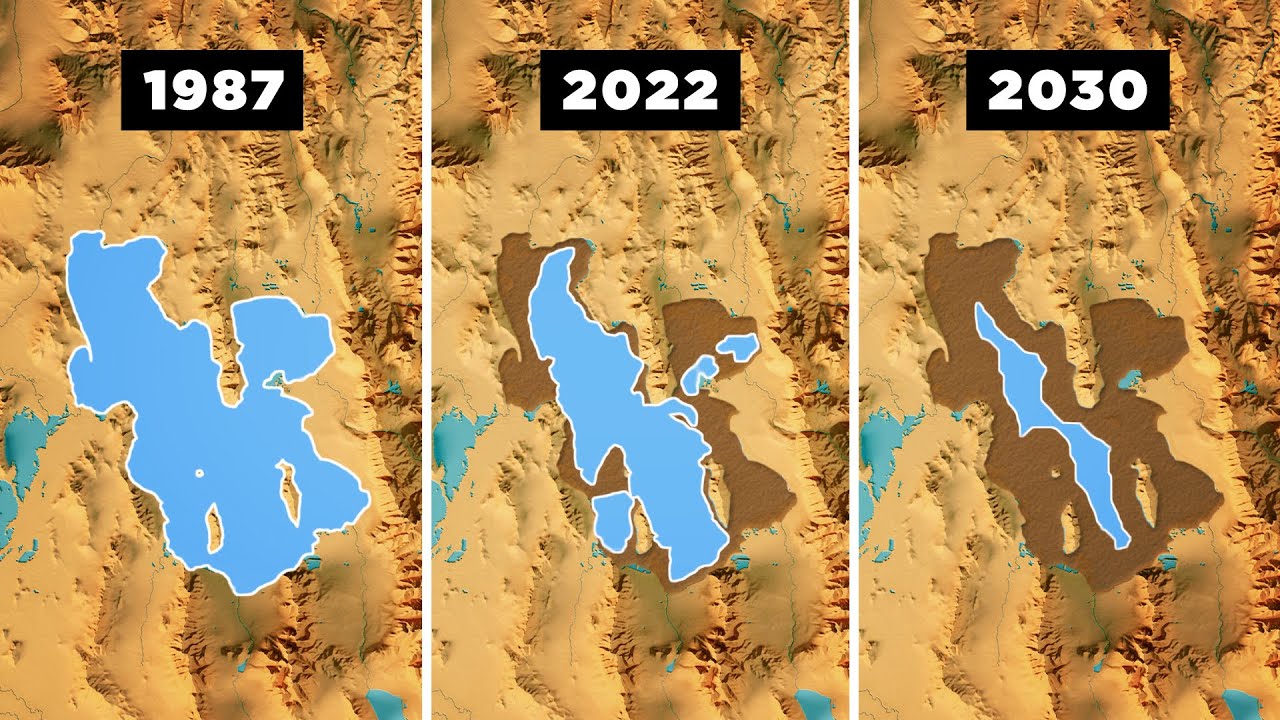
An American giant could disappear in five years: Utah’s Great Salt Lake has already shrunk by two-thirds, exposing a bed full of arsenic, and scientists are calling its collapse an “environmental nuclear bomb” about to explode over a city of more than a million people.


The NASA research utilizes satellite data combined with advanced climate models that consider not only temperature but also the relative humidity of the air—factors that together amplify the thermal sensation and risks to human health.
Understanding the impact of heat coupled with humidity is essential for assessing how the rise in temperatures may directly affect the habitability of Brazilian regions over the next 50 years.
How Does Extreme Heat Affect Public Health?
Intense heat, especially when combined with high humidity, hinders the human body’s ability to maintain its internal temperature stability.
This can lead to severe conditions such as heatstroke, dehydration, and even organ failure, with potentially fatal consequences.
Cardiovascular and respiratory diseases tend to worsen under these conditions, increasing the risk for vulnerable groups, such as the elderly, children, and people with chronic illnesses.
Furthermore, enclosed environments with poor ventilation, common in Brazilian urban areas, can become even more dangerous, increasing the incidence of heat-related health issues.
Experts warn that the increasing heatwaves are not an isolated problem but a growing crisis that directly impacts the safety and well-being of the population.
Which Brazilian Regions Are Most Threatened?
According to NASA’s climate models, regions in the Central-West, Northeast, North, and Southeast face a high risk of becoming uninhabitable by the middle of this century.
The Central-West, for example, could experience an average temperature increase that exceeds 4ºC, combined with high humidity, conditions that create a critical thermal sensation for human life.
The Northeast, traditionally hot, will see its conditions aggravated, especially in areas already affected by prolonged droughts, which could worsen water scarcity and the survival of the local population.
The North, where the Amazon Rainforest acts as a fundamental climate regulator, is also at risk as deforestation accelerates the rise in heat and harms the region’s natural humidity.
In the Southeast, large metropolises will face extreme temperatures, impacting public health, infrastructure, and the economy.
What Happens to Brazil and the World in the Face of This Scenario?
Brazil is not alone in this fight against extreme heat. Areas in South Asia, the Persian Gulf, China, and other regions also face similar risks, according to recent studies by NASA and the World Health Organization (WHO).
According to WHO data, extreme heat is already responsible for thousands of annual deaths worldwide, with many cases still underreported due to the difficulty in directly linking deaths to heat.
In addition to human risks, extreme heat impacts agriculture, increases energy consumption—due to intensive use of air conditioning—and raises the vulnerability of fragile ecosystems.
How to Face the Challenge of Extreme Heat?
According to experts, the response to the rising heat and humidity involves urgent actions for mitigation and adaptation to climate change.
The main one is the drastic reduction of greenhouse gas emissions, which drive global warming.
Protecting green areas, restoring biomes such as the Amazon and the Cerrado, as well as investing in clean energy, are essential measures to slow down this process.
At the local level, strengthening early warning systems, awareness campaigns, and adapting urban infrastructure are essential to protect the population.
This includes creating public spaces with shade and natural ventilation, as well as promoting practices that reduce energy and water consumption.
A Call for Global Action
The NASA alert reinforces the urgency of a coordinated international mobilization.
Extreme heat is a problem that transcends borders and requires collaboration among countries, governments, scientists, and civil society to ensure a livable future.
Investing in science, technology, and education is essential to face the transformations that are already underway.
Brazil, given its territorial extent and climatic diversity, plays a strategic role in this scenario but needs integrated public policies committed to sustainable development.
As Brazil moves towards a scenario where heat and humidity could make several regions inhospitable, how do you think governments and society should act to prevent this future?
Updated information as of April 2025, based on data from NASA, the World Health Organization, and recent climate research.




Conversa fiada