Portuguese
  Spanish


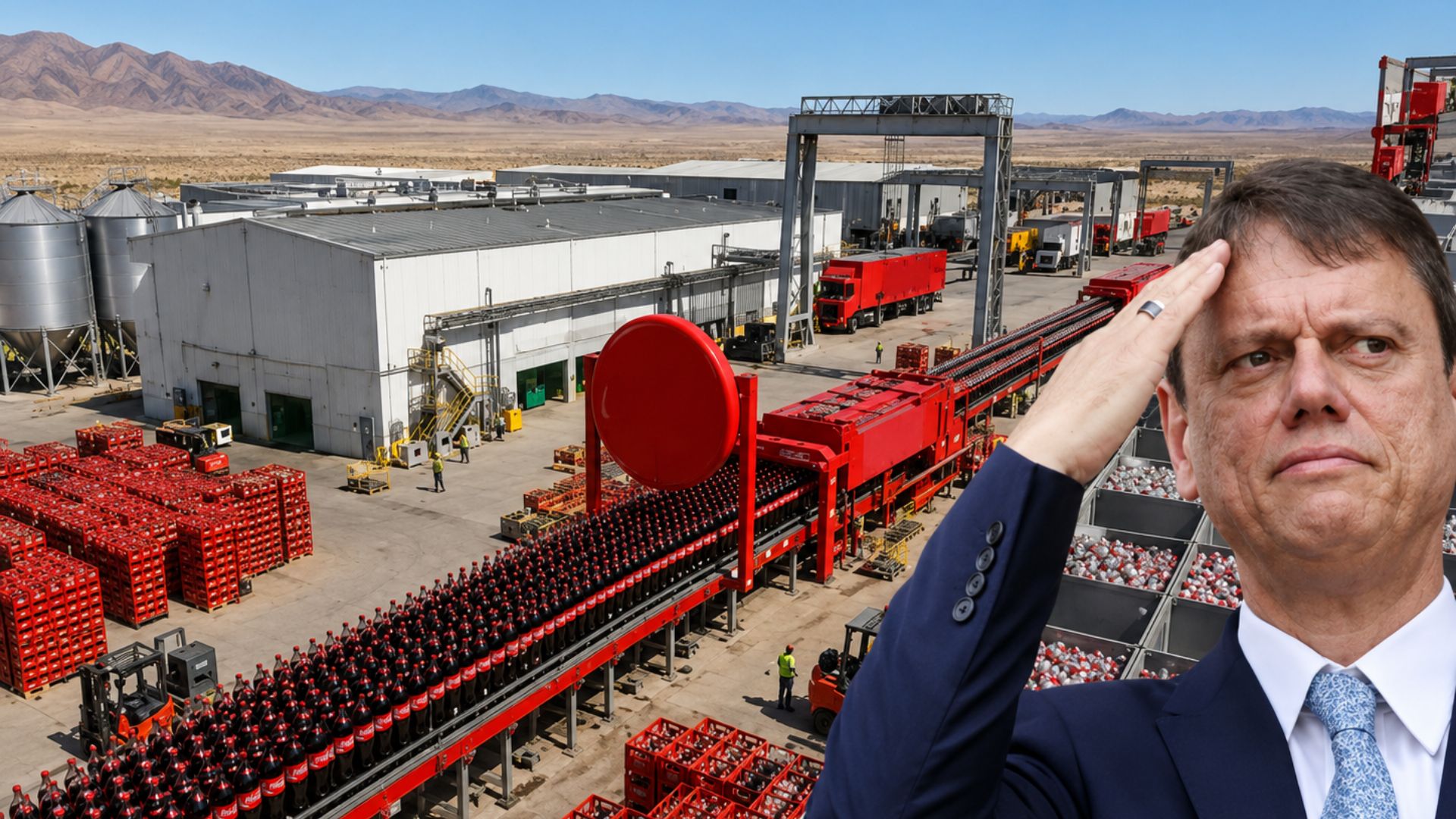

Located in the interior of São Paulo, a unit operated by Coca-Cola FEMSA houses one of the largest industrial structures in the beverage sector, with annual production in the billions, significant logistical weight in Brazil, and data confirmed by public sources linked to the Jundiaí City Hall and the Coca-Cola System.
According to the Jundiaí City Hall, the largest Coca-Cola system factory in the world by production volume is located in the interior of São Paulo and has become a strategic piece for the brand’s operation in Brazil.
Located in Jundiaí and operated by Coca-Cola FEMSA Brazil since 2003, the unit occupies about 190 thousand square meters and produces approximately 2 billion liters of beverages per year, according to data released by the municipal administration.
The same source reports that the plant accounts for about 30% of the brand’s national production, has 16 bottling lines, works with 168 flavors, and supplies 13 distribution centers.
-
15-Year-Old Entrepreneur Malu Lira Publishes 20 Children’s Books on Financial Education, Earns $500,000, and Expands Her Project to the Amazon Rainforest

-
Entrepreneur Turns Rio Cemetery Canteen into a Successful Snack Chain Generating $4.9 Million Annually and Expanding to Metro Stations

-
Rare fox feared “extinct” found alive on Caribbean island after over two decades without official sightings

-
21-Year-Old Brazilian Student Turns Homemade Popsicle Hobby into $100,000-a-Month Business



The size of the operation helps explain why Jundiaí was chosen as one of the company’s main industrial hubs in the country.
Located less than 60 kilometers from the capital of São Paulo, the city has direct access to the state’s main highways, a factor considered decisive for accelerating logistical distribution to large consumer markets, including the São Paulo Metropolitan Region.
Although Coca-Cola is present in more than 200 countries, the company operates on a franchise-based bottling model.

According to The Coca-Cola Company, the global system includes more than 200 bottling partners and about 950 production facilities worldwide.
In practice, the multinational produces concentrates, beverage bases, and syrups, which are sold to independent partners responsible for the local manufacture, packaging, distribution, and sale of the products.
In Brazil, the Coca-Cola Brazil institutional page states that the Coca-Cola Brazil System is made up of seven manufacturing groups, in addition to Leão Alimentos e Bebidas and Verde Campo.
The same page indicates that 37 factories make up the Coca-Cola Brazil System, a number that replaces previous references to 33 units found in recent statements and reports.
Coca-Cola production undergoes water and bottling control
Although the exact formula continues to be treated as an industrial secret, part of the manufacturing process is known and begins with water.
Coca-Cola states, on its frequently asked questions page about ingredients, that the drink is mainly composed of carbonated water, sugar, caramel color, phosphoric acid, natural flavors, and caffeine.
In Brazil, information from Coca-Cola System manufacturers also lists carbonated water, sugar, kola nut extract, caffeine, caramel color IV, phosphoric acid acidulant, and natural flavor as ingredients of the original version.
The water used in industrial lines undergoes treatment stages before proceeding to bottling, a common procedure in beverage factories that depend on strict standardization to maintain quality and safety.
After treatment, the water receives the concentrate and other ingredients according to standards defined by the company and its industrial partners.
This standardization allows the soft drink to maintain similar characteristics in different markets, regardless of the place of manufacture.
Carbon dioxide is one of the most sensitive components of the process, as it directly influences the texture and taste perception of the soft drink.
The packages are filled and sealed in automated industrial lines, reducing the risk of contamination and ensuring that the product is distributed within the standards defined by the operation.
Automation sustains the scale of the factory in Jundiaí
Industrial automation is one of the factors that help explain the production capacity of the Jundiaí unit.
The Jundiaí City Hall confirms that the factory has 16 bottling lines, a structure that allows the production of different beverage formats and supplies distribution centers connected to the consumer market.

Public sources consulted do not detail, in official documents, the failure rate identified by sensors in the packages.
For this reason, the data on failures below 1% was not maintained as confirmed information in the body of the article.
Even so, large-scale industrial operation depends on volume control, visual inspection, temperature, pressure, and filling speed to reduce losses and maintain regularity in the lines.
In factories of this size, small failures can cause raw material waste, operational interruptions, and logistical delays.
Therefore, automated inspection and monitoring systems are usually an essential part of quality control in modern beverage lines.
Why Jundiaí became a strategic piece for Coca-Cola
The choice of Jundiaí involved logistical factors, water availability, and industrial expansion capacity.
The city is positioned between important consumer centers in the Southeast and has quick connections to highways such as Anhanguera and Bandeirantes.
The factory was established in a region with consolidated industrial infrastructure, as well as easy access to São Paulo and nearby markets.
Over the years, the presence of the unit has also driven private investments and increased the generation of direct and indirect jobs in the region.
According to the Jundiaí City Hall, the plant has approximately 1,700 employees.
The PCJ Consortium reports that the unit has more than 1,300 direct employees, a difference explained by the approach each source takes in considering direct workers and expanded operational structure.
The growth of the operation helped consolidate Jundiaí as one of the main industrial hubs in the interior of São Paulo.
In addition to beverage production, the unit drives sectors related to transportation, industrial maintenance, packaging, storage, and distribution.
Water management became a central indicator of the operation
Another factor highlighted by public sources is the water management of the factory.
According to the PCJ Consortium, the Jundiaí unit reduced the volume of water used per liter of beverage produced by about 80% since the start of its operations in 1993.
Between 2023 and 2024, the rate dropped from 1.34 to 1.32 liters of water per liter of beverage, representing an approximate annual saving of 700 million liters.
In August 2025, the factory received the international Alliance for Water Stewardship certification, recognition aimed at sustainable water resource management practices.
The PCJ Consortium reported that the unit was the second of the company in Brazil to receive the AWS certification.
Coca-Cola FEMSA also reported that nine plants in Latin America obtained the AWS certification between 2024 and 2025, as part of a regional strategy for efficiency, access, and water replenishment.
Origin of Coca-Cola and global expansion of the brand


Coca-Cola was created in 1886 in the United States by pharmacist John Pemberton.
According to The Coca-Cola Company, the first glass of the beverage was served on May 8 of that year, at Jacobs’ Pharmacy in Atlanta.
Initially, the product was sold in small portions and prepared from a syrup mixed with carbonated water.
The name Coca-Cola and the classic visual identity were developed by Frank Mason Robinson, Pemberton’s accountant, according to the company’s historical records.
Decades later, the brand consolidated its expansion under the leadership of Asa Griggs Candler, a businessman associated with the commercial structuring that allowed the beverage’s presence to grow in the United States and other markets.
The partnership model with bottlers helped the company grow without relying solely on a single central factory.
Currently, the company reports that customers and partners sell about 2.2 billion servings of its products per day worldwide.
The global expansion was also accompanied by advertising campaigns, a diversified portfolio, and adaptation to new consumption habits.
In Brazil, sugar-free and low-calorie versions became part of the brand’s strategy amid the advancement of discussions about food, sugar consumption, and nutritional choices.
The Jundiaí unit remains at the center of this operation by combining industrial scale, logistical position, and water efficiency indicators recognized by public sources.
With an annual production close to 2 billion liters, the São Paulo factory continues to be a reference for productive capacity within the Coca-Cola system worldwide.