






 Portuguese
  Spanish
  2 min of reading
  0 comments


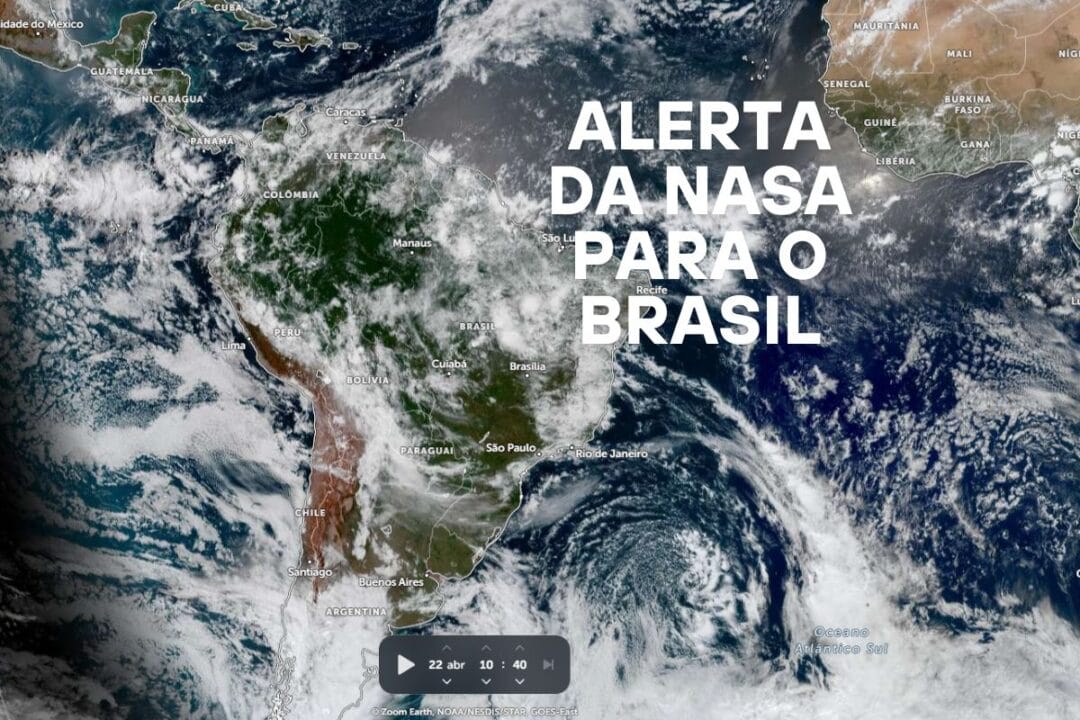
Midwest, Northeast, North, and Southeast Are Among the Most Vulnerable Regions; Understand the Criteria and Health Risks.
A NASA study revealed that parts of Brazil may become uninhabitable by 2073 due to extreme heat. Combining temperature and humidity, regions such as Midwest and Northeast will face risks of thermal collapse. Learn which areas are threatened and how heat can affect human health.
The NASA research points out that areas in the Midwest, Northeast, North, and Southeast of Brazil are vulnerable to uninhabitable conditions in the next 50 years. The criterion used goes beyond temperature: it considers the combination of heat and humidity, called wet-bulb temperature, which amplifies the effects on the human body.
Understand the Wet-Bulb Temperature Criterion
The wet-bulb temperature is measured with a thermometer covered by a wet cloth. Values above 35°C make survival practically impossible. In Brazil, regions with high humidity and heat above 37°C (with 70% humidity) may reach this threshold, posing a risk of death even in the shade.
-
Who has the highest IQ: the oldest child, the middle child, or the youngest? A study with 240,000 people published in Science reveals a difference of up to 3.2 points and indicates which position in the family tends to have an advantage.

-
A YouTuber spent almost a year transforming the failed invention into an autonomous flying umbrella: the drone uses a camera and Raspberry Pi to follow the person and protect them from the rain on its own.
-
The first trillionaire in history, Elon Musk notices Brazil and its internet, Starlink, which works even in the middle of nowhere, emerges for just R$ 600, fits in a backpack, operates via satellites, and offers dual-band Wi-Fi with WPA3 security.
-
Heir bought 23,000 degraded acres in the Scottish Highlands, fenced the area, planted nearly 1 million native trees, and transformed empty mountains into a forest officially recognized after meeting 15 evaluation criteria over 20 years.


Diseases and Risk of Organ Failure
Extreme heat is linked to 27 lethal disorders, including:
- Organ failure (when body temperature exceeds 42°C);
- Worsening of cardiovascular and respiratory diseases;
- Brain damage.
Between 2000 and 2019, heat caused 489,000 deaths/year worldwide, according to WHO and WMO – an underreported number.
Beyond Brazil
The study highlights that South Asia, the Persian Gulf, parts of China, and Southeast Asia may also become uninhabitable. The wet-bulb temperature criterion was applied globally, using satellite images and climate projections.
How to Mitigate the Effects? Urgent Measures Highlighted by the NASA Study
To avoid this scenario, NASA recommends:
- Reducing greenhouse gas emissions;
- Combating deforestation and wildfires;
- Implementing early warning systems for heatwaves;
- Promoting sustainable consumption of natural resources.
The NASA study is a warning for immediate actions. Extreme heat is not just an environmental crisis but a public health threat. Without global measures, entire regions of Brazil and the world may become inhospitable in decades.





Be the first to react!