





 Portuguese
  English
  Spanish
  2 min of reading
  0 comments


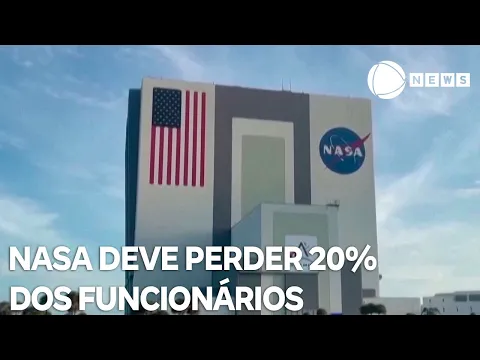
NASA confirmed that 3 thousand employees joined the voluntary separation program, as part of the federal personnel reduction plan authorized by the Donald Trump government. With the measure, the total number of agency employees fell from 18 thousand to just over 14 thousand, representing a reduction of more than 20% since the start of the second presidential term.
The second phase of the federal voluntary separation program was responsible for more than 3 thousand exits just in 2025, while another 870 had already occurred in the first round. The reduction takes place gradually, without an immediate interruption of the agency’s essential activities.
Despite the significant personnel cuts, NASA will continue to invest in space exploration programs. Manned missions to the Moon and, in the future, to Mars, remain a priority for the White House, which considers these objectives strategic for maintaining the United States’ leadership in the sector.

According to an official statement, the agency seeks to become more agile and efficient, preserving scientific and operational capacity even with fewer human and financial resources.
-
New credit for Uber, 99, and taxi drivers can pave the way for car ownership, reduce the burden of car rental costs in their budget, and change the math for those who make a living from traffic every day.

-
Canadians are disappearing from the United States: The US feels the absence of Canada financially, while hotels, casinos, and tourist destinations try to attract visitors back with promotions.
-
WEG from Jaraguá do Sul was awarded in New York for strengthening relations between Brazil and the United States, employs over 2,250 people in American territory, operates 10 factories and 9 distribution centers in the country, and boosts the energy infrastructure of the U.S. with locally manufactured products and solutions.

-
Unclaimed funds will enter a new phase this Tuesday: banks must send funds to the government, while R$ 10.5 billion in idle funds could help finance Desenrola 2.0 and ensure debt renegotiation within the financial system.




Cuts in Science and Climate to Focus on Exploration
The budget sent by the Trump administration to Congress proposes drastic cuts in climate and scientific research programs, while reallocating funds for space exploration projects. This directive included the removal of mentions of climate change from institutional pages and the limitation of resources for studies on global warming.
In addition, officials linked to the administration have been attempting to revoke the 2009 risk declaration that classified greenhouse gases as a public health threat, generating criticism from part of the scientific community.
Even so, NASA reported that the safety of operations and the pursuit of innovation remain among the agency’s priorities, despite the reduced number of employees.
Race with China and Uncertainty in Leadership
According to the White House, the goal of the current direction is to ensure that the U.S. surpasses China in the space race, with the aim of bringing astronauts back to the Moon and achieving the first human landing on Mars before the end of the decade. China plans a manned mission to Earth’s natural satellite by 2030.
The agency remains under interim leadership, after the Senate rejected the nomination of Jared Isaacman, an aerospace businessman nominated by Trump and supported by Elon Musk. Isaacman, close to SpaceX, was seen as a key player to integrate NASA with private companies.
Information was released by Estadão Conteúdo and reported on platforms such as InfoMoney, in addition to official statements from NASA itself.









-

1 person reacted to this.