Portuguese
  Spanish


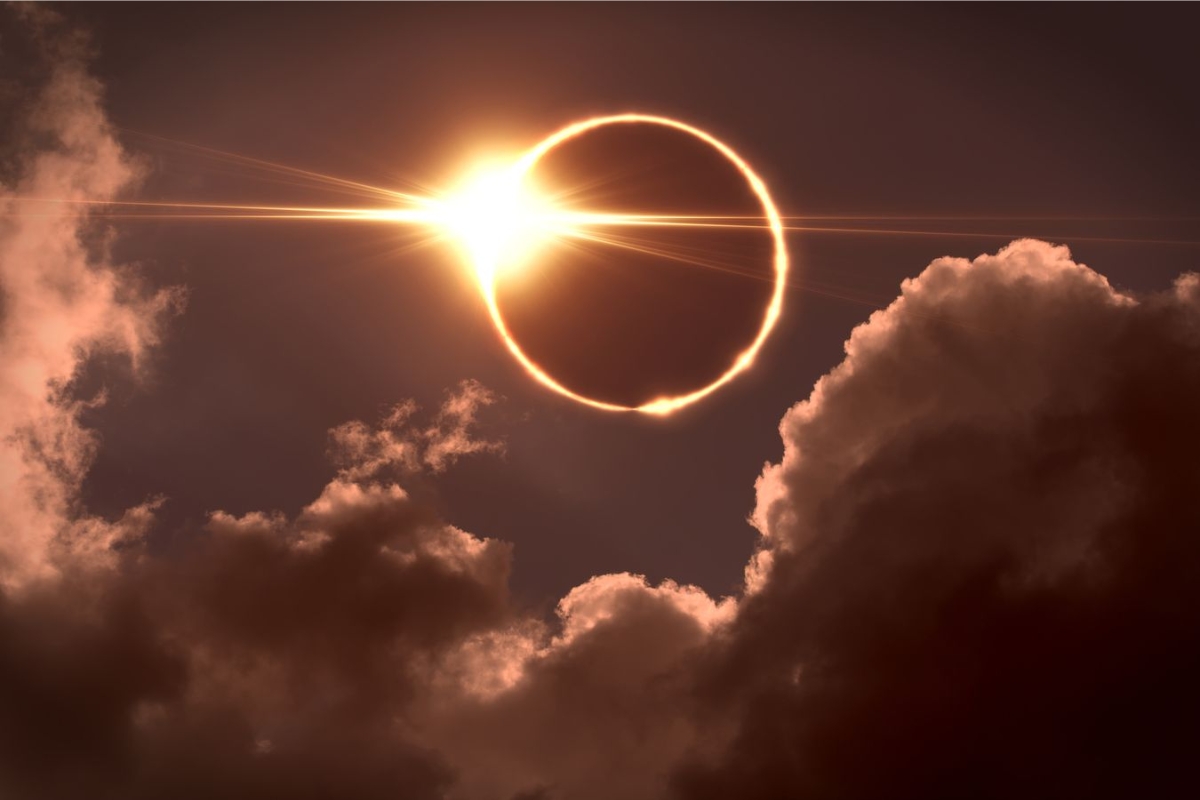

From April to December, the sky calendar still reserves comet, Blue Moon, meteor showers, eclipses, and bright full moons. The final stretch of 2026 concentrates dates that can renew the interest of those who observe space
April has flipped the switch on the sky calendar. The most talked-about events at the beginning of the year are already behind us, but the remaining sequence still includes comet, meteor showers, total solar eclipse, and supermoons capable of holding attention until December.
From the second half of April to the end of 2026, the schedule continues with 10 relevant phenomena already marked on specific dates. This cut now becomes more useful for the reader because it focuses only on what can still come into the radar in the coming months.
April still reserves the comet C/2025 R3 and the peak of the Lírids between the 21st and 22nd
The final stretch of April holds an important block. The C/2025 R3 has April 17 as the best observation chance, reaches its closest point to Earth on April 27, and still shares space with the peak of the Lírids between April 21 and 22.
-
China Develops Custom 140-Ton Electric Mining Truck with 770 kWh Swappable Battery, Deploys 290 Units in Xinjiang’s Largest Zinc Mine

-
Meta to Launch Arena, a New Prediction App Targeting 3.56 Billion Users, Competing with Polymarket and Kalshi

-
Scientist Challenges Famous Human Evolution Theory, Argues Homo Sapiens Evolved Gradually Over Thousands of Years
-
15-Year-Old American Builds Ocean Generator with PVC Pipe and 3D-Printed Propeller for $12, Wins National Prize, Presents at White House, and Makes Forbes 30 Under 30 List




This part of the month concentrates quick action and direct impact for those watching the sky. The comet requires binoculars or telescope and tends to gain more strength on the radar of the southern hemisphere in early May, while the Lírids enter as the most popular window in April to observe bright trails during the night.

May closes with Blue Moon and June brings Venus and Jupiter closer in one of the brightest encounters of the year
After April, the calendar slows down for a short time and gains strength again at the end of May. The day May 31 delivers the so-called Blue Moon, a phenomenon that marks the second full moon of the same month and pushes 2026 to a total of 13 full moons.
Following this, the days June 8 and 9 gather Venus and Jupiter in a strong visual approach in the sky. The practical reading is simple: it’s a bright encounter, easy to notice and does not require equipment to catch attention.
August brings total solar eclipse on the 12th, Perseids in the same week, and partial lunar eclipse at the end of the month
August concentrates the heaviest part of the year. According to NASA, the month brings the total solar eclipse on August 12, the peak of the Perseids between August 12 and 13, and also ends with a partial lunar eclipse on August 27 and 28.
The total solar eclipse appears with its main path over Greenland, Iceland, Spain, Russia, and a small area of Portugal, while the partial lunar eclipse reaches the Americas, Europe, Africa, and the west of Asia. In the midst of this block, the Perseids arrive with the support of the New Moon, a scenario that greatly improves visibility.

November and December push 2026 to close with supermoons on November 24 and December 24
In the final stretch of the year, the calendar swaps the tension of eclipses for a more visual conclusion. The upcoming supermoons are already marked for November 24 and December 24, two dates that reposition the full Moon as the protagonist in the closing of 2026.
The importance of this period goes beyond appearance. When the full Moon coincides with the phase of greatest proximity to the Earth, it can appear larger and brighter, in addition to reinforcing effects such as higher tides than normal.
With April already underway, the balance of 2026 changes clearly. The focus shifts from the promise of a full year to the part of the calendar that still delivers concrete phenomena between April and December.
For those who follow the sky, what remains is not little. The year still preserves 10 strong dates with the potential to mobilize observers, renew the search for visibility windows, and keep space at the center of conversation until the end of December.