Portuguese
  Spanish


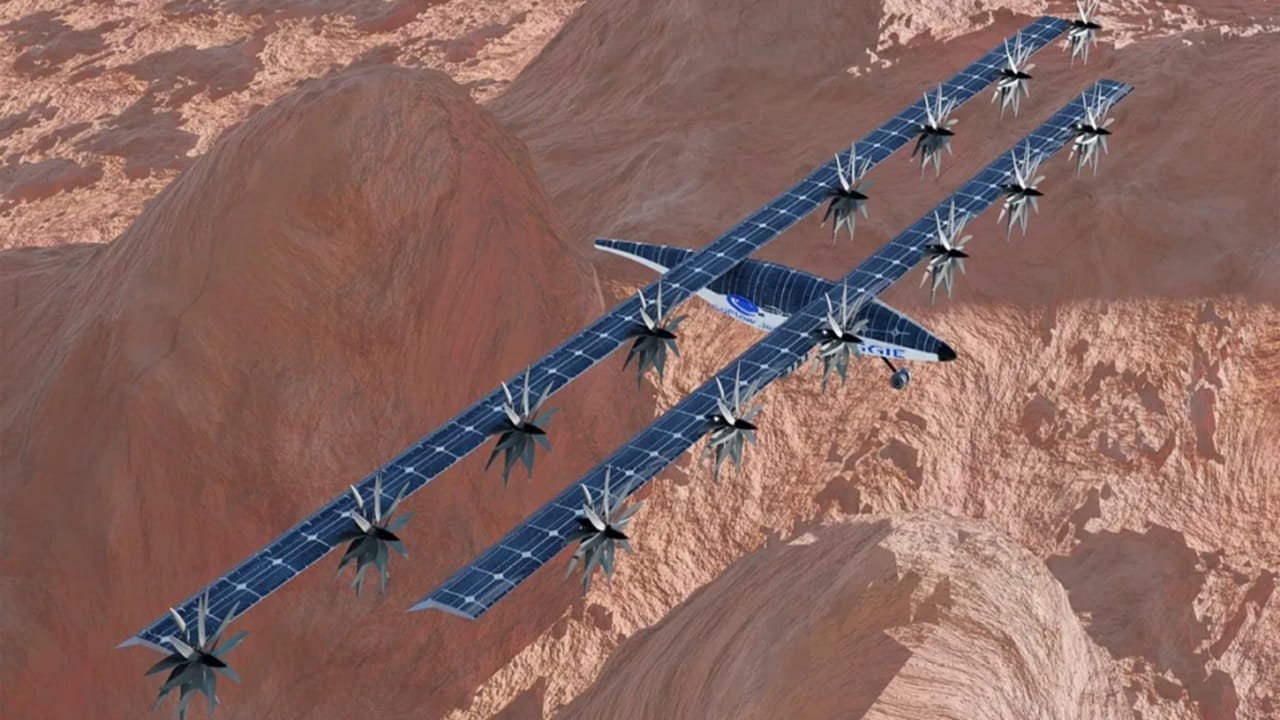

The Future of Space Exploration: MAGGIE, The NASA Solar-Powered Electric Airplane
According to the website Engenharia Hoje, following the historic success of the Ingenuity helicopter on Mars, NASA surprises the world with an ambitious project: a solar-powered electric airplane called MAGGIE. This technological advance promises to take Mars exploration to new heights, marking an exciting chapter in the space journey.
Innovative Space Mission: Exploring Mars with the Solar Airplane MAGGIE
Developed by the aerospace company Coflow Jet, LLC, MAGGIE is a fixed-wing airplane, powered exclusively by solar energy. Designed to conduct atmospheric measurements on a global scale on Mars, the airplane aims to unveil the mysteries of the geophysics and atmospheric chemistry of the Red Planet. With an impressive range, MAGGIE seeks evidence of past or present life on Mars, promising a valuable contribution to planetary science.
VTOL Technology and Terrestrial Potential: Innovations of MAGGIE in Space and Air Exploration on Earth
MAGGIE not only redefines space exploration but also introduces VTOL technology, allowing vertical takeoff and landing without the need for a runway. This feature not only optimizes missions on Mars but also opens doors for the enhancement of VTOL aircraft here on Earth. With a cruise Mach number of 0.25 and the unique CoFlow Jet (CFJ) technology, MAGGIE is ready to navigate the low-density Martian atmosphere, revealing new horizons in space research.
-
4,000-Year-Old Child’s Skull Unveils Ancient Burial in 7,500-Year-Old Norwegian Rock Shelter, Impressing Archaeologists

-
Norway Defeats Brazil in World Cup but Invests Billions to Preserve the Amazon, Strengthens Amazon Fund, and Joins Brazil in Leading Global Effort Against Tropical Deforestation

-
Denmark Constructs Its Largest Breakwater with 175 Concrete Blocks and World’s Largest Excavator to Combat 8-Meter Waves, at a Cost of $156 Million

-
Swedish Company Develops Offshore Wind Turbine That Eliminates the Need for Cranes and Simplifies Maintenance



This technological advance represents not only a leap in space exploration but also a promising innovation for solar-powered electric aircraft.MAGGIE is not just an airplane; it is a symbol of the limitless potential of aerospace engineering and the ongoing quest for cosmic discoveries.