






 Portuguese
  Spanish
  3 min of reading
  1 comment


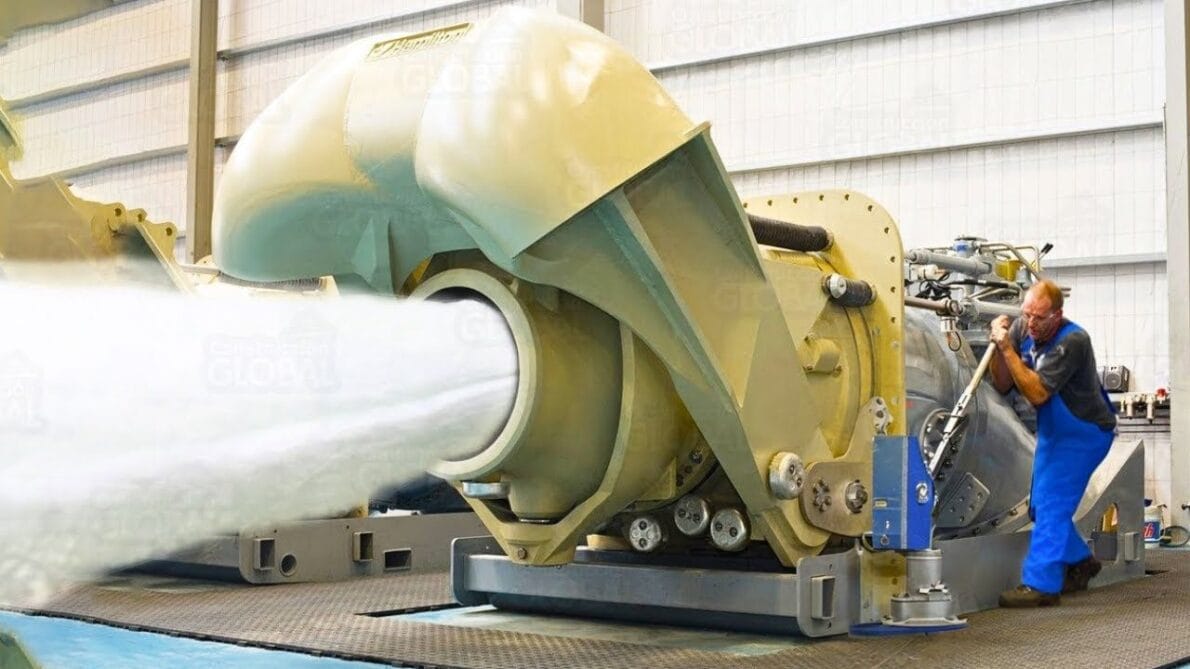

Did You Know That the Largest Boat Engines in the World Undergo Rigorous Testing Before Being Used at Sea? Let’s Explore How Nuclear and Diesel Engines Are Tested to Ensure Their Safe and Efficient Operation.
The construction and operation of the largest boat engines in the world involve a series of rigorous tests to ensure they operate correctly in extreme marine conditions. These tests are essential to ensure the efficiency and safety of the engines.
Marine diesel engines, for example, are comparable in driving force to automobile engines, but are immensely larger, weighing as much as 13 blue whales combined. These ocean giants are crucial for transporting goods around the world.
Manufacturer Acceptance Testing Is the First Step
Here, the engines undergo a series of bench tests to verify their power, fuel consumption, stability, and durability. These tests simulate various operational conditions to ensure that the engine operates reliably.
-
Without a mansion, without high investment, and without a traditional classroom, a teacher living in a 22 m² house taught students to build a 9 m² studio apartment with the equivalent of R$10,000.

-
Without her own home and pressured by rent, a 25-year-old bought a small 15-meter boat, gradually renovated the interior by herself, transformed the interior with paint, new flooring, a larger bathroom, and started living on the canals, paying much less per month.
-
Long before sustainable construction became a trend, China built earthen fortresses with multiple floors, a central courtyard, and the capacity to house up to 800 people living in a community.
-
He got tired of renting, bought an old school bus, removed the seats, modified the roof, reinforced everything with steel, and created a two-story mobile home that looks small on the outside but houses two bedrooms inside.




After the bench tests, the engines proceed to sea trials, where they are installed on a boat and tested in real conditions. These tests are essential to verify the engine’s performance in the marine environment. Tests include assessments of speed, fuel consumption, stability, and response to adverse conditions.
The History of Marine Engines Has Evolved a Lot Since Steam Engines to Modern Technologies
Nuclear engines, for example, are mainly used in aircraft carriers and submarines due to their ability to generate large amounts of energy. These engines utilize nuclear reactors to heat water and produce steam, which drives the ship’s propellers. Despite their efficiency, nuclear engines are limited to larger vessels due to safety and logistics challenges.
On the other hand, diesel engines have become the predominant option for most ships due to their efficiency, reliability, and ease of maintenance. These engines are widely used across various vessels, from small recreational boats to large cargo ships.
One of the Largest Boat Engines in the World Was Built by the Japanese Company AOE Works
This colossus weighs 2,300 tons and has 14 cylinders capable of producing 115,000 horsepower. Inside the crankcase of this engine, a person could stand and climb a ladder to make repairs, showcasing the magnitude of this engine.
These engines share similarities with conventional engines, but on a much larger scale. They have a crankshaft that drives a gigantic propeller at the rear of the ship. Most ships in the world are powered by the action of these colossal propellers, which can take various forms, from conventional propellers to innovative propulsion systems.
The Fuel Consumption of These Engines Is Impressive
A tanker can consume approximately 250 tons of fuel per day to keep its engines running. This fuel, known as heavy fuel oil, needs to be heated before being injected into the engines to ensure efficient combustion.
Before a ship is considered ready to sail, it must undergo a series of stability tests. These tests include measurements of draft, main engine power, and anchoring tests. Stability is crucial to ensure that the ship can withstand adverse sea conditions without issues.









Muito bom.
Gratidão pela postagem da matéria ; assunto técnico curioso, interessante