






 Portuguese
  Spanish


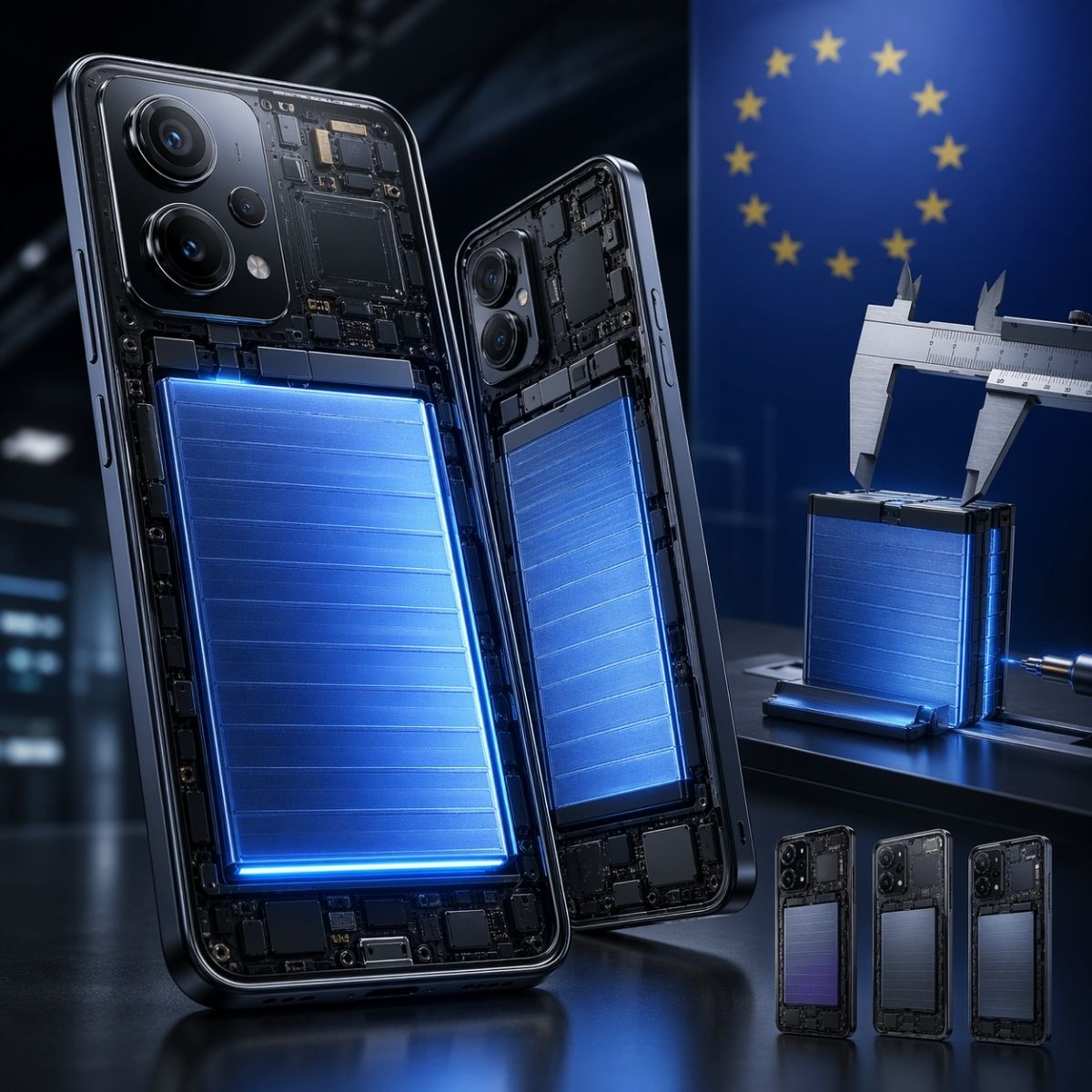


The Redmi Note 17 Pro Max appeared in Xiaomi files with a 10,000 mAh battery in China and 9,210 mAh in the global version, a 200 MP Samsung camera, and a Dimensity 7500 processor, a record autonomy that required adjustment to meet European requirements.
The Redmi Note 17 Pro Max emerged in a Mi Code leak, Xiaomi’s internal development repository, with specifications that position the model as the most ambitious in the Note line in terms of battery, camera, and autonomy. The device features a 10,000 mAh cell in the variant destined for the Chinese market, a capacity that had to be reduced to 9,210 mAh in the global version because European Union regulations impose strict limits on energy density, thermal control, and fast charging safety. The information was shared on the X social network by informant Kacper Skrzypek, who identified the internal codename “chicago” and model code Q16U in the manufacturer’s files.
Even with the reduction, the 9,210 mAh of the global version of the Redmi Note 17 Pro Max positions the smartphone at an autonomy level that few competitors can match in the mid-range segment. The 100 W fast charging accompanies both versions, which means that even a battery of this magnitude can be recharged in a competitive time, eliminating the main objection consumers usually raise against large-capacity cells: the time spent plugged in. The launch of the Redmi Note 17 Pro Max is scheduled for June or July, but Xiaomi has not yet officially confirmed any of the leaked specifications.
What changed in the Redmi Note 17 Pro Max processor compared to its predecessor

The Mi Code identifies the processor as MediaTek Dimensity 7500, registered under code MT6881, a significant change from the Redmi Note 15 Pro+ which used Qualcomm’s Snapdragon 7s Gen 4. The change in chipset supplier indicates that Xiaomi opted for a more aggressive pricing strategy in the premium mid-range segment, as MediaTek processors traditionally cost less for manufacturers than Qualcomm equivalents, a saving that can be passed on to the end consumer in the price of the Redmi Note 17 Pro Max.
-
After 79 Attempts, Students Create Corn Waste Bioplastic That Turns into Fertilizer and Grows Plants When Buried

-
Brazilian Public School Students Win $5,000 at World’s Largest Science Fair with Innovative Water Filter Made from Local Charcoal

-
Xiaomi Launches 17T in Brazil with 120x Zoom, 6,500 mAh Battery, and Leica Cameras to Rival iPhone

-
Young Innovator Develops Low-Cost Synthetic Skin Using Buriti Oil to Aid Burn Victims, Gains International Recognition in the U.S.


The choice of the Dimensity 7500 does not mean a loss of performance. MediaTek’s 7000 series chipsets have evolved considerably in recent cycles and deliver energy efficiency that complements a 9,210 mAh battery well, a combination that can result in days of use without needing to recharge for moderate consumption profiles. The integration between the processor and the power cell is as relevant as the raw capacity, and the Redmi Note 17 Pro Max appears to have been designed to maximize this synergy.
The 200 MP camera and what the Redmi Note 17 Pro Max gains and loses

The photographic system of the Redmi Note 17 Pro Max represents a strategic change from its predecessor. The model abandons the triple camera configuration in favor of a dual setup with superior quality sensors: a 200-megapixel Samsung ISOCELL HP5 main camera accompanied by an 8 MP OmniVision ultra-wide-angle, plus a 32 MP Samsung front camera. The 200 MP resolution on the main camera is the highlight and allows for generous cropping without loss of sharpness, a valuable feature for those who use digital zoom daily.
What the Redmi Note 17 Pro Max loses in this transition is the dedicated telephoto lens. The absence of optical zoom in a model carrying the “Pro Max” designation may frustrate consumers who expect complete versatility in the camera system, especially when rivals in the same price range offer at least 2x telephoto. Xiaomi seems to have prioritized quality in the main sensor and record autonomy instead of distributing the budget among three sensors, a bet that benefits those who photograph more than those who need optical reach.
Why the Redmi Note 17 Pro Max battery was reduced for the global version
The 790 mAh difference between the Chinese and global versions is not a Xiaomi whim. European Union regulations on electronic device batteries establish parameters for energy density, thermal behavior during fast charging, and safety in extreme conditions that ultra-high-capacity cells do not always meet without design modifications. To obtain the necessary certification for sale in the European market without completely redesigning the hardware, the manufacturer chose to use a slightly smaller cell that maintains regulatory compliance.
The decision reveals the dilemma that Chinese manufacturers face when launching global products. In China, where rules allow greater flexibility, the Redmi Note 17 Pro Max can deliver its full 10,000 mAh, but each market outside the country imposes requirements that force adaptations that consumers do not always understand. Still, the 9,210 mAh of the international version widely surpasses the average for the mid-range segment, where 5,000 mAh to 6,000 mAh batteries are still standard, confirming that even the “reduced” version of the Redmi Note 17 Pro Max offers exceptional battery life for its category.
What to expect from the Redmi Note 17 Pro Max when it launches
The 7-inch flat-design display positions the device at the upper limit of smartphone size, a format that favors media consumption and productivity but may be too large for those who prefer compact devices. The Redmi Note 17 Pro Max seems to directly target an audience that prioritizes battery, a generous screen, and a high-resolution camera above all other criteria, a consumer profile that is growing especially in emerging markets where the cell phone is the main internet access device and needs to last all day without charging. The “Pro Max” designation, which Xiaomi incorporated into the line last year, positions the model as a direct competitor to the nomenclature popularized by Apple, a strategy that seeks to associate the product with a premium standard at a mid-range price.
If the leaked specifications are confirmed, the Redmi Note 17 Pro Max will arrive on the market with concrete arguments to compete for the attention of those seeking maximum autonomy at the lowest possible price. A 9,210 mAh battery in the global version, a 200 MP camera, 100 W charging, and an efficient processor make up a package that no rival offers in the same range, and the only remaining question is the price Xiaomi will charge for all of this. If the price follows the tradition of the Note line, the mid-range market will need to readjust.
And you, would you buy a phone with a 9,210 mAh battery or do you think it’s overkill? Does the absence of a telephoto camera bother you? Leave your opinion in the comments.


