






 Portuguese
  Spanish
  3 min of reading
  0 comments


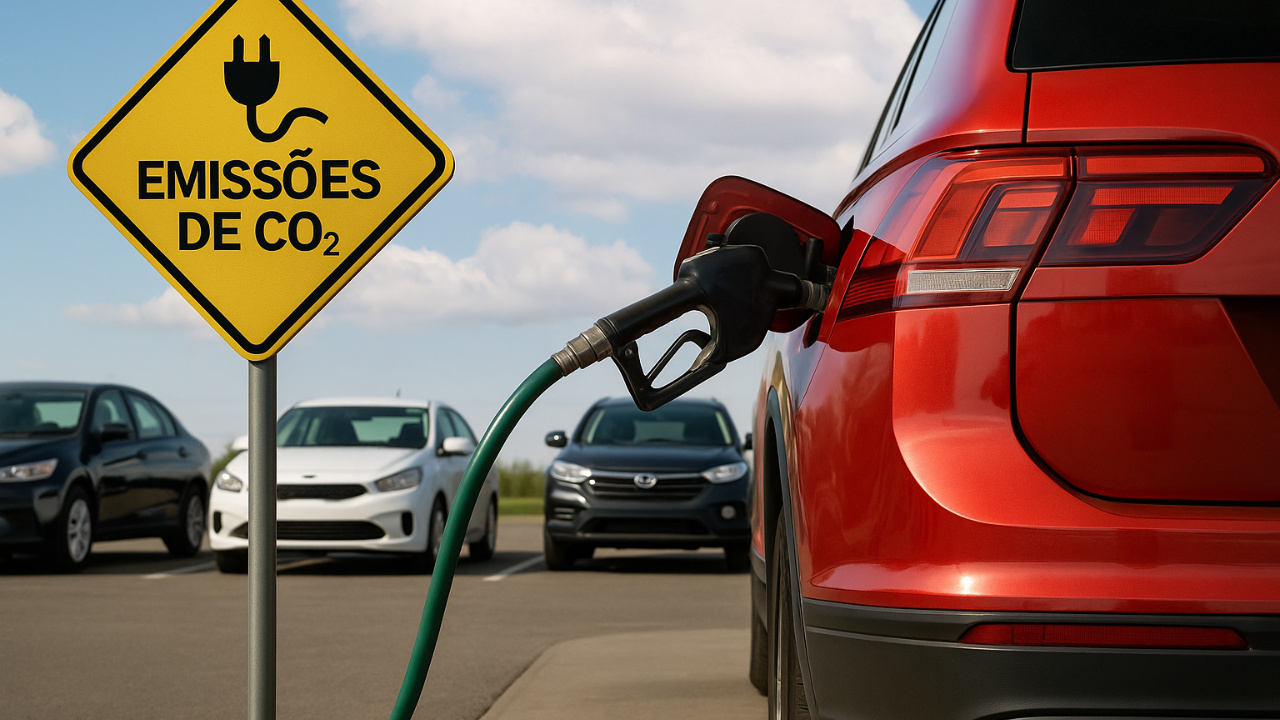
US Reduces NHTSA Fuel Economy Standards and Favors Gasoline Cars, Contradicting Automotive Electrification.
The United States has decided to profoundly alter the course of its automotive policy by revising fuel economy standards, favoring gasoline cars at a time when the world is moving towards automotive electrification.
The change, announced by the NHTSA, is taking place now at the federal level and impacts all automakers that will sell vehicles in the country between 2022 and 2031.
The agency proposes less stringent targets because it believes that higher car costs could deter consumers, which is why it chose to ease the rules.
-
Toyota sells a “Family Spin” cheaper than the Chevrolet Spin in Brazil, with 7 seats and a price starting from around R$ 70,000 in tax-free conversion; Avanza 2026 has a 1.3 or 1.5 engine, manual or CVT transmission, 205 mm ground clearance, and a family proposal that Brazilians don’t have in Indonesia.

-
Five used cars that can handle 100 km per day without breaking the bank, but experts warn that even the most durable ones may hide expensive repairs if they’ve gone years without proper maintenance.

-
Dodge Charger Daytona receives solid-state battery in real test and reignites the race for lighter electric cars, faster to charge and with more range.

-
Hyundai Staria Hybrid arrives as a “premium Kombi” hybrid with 7 or 9 seats, 1.6 turbo engine, 54 kW electric motor, spacious cabin, Relaxation seats, and a work van version with 3 or 6 seats in Europe.



This decision is surprising because it occurs precisely when governments and companies are ramping up efforts to reduce CO₂ emissions and increase the use of clean technologies. However, in the US, the government believes that softer standards could ease the entry price of vehicles and stimulate consumption.
New NHTSA Rule Reduces Targets and Favors Higher Fuel Consumption
The centerpiece of this shift is the deep revision of the previously established requirements.
According to the proposal, the NHTSA aggressively lowers the fuel economy standards set under the Biden administration.
From this change, the target now requires an average of only 34.5 miles per gallon by 2031, significantly distancing itself from the 50.4 miles per gallon that were stated in the original rule.
Thus, the US government opens the door for a larger presence of gasoline cars in dealerships, as heavier and less efficient vehicles can now easily meet the new targets.
On the other hand, the pressure to expand automotive electrification diminishes, precisely at a time when other countries are reinforcing climate commitments.
Understand How the Previous Plan Followed a Different Logic
To understand the impact of the change, it is necessary to observe the previously in-force plan. Under the Biden administration, the NHTSA projected a strict annual increase: 8% for 2024 and 2025 models and 10% for 2026.
This escalation forced a continuous reduction in fuel consumption, pressuring automakers to accelerate electric and hybrid projects.
Now, the estimated leap is between 0.25% and 0.5% per year, a drastic drop that completely alters the regulatory horizon.
Therefore, the softer trajectory makes the energy transition much less immediate, which tends to prolong the dominance of combustion-powered vehicles.
Cheaper Cars, but with Hidden Costs for the Driver
Although the easing alleviates industrial costs, it generates significant side effects.
The NHTSA itself recognizes that the new scheme could reduce the average initial price of each vehicle by about $900.
However, this relief quickly disappears in the consumer’s daily routine, as less efficient vehicles consume more fuel.
The direct impact appears at the gas station and also in the environment.
Government’s internal estimates indicated that the previous standard would allow for saving 64 billion gallons of gasoline and avoiding 659 million metric tons of CO₂ emissions, generating $35.2 billion in net benefits for drivers.
With the regulatory shift, a large part of these gains no longer exists, which amplifies criticism of the environmental setback.
Course Change Contrasts with Global Trend
Meanwhile, countries in Europe and Asia are accelerating plans to replace combustion cars with electric alternatives.
Thus, the American decision becomes an outlier in the global climate debate, especially because it occurs in the second largest automotive market in the world.
Experts assert that by favoring gasoline cars, the US may delay investments in innovation and hinder its automakers’ future competitiveness in the automotive electrification scenario.
Conversely, supporters of the change argue that consumers need more affordable options while the electric charging infrastructure still progresses slowly in the country.
Uncertain Future Amid Costs, Climate, and Politics
The debate over fuel economy standards is expected to remain intense in the coming years, especially because it involves domestic economy, industrial competitiveness, and climate goals.
At the center of this dispute, the NHTSA assumes a strategic role in determining the pace of market transformation.
For now, the new directive opens up a scenario in which gasoline cars continue to be predominant, while the reduction of CO₂ emissions may progress more slowly.
It remains to be seen how this choice will influence the US’s positioning in the global energy transition.





Be the first to react!