Portuguese
  Spanish


The humanoid robot Pemba, an adapted G1 model from Unitree, reached the summit of the Chimborazo volcano in Ecuador, at more than 6,000 meters of altitude, the historic expedition was made public in June 2026. The feat opens a project that dreams of taking the machine to Everest, although the team carried the robot on difficult stretches.
A humanoid robot has just made history by reaching the top of one of the highest mountains in the Americas. Nicknamed Pemba, it reached the summit of the Chimborazo volcano in Ecuador, at more than 6,000 meters of altitude, facing extreme cold and hostile terrain.
The feat, reported by the website Humanoids Daily and by the project’s creator, has an important asterisk: the 16-hour climb was not entirely autonomous. Pemba, a modified G1 model from Unitree, walked alone on the smoother sections but needed to be carried by the team on the steeper parts. The next target is none other than Everest.
The Chimborazo climb and the autonomy asterisk
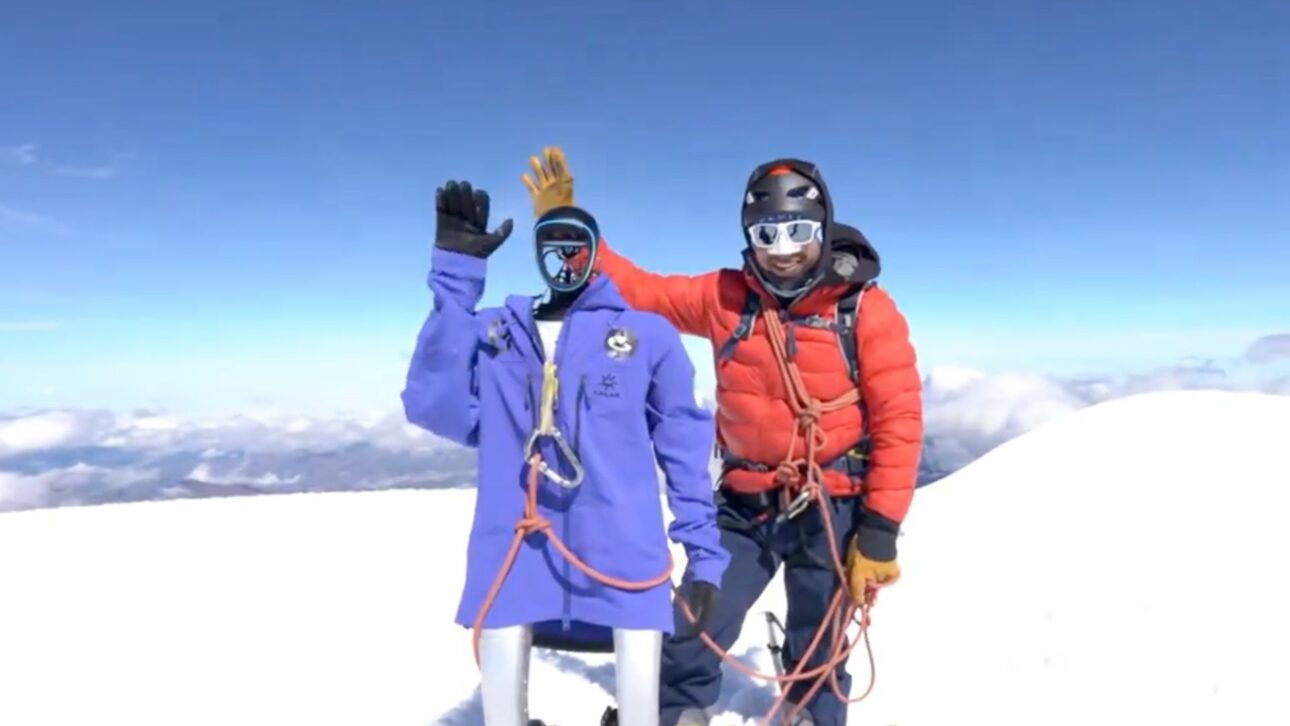
According to the project team, the humanoid robot walked independently only on sections with an incline of less than 30 degrees. On the steeper and technically difficult sections of the 16-hour climb to the summit of Chimborazo, the expedition members had to carry the machine. In other words, it was an important achievement, but still far from an autonomous climb from start to finish.
-
AI-powered toys that talk, recognize faces, and collect data face scrutiny from Brazilian government over children’s privacy concerns

-
4,000-Year-Old Child’s Skull Unveils Ancient Burial in 7,500-Year-Old Norwegian Rock Shelter, Impressing Archaeologists

-
Norway Defeats Brazil in World Cup but Invests Billions to Preserve the Amazon, Strengthens Amazon Fund, and Joins Brazil in Leading Global Effort Against Tropical Deforestation

-
Denmark Constructs Its Largest Breakwater with 175 Concrete Blocks and World’s Largest Excavator to Combat 8-Meter Waves, at a Cost of $156 Million



It is precisely this autonomy that the team wants to expand from now on, using reinforcement learning systems trained to tackle increasingly challenging terrains. The ascent is described as the first stage of an ambitious journey dubbed the Triple Crown, which may, in the future, lead the humanoid robot to attempt the most coveted point in mountaineering, amid the great altitude of the Himalayas.
Why send a humanoid robot to the wilderness
The project was not born to perform acrobatics. Led by engineer Pablo Berlanga Boemare, founder of Geologic Dome, who has already worked on conservation initiatives with the World Wildlife Fund, the WWF, in the Congo Basin and the Amazon, the humanoid robot was conceived to answer a practical question: can these machines become useful tools in remote and dangerous places for humans?
The logic is as follows: many protected areas rely on networks of cameras and fixed sensors to monitor wildlife, illegal logging, and poaching. The proposal is that a humanoid robot equipped with cameras, sensors, satellite connection, and artificial intelligence can patrol large areas alone, collecting data. The plan envisions future versions powered by solar energy and connected to networks like Starlink, offering a more flexible alternative to equipment fixed in one spot.
The challenge of extreme cold at high altitude
Bringing electronics to this type of environment is a very tough test. At high altitude, batteries and components face freezing temperatures, abrupt variations of heat and cold, and less efficient cooling. To overcome this, engineers created their own thermal control and ventilation systems, integrated into the protective clothing that the humanoid robot wears, almost like mountaineering clothes.
These adaptations originate from previous tests conducted in the cold. In the Altay region, China, the G1 from Unitree reportedly operated in temperatures as low as -47°C, taking more than 130,000 steps on the snow with the help of LiDAR sensors and depth cameras. It was this experience in severe weather that helped prepare the Unitree machine to face the altitude and cold of Chimborazo.
Everest is next, but it hits a legal snag
The team’s big dream lies in the Himalayas. According to The Kathmandu Post, Geologic Dome and the Fourteen Peaks Expedition, based in Nepal, proposed a 52-day research expedition to take a humanoid robot to Everest, testing the machine between Base Camp and altitudes close to 8,000 meters. The idea is to measure battery performance, locomotion, and joint stress, as well as evaluate future uses such as waste collection, glacier monitoring, and rescue operations.
The problem is bureaucratic. Nepal still does not have legislation regulating robotic expeditions on Everest, and according to Himal Gautam, director of the Department of Tourism, authorities have requested the creation of rules, fees, and guidelines for “non-human climbers” before allowing the mission.
For this reason, the attempt on Everest was postponed. Meanwhile, the feat on Chimborazo already shows that the next frontier for the humanoid robot may be in some of the most hostile terrains on the planet, and not just in factories and warehouses.
Seeing a humanoid robot face the cold and altitude of Chimborazo, even needing help in the most difficult sections, shows how far robotics wants to go.
Tell us in the comments if you believe that machines like Unitree will indeed conquer Everest and extreme environments.