Portuguese
  Spanish


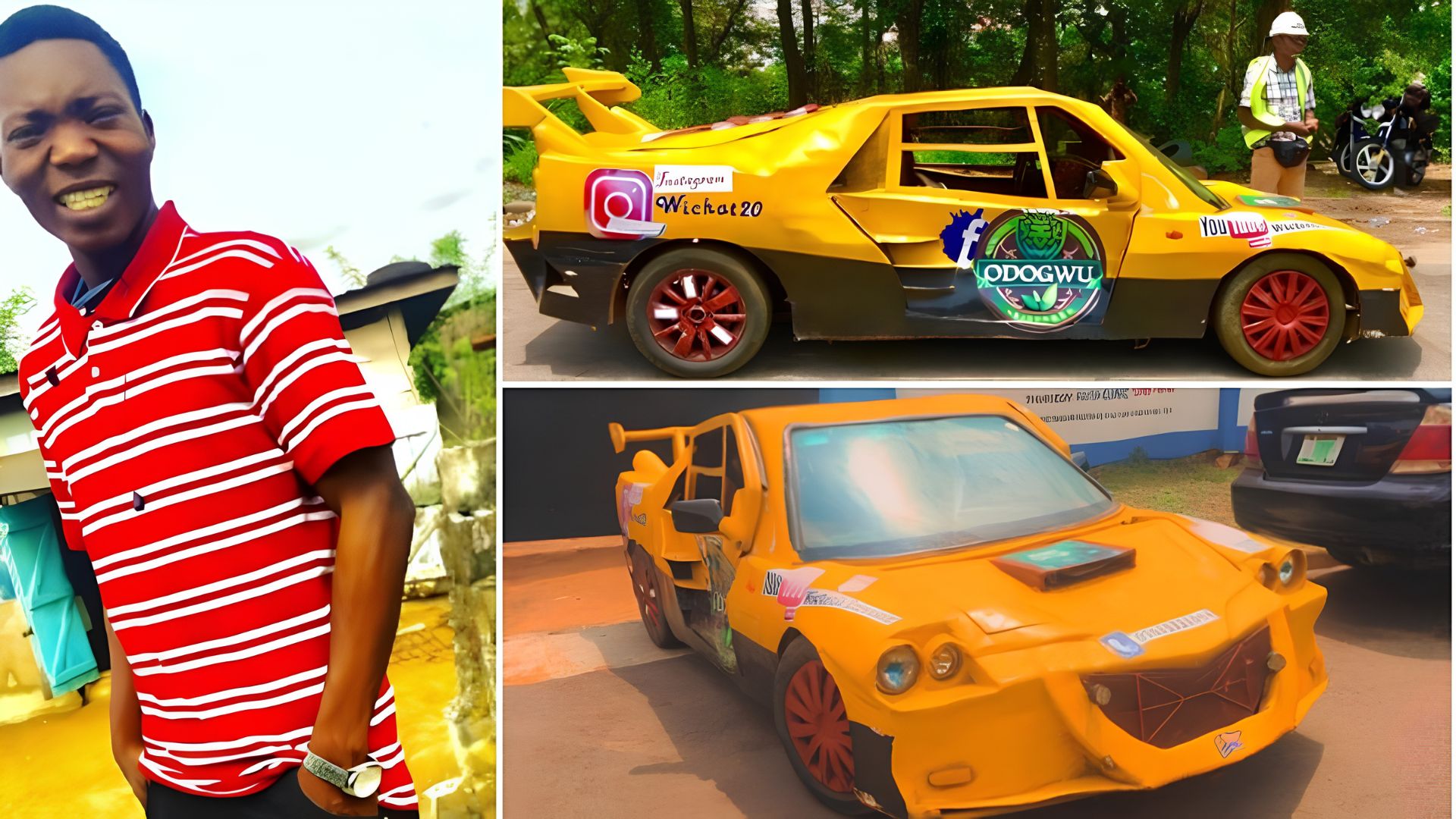

Ibitoye Olajide Michael built a car with scrap, cardboard, fiberglass, and a Volkswagen engine.
On October 19, 2020, Ibitoye Olajide Michael, from Ibadan, Nigeria, put on the streets an automotive prototype started in 2017 and built with metal scrap, cardboard, fiberglass, polyurethane foam, and a 1.6 Volkswagen engine. The project attracted attention for combining handcrafted manufacturing, material reuse, and functional assembly outside an industrial structure.
The case connects to a larger discussion about the Nigerian automotive industry. Although the country is trying to expand local vehicle production, the chain still faces strong dependence on imports, low supplier integration, and difficulty in transforming dispersed technical capacity into scale manufacturing.
Automotive prototype from Ibadan was built with scrap, cardboard, fiberglass, and a Volkswagen engine
According to TheCable, Michael began building the car in 2017 and used cardboard to define the shape of the body before applying fiberglass, as well as polyurethane foam and metal bars for the structure. He also stated that he made the vehicle’s upholstery and seats by himself.
-
Robots Tested in the Atlantic to Inspect Offshore Turbines Without Initial Human Deployment

-
USP Plant Demonstrates Hidden Value in Daily Organic Waste Disposal
-
Brazil Unveils Innovative Monitoring System to Prevent Abandonment of Public Works, Boosting Efficiency and Reducing Waste in Infrastructure Projects
-
AI Video Generator Automatically Creates Subtitles and Animated Captions




The same report states that the car had two axles, dual exhaust, and a fiberglass body. Meanwhile, Guardian Nigeria added that the prototype operated with rear-wheel drive, rear engine, and a 1.6 Volkswagen engine, an unusual configuration for a handcrafted project.


Car built with cardboard, fiberglass, polyurethane foam, and a Volkswagen engine became a symbol of technical improvisation
The materials used are one of the most impressive parts of the case. To TheCable, Michael explained that he used cardboard as the base for the car’s shape before applying fiberglass, as well as polyurethane foam for the curves and accessible metals to assemble the chassis. He also stated that he made the vehicle’s upholstery and seat by himself, leaving out only the electrical part.
The car also features uncommon characteristics in an artisanal project. TheCable reported that the prototype had two axles, dual exhaust, provision for two radiator units, and gull wing doors in the finalization plan, in addition to a fiberglass body.
The Guardian Nigeria added that the vehicle is rear-wheel drive, with the engine positioned at the back, and operates with a Volkswagen 1.6 engine. According to the newspaper, the arrangement visually resembled some sports models, although the project was entirely independent.
Automotive project started in 2017, faced lack of money, and only hit the streets after years of manual work
The lack of resources was one of the biggest obstacles. To TheCable, Michael said he had already spent at least 450,000 nairas on the project and would still need about 800,000 nairas to complete the car as he envisioned.

The journey also required technical learning on the fly. The Guardian Nigeria reported that, at the start of construction, Michael had to learn to weld better and even became partially blind for four days due to welding sparks hitting his eyes without proper protection. After recovering, he continued working on the prototype.
To finance the assembly, the newspaper also reported that he started saving part of the money he received and continued saving resources during the National Youth Service Corps period, the mandatory national service program for graduates in Nigeria. This effort was crucial to keep the construction going until the car hit the streets in 2020.
Inventor from Ibadan also created a motorcycle, battery-powered generator, and other prototypes outside the traditional automotive industry
The car was not Michael’s only experience. In an interview with TheCable, he stated that he had already tested other projects, such as a motorcycle, a DC battery-powered generator, a wireless LED lamp, a wristwatch made with straw and cardboard, an ice air conditioning system, and even experiments with electricity generation by saltwater.
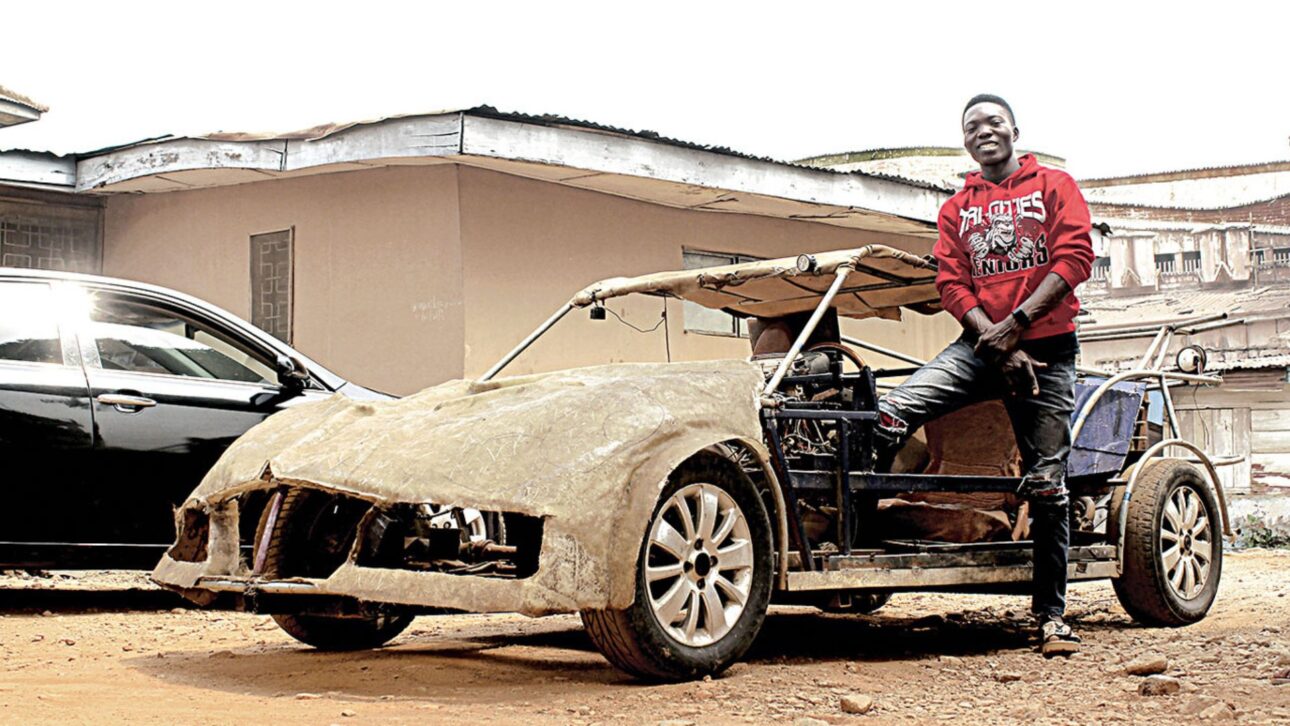
This set of attempts helps to understand that the car did not emerge in isolation. The automotive project was the most visible, but it was part of a routine of improvised inventions, built with simple materials and with a strong experimental component.
The prototype built in Ibadan does not belong to the formal industry, but it helps to highlight a structural problem in Nigeria: transforming practical knowledge, inventiveness, and low-cost manufacturing into more robust automotive production.
In an environment where the chain still heavily depends on imported parts and operates below capacity, independent projects end up revealing both technical potential and sector limitations.