






 Portuguese
  Spanish


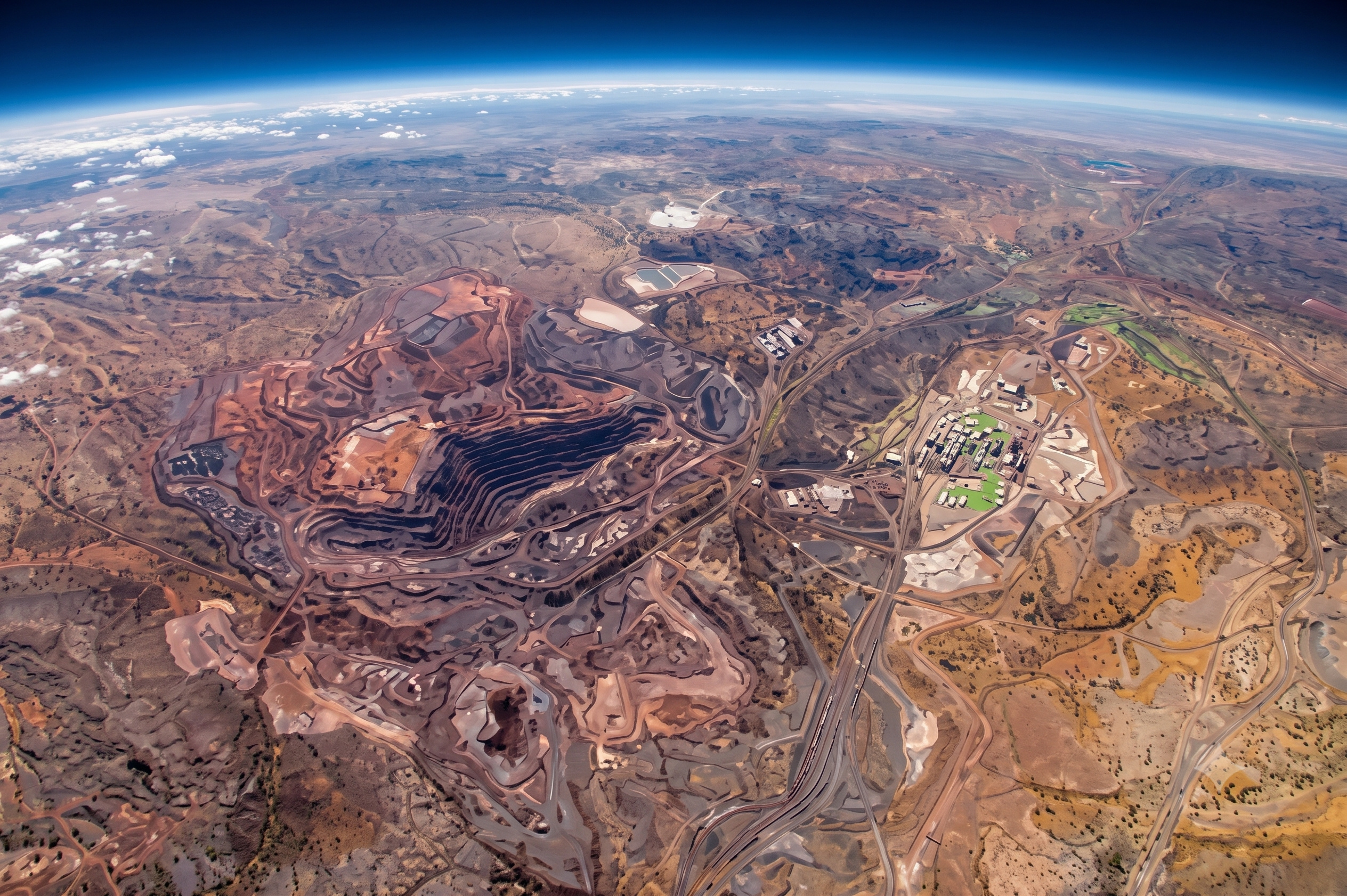

Mount Whaleback in Australia is 5.5 km long, visible from space, and supplies one of the largest steel production chains on the planet.
In the heart of the Pilbara region in Western Australia, there is a scar so gigantic on the landscape that it can be easily identified by satellites in Earth’s orbit. It is the Mount Whaleback Mine, considered by BHP to be the largest single open-pit iron ore mine in the world.
Seen from above, its elongated shape resembles the arched back of a whale emerging from the desert, a characteristic that gave rise to the name Whaleback, an English expression used to describe something similar to a whale’s back. Today, this colossal structure has become one of the most important gears in the global steel industry.
An entire mountain disappeared to make way for the largest single iron ore mine on the planet
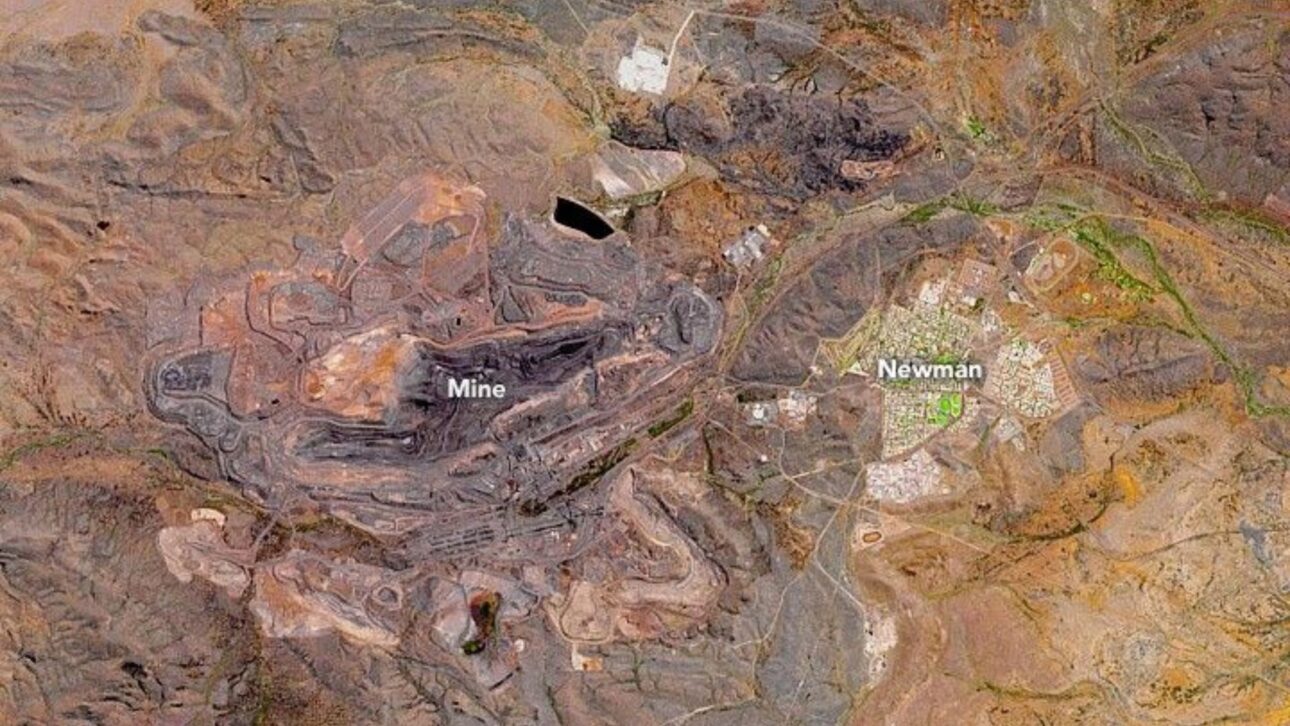
According to the NASA Earth Observatory, Mount Whaleback is approximately 5.5 kilometers long and about 1.5 kilometers wide, dimensions sufficient to make it one of the largest industrial excavations ever undertaken by humans.
-
Brazil Unveils Innovative Monitoring System to Prevent Abandonment of Public Works, Boosting Efficiency and Reducing Waste in Infrastructure Projects

-
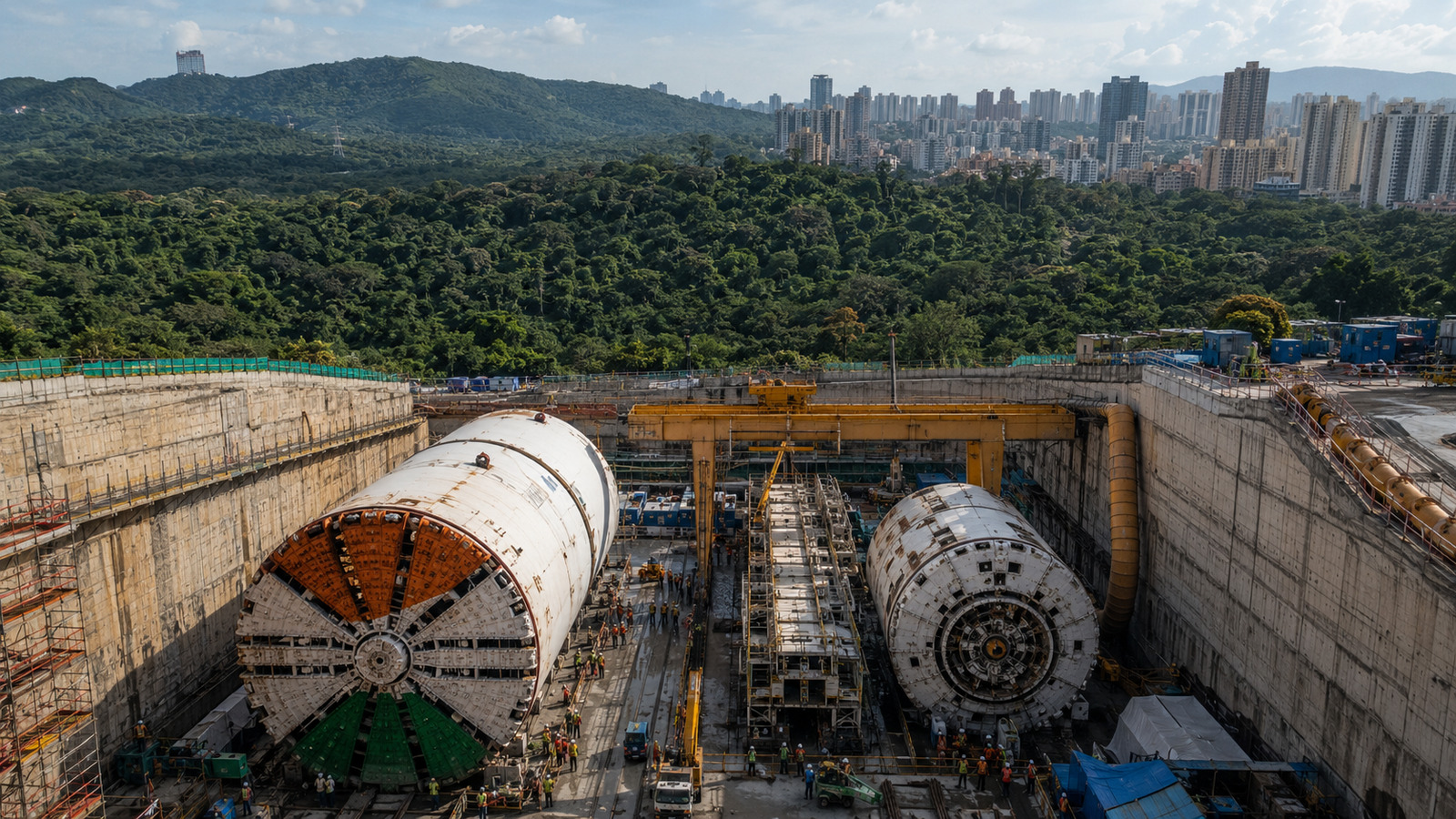
India Begins Drilling Massive Twin Tunnel Under National Park to Cut Mumbai Commute by 12 km and Save Up to 1 Hour

-
Detroit Microhouse Village Offers Former Homeless Residents Ownership After 7 Years: First 3 Tenants Receive Deeds

-
Brazilian Factory in Ivoti Produces 500 Modular Steel and Fiberglass Concrete Homes Following 2024 Floods, Securing $13 Million Contract



BHP itself describes the operation as the largest single open-pit iron ore mine in the world, highlighting that activity officially began in 1968, a few years after the mineral deposit was discovered in 1957 by prospector Stan Hilditch.
According to NASA, the gigantic mineral body began to form more than 2.5 billion years ago, when the region was still submerged under ancient oceans. The activity of microscopic organisms released oxygen that reacted with the dissolved iron in the water, giving rise to the hematite deposits currently being exploited.
Trains over 2.5 kilometers long cross the desert carrying ore towards the ocean
Extracting ore is just part of the operation. After processing, enormous train compositions transport the production to the maritime terminals of Port Hedland on the Australian coast, from where the material mainly heads to Asian steel mills.
According to BHP, some of its trains exceed 2.5 kilometers in length, have about 264 wagons loaded with ore, and are among the largest freight train convoys in regular operation on the planet.
The infrastructure created to support the mine includes hundreds of kilometers of railways, automated loading systems, and the city of Newman itself, built to house workers during the development of the project.
The Australian “steel whale” continues to grow after more than five decades of operation
More than fifty years after its inauguration, the mine remains active. According to the NASA Earth Observatory, Mount Whaleback is currently part of a set of operations known as the Newman Hub, where ore from neighboring deposits is combined before international shipping.


BHP reports that the mine is part of a joint venture composed of the Australian company and Japanese groups such as Mitsui and Itochu, reinforcing the strategic role of the enterprise for the global steel chain.
Furthermore, the ore extracted in Pilbara has a high concentration of hematite, a mineral that can contain about 70% pure iron, according to NASA, a characteristic that makes the region one of the most important iron provinces on the planet.
Seen from space, the mine looks like an industrial scar opened in the middle of the Australian desert
The images captured by NASA satellites help to gauge the scale of the operation. From space, Mount Whaleback appears as a huge dark strip excavated amidst the reddish tones of the Australian interior, clearly standing out against the arid landscape of the Pilbara region.
According to the NASA Earth Observatory, the mine is so extensive that it has become the subject of geological studies and orbital monitoring, serving as an example of the human capacity to profoundly modify the Earth’s surface in just a few decades.
The operation symbolizes a paradox of the modern economy: a mountain formed over billions of years is gradually being transformed into steel, buildings, automobiles, ships, and infrastructure in an extremely short time on the geological scale.
The largest individual iron mine in the world shows how far humanity can reshape the planet
Few structures produced by human activity can be perceived so easily from space.

While entire cities disappear under clouds and vegetation, Mount Whaleback remains visible as a vast industrial mark carved into the Australian desert.
The inevitable question is another: how many other landscapes considered natural today could transform into gigantic mineral scars in the coming decades to meet the global demand for steel, energy, and infrastructure?


