Portuguese
  Spanish


Clarence Chua relocates entire hives, preserves queens, larvae, and workers, and transforms the fear of bees into environmental action in urban areas.
A resident of Singapore is gaining attention for a rare environmental preservation work.
Clarence Chua, 42, has helped save about 6 million bees over the past six years, according to information released by Reuters in July 2026.
The work involves removing hives from houses, buildings, religious areas, and even unusual structures like an airplane engine.
-
In Brazil’s Arid Northeast, Vineyards Now Produce Wine Grapes Year-Round, Accounting for 98% of the Country’s Grape Exports

-
China Limits Brazilian Meat Imports After Returning 20 Soybean Ships, Causing Factory Shutdowns and Concerns in Brazil’s Meat Industry

-
Brazilian Producer Adopts Hydroponic Strawberry Farming in Western Paraná, Achieving Year-Round Harvests and Becoming a Model for Continuous Production

-
Vertical Farming Company Backed by SoftBank and Jeff Bezos Files for Bankruptcy, Valuation Plummets from $1.9 Billion to Under $15 Million




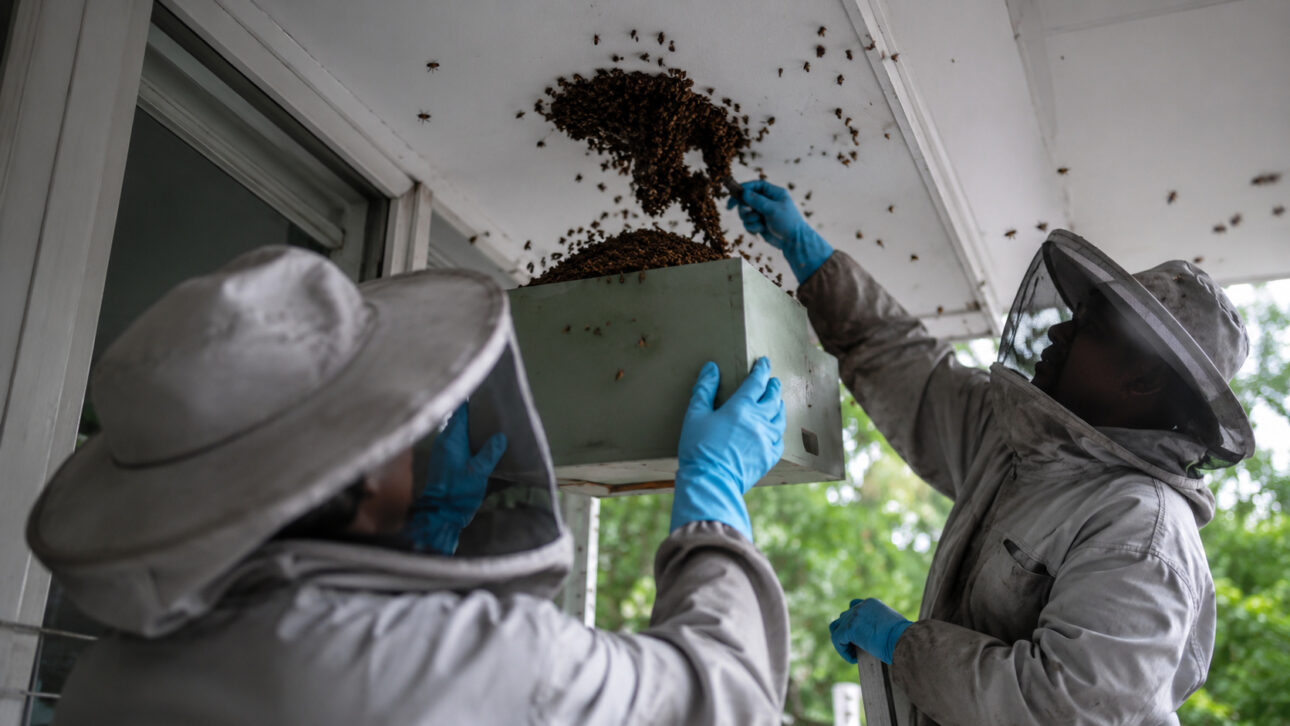
After that, the swarms are taken to wooden boxes and relocated to apiaries managed by him.
Rescue replaces extermination with preservation
In Singapore, residents often call pest control companies when they find bees in homes.
These companies eliminate nests in a few minutes and charge between 80 and 150 Singapore dollars for the service.
Clarence Chua tries to convince residents to allow a different solution.
He charges between 100 and 500 Singapore dollars to perform the humane removal of the hive.
In this way, instead of killing the insects, he preserves the entire colony.
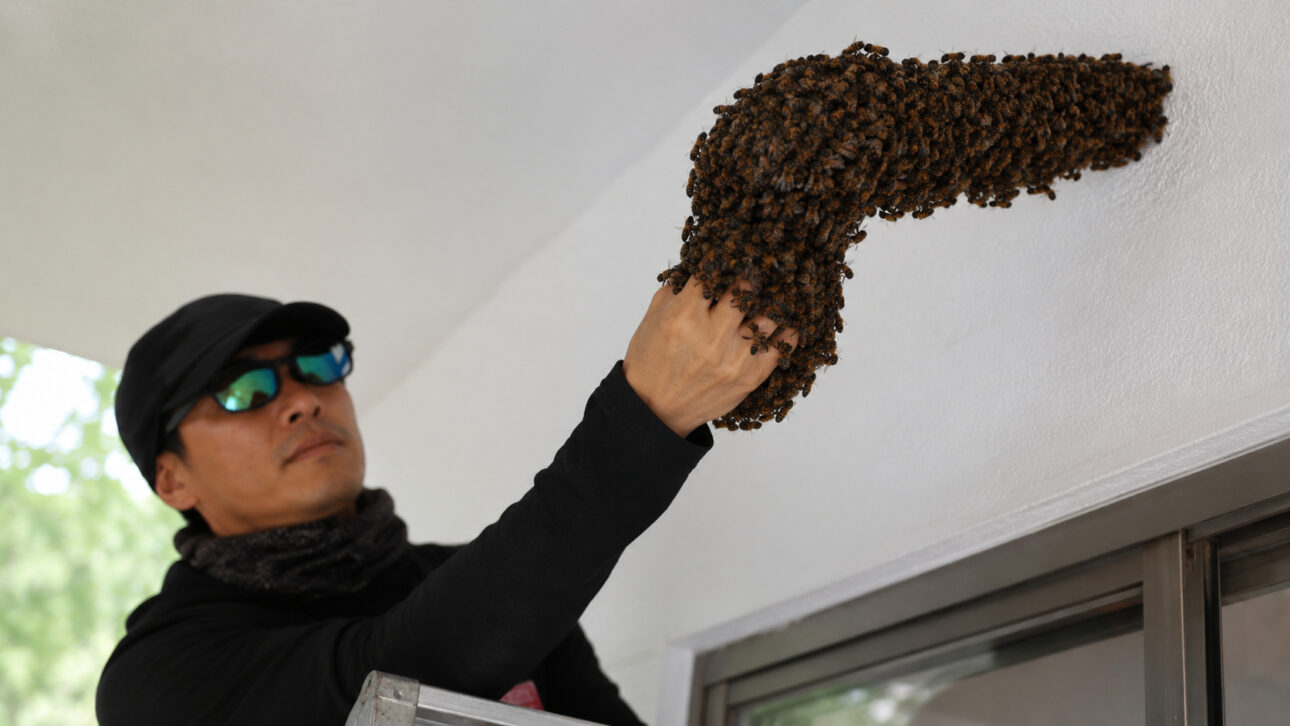
How bee relocation works
The process requires care, patience, and observation of the swarm’s behavior.
First, Chua closely evaluates the bees. Often, he approaches using only a bandana and his bare hands.
According to him, when bees do not feel threatened, they can remain calm even with someone very close.
After removal, the hive is placed in wooden boxes.
The procedure aims to preserve the queen bee, larvae, and workers, maintaining the colony’s structure.

About 100 hives relocated per year
In the last six years, Clarence Chua has relocated, on average, 100 hives per year.
With this, the estimate reaches about 6 million bees saved.
After the rescue, the swarms are taken to one of the three apiaries maintained by him.
One of these spaces, in fact, is in the backyard of Chua’s own house.
Bees have been removed from unusual places
Over the years, Chua has received calls in quite unusual situations.
He has removed bees from a small spiritual worship house inside a condominium.
He also removed a swarm installed in the engine of an airplane.
In this case, the aircraft could not take off until the bees were safely removed.
Work also involves risks
Despite the experience, bee rescue can be dangerous.
On one occasion, Chua attempted to remove a swarm installed on the balcony of a condominium.
Initially, he believed that the bees were docile.
The swarm reacted quickly, and he ended up stung about 100 times in approximately 30 seconds.
After that, he stated that he learned never to underestimate nature.
Awareness grows on social media
Meanwhile, Chua’s work has also gained traction on social media.
Videos of the rescues, some recorded in first person with Meta’s smart glasses, have already attracted about 20,000 followers.
Additionally, municipal councils in Singapore have started hiring his services.
These agencies manage public housing complexes where almost 80% of the country’s population lives.
Why Bees Are Important
For Clarence Chua, protecting bees is essential because of pollination.
According to him, without these insects, there would be fewer fruits in the world.
Many foods could also become more expensive, as various agricultural crops depend directly on bees.
The case thus shows how the humanitarian rescue of hives can replace extermination in urban areas.
At the same time, it highlights the risks, costs, and importance of dealing with nature responsibly.
Do you think cities should prioritize the rescue of bees instead of the extermination of urban hives? Share your opinion!