





 Portuguese
  English
  Spanish
  4 min of reading
  0 comments


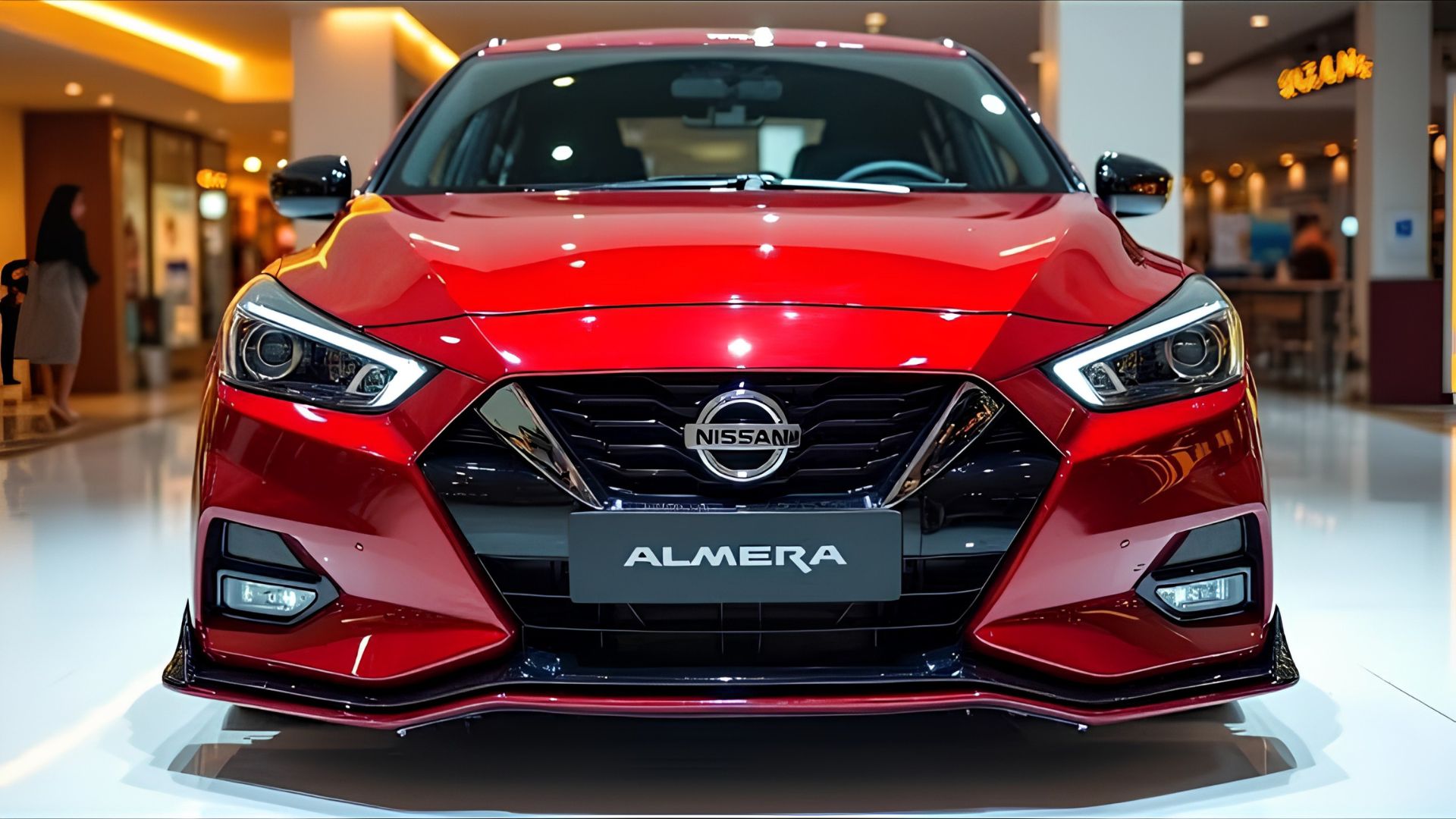
Sold in Thailand and other Asian markets, the Nissan Almera combines a 1.0 turbo engine, CVT transmission, ADAS, and high consumption without reaching Brazil.
While the Brazilian market has seen compact sedans lose ground to SUVs in recent years, some regions in Asia continue to receive models that combine advanced technology, efficient engines, and relatively affordable prices. One of the most interesting examples is the Nissan Almera, a compact sedan sold in Thailand, the Philippines, Malaysia, and other Asian markets, but absent from Brazilian dealerships.
The current generation of the Almera was launched in 2019 and attracted attention for adopting an unusual formula for the category: a turbo engine of just 1 liter combined with advanced driver assistance systems usually found in more expensive vehicles. According to Nissan Thailand, the model received important updates in 2023 and began offering a technological package that includes autonomous emergency braking, forward collision warning, and blind spot monitoring in the higher versions.
The result is a compact sedan that shows how some international markets continue to invest in a category that has lost strength in Brazil.
-
T-Cross gets Rock in Rio edition with exclusive details, themed seats, 17-inch wheels, and price maintained by Volkswagen at R$ 142,990.

-
Cheaper than HB20, Onix, and Argo: with a 1.6 flex engine of up to 120 hp, 6-speed automatic transmission, well-known mechanics, and affordable maintenance, this hatch remains among the most sought-after used cars in Brazil: meet the Volkswagen Gol 2022 automatic.

-
New Jeep Scrambler SRT resurfaces with a 6.4 Hemi V8 engine producing 470 hp, rear seats that rotate 180°, a cabin for four occupants, and a removable roof in a project planned for 2030.

-
Cheaper than a Kwid, this Japanese sedan offers a giant 482-liter trunk, a 1.6 flex aspirated engine, automatic CVT transmission, and six airbags; the Nissan Versa Sense is ideal for those who prioritize interior space, comfort, and affordable maintenance costs.



A 1.0 turbo engine replaced larger engines and reduced consumption
The main technical feature of the current Almera is under the hood. According to Nissan, all versions sold in Thailand use the HRA0 1.0 Turbo three-cylinder engine, combined with Xtronic CVT automatic transmission.
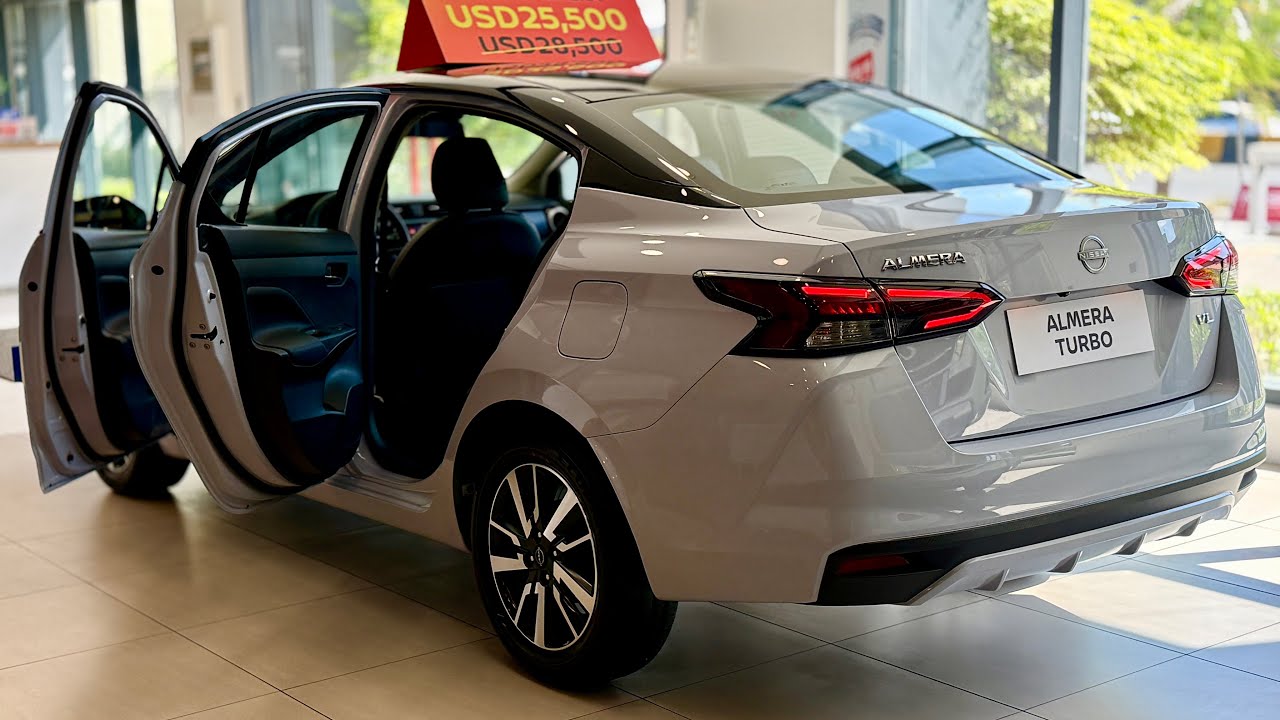
According to specifications released by the manufacturer in Southeast Asian markets, the engine delivers approximately 100 hp and about 152 Nm of torque, numbers similar to those found in various 1.0 turbo engines currently sold in Brazil.
The focus, however, is not only on performance. Nissan developed the set mainly thinking about energy efficiency and emission reduction, something increasingly important in Asian markets.
The consumption draws attention for an automatic turbo sedan
One of Almera’s strongest arguments is efficiency. According to data released by Nissan in Asian markets, some versions can achieve fuel consumption of over 23 km/l in local homologation cycles. The values vary according to the country, testing methodology, and vehicle configuration.


Even considering differences between international and Brazilian measurement standards, the numbers place the Almera among the most economical sedans in its category.
This combination of a small engine, turbocharger, and CVT transmission is one of the reasons the model remains competitive in markets where fuel prices play an important role in the purchase decision.
The safety package includes rare technologies among compact sedans
The most interesting aspect of the Almera might not be the engine. According to Nissan Thailand, more equipped versions offer the Nissan Intelligent Mobility package, which includes driver assistance features typically associated with more expensive vehicles.
Among the available systems are:
- Autonomous emergency braking
- Intelligent forward collision warning
- Blind spot monitoring
- Rear cross traffic alert
- Hill start assist
- Electronic stability control
- Traction control
The presence of this technological set helps explain why the Almera often appears as a safety reference within the segment in various Asian markets.
The sedan has grown and gained a more sophisticated appearance
The current generation has completely abandoned the conservative look of the older versions. The model has adopted Nissan’s global design language, with a front grille inspired by the brand’s SUVs, more aggressive headlights, and sportier side lines.

According to Nissan, the cabin has also undergone a significant evolution, incorporating a modern multimedia center, partially digital dashboard, smartphone connectivity, and finishing materials superior to those found in previous generations.
The goal was to bring the Almera closer to more sophisticated models without abandoning the proposition of an affordable family vehicle.
Brazil has lost practically all direct rivals of the Almera
The existence of the Almera draws attention because it represents a type of car that has practically disappeared from the Brazilian market.
Models like Toyota Yaris Sedan, Chevrolet Joy Plus, Hyundai HB20S entry-level and several other compact options have lost space due to the popularization of SUVs.

Meanwhile, markets like Thailand, the Philippines, and Malaysia continue to invest in modern, efficient, and well-equipped compact sedans. The Almera has become one of the main representatives of this strategy.
The Nissan Almera is unlikely to officially arrive in Brazil in the short term. But it shows how other markets continue to bet on different solutions from those dominating Brazilian dealerships.
With a 1.0 turbo engine, CVT transmission, advanced driver assistance systems, autonomous braking, and consumption that can exceed 23 km/l in some markets, the Almera is an example of how compact sedans continue to evolve outside the country even in an era dominated by SUVs.








Be the first to react!