






 Portuguese
  Spanish


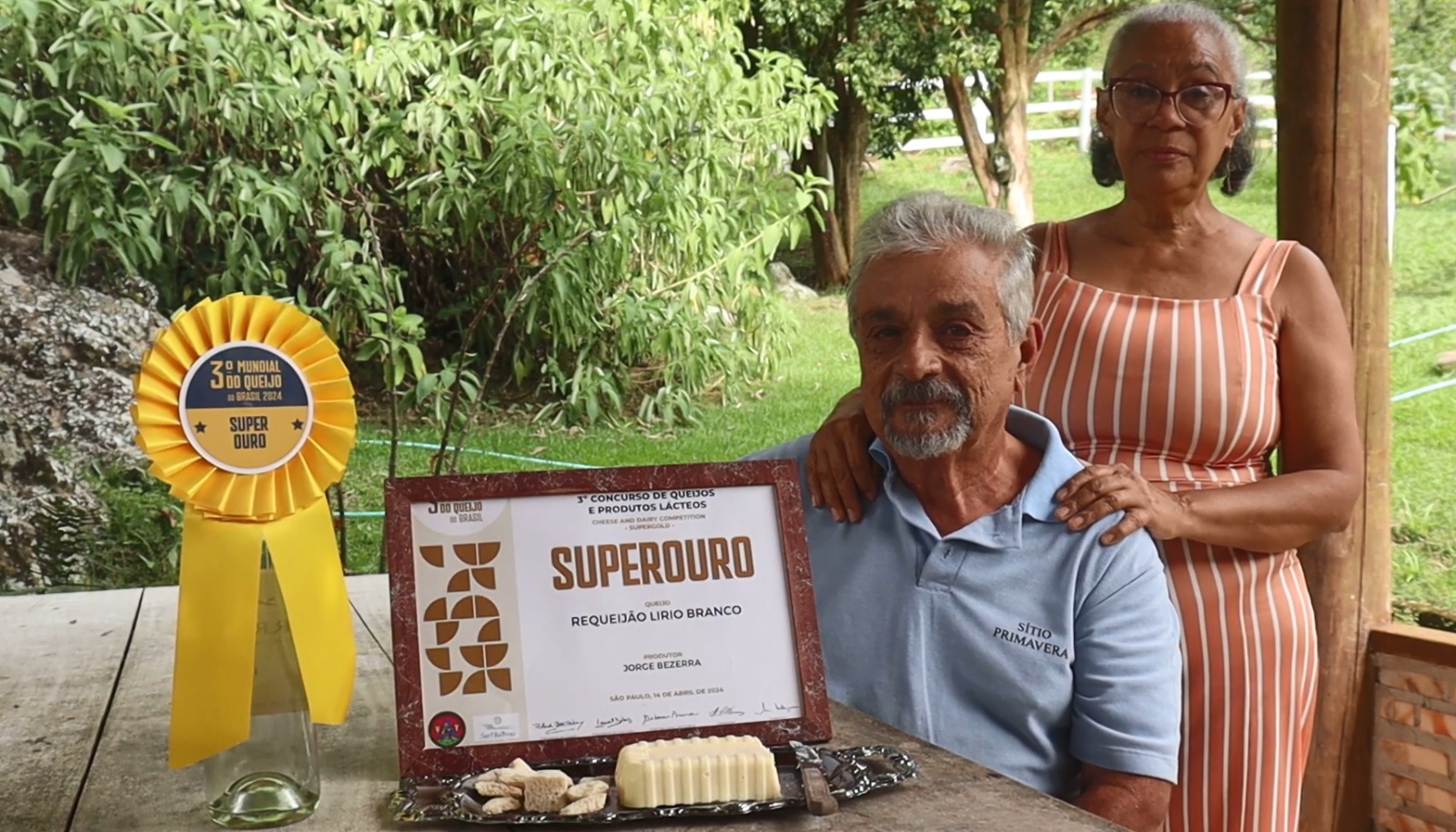


Amidst the appreciation of the Artisanal Minas Cheese, recognized by UNESCO as an intangible cultural heritage of humanity in 2024, the story of Maria Elisa and Jorge shows how milk, maturation, and rural tourism have come to sustain a new routine in the countryside.
The recognition of the Artisanal Minas Cheese Making Methods by UNESCO, on December 4, 2024, increased the visibility of producers working with raw milk, regional tradition, and maturation techniques in Minas Gerais.
In this scenario, the journey of Maria Elisa de Almeida and Jorge Luiz Coutinho Bezerra helps to explain how artisanal production can change the economic routine of a rural property.
The couple left urban life and started living at Sítio Primavera, in Lima Duarte, in the Zona da Mata of Minas Gerais, where they structured an artisanal cheese production linked to cattle breeding, sanitary control, product maturation, and rural tourism.
-
The Transparent Plastic Pen That Sold Over 100 Billion Units, Becoming the Best-Selling Pen in History Across Five Continents

-
Brazilian Startup Develops Solar-Powered Mobile Factory, Recycles 100,000 Panels in Under a Year, Recovering Silver and Copper
-
Your Door Lock, Gate Padlock, and Hotel Key Card Likely Come from the World’s Largest Lock Manufacturer, the Swedish Group Behind Yale and Brazil’s Papaiz
-
Major Brazilian Ethanol Producer Becomes Largest Owner of Planted Forest in Mato Grosso, Aiming to Power Plants with Renewable Energy Instead of Fossil Fuels


The sources consulted about the couple’s journey indicate that they lived in Rio de Janeiro before moving to Minas.
The property is located between the Serra do Ibitipoca and the Pão de Angu hill, a region recognized for the production of Artisanal Minas Cheese.
On site, the routine began to include animal management, milking, dairy product manufacturing, training courses, and welcoming visitors interested in following the production process.
The activity gained national prominence after the cheese factory’s products were awarded in industry competitions.
Among them is the Lírio Branco bar cheese, which received a Super Gold medal at the 3rd World Cheese Awards of Brazil, held in April 2024, in the state of São Paulo, according to Agência Minas.
The change did not stem from a consolidated family tradition in rural production.
According to reports published by the Faemg/Senar System, Maria Elisa and Jorge had been visiting the Lima Duarte region for years and decided to settle in the municipality after retirement.
The initial plan was to live closer to the countryside, but the property began to encompass artisanal food production, lodging, and activities related to rural tourism.
“I knew nothing about cheese, only about eating it,” said Maria Elisa in an interview with the Faemg System/Senar.
The speech refers to the beginning of production, when the couple started seeking technical guidance to handle milk quality, good manufacturing practices, maturation, cheese standardization, and sanitary regularization.
From Urban Life to Artisan Cheese Production in Minas
Sítio Primavera was acquired as part of the project to move to the countryside.
Before consolidating the cheese factory, the couple evaluated other rural activities and started cattle raising.
With accumulated experience and support from agricultural sector institutions, the production of Artisan Minas Cheese began to play a central role on the property.
The choice of cheese is also related to the territory.
Lima Duarte is part of the Ibitipoca Mountains region, recognized in 2020 as a producer of Artisan Minas Cheese by Emater-MG, through Ordinance 2.016/2020.
The recognition covers municipalities from different areas of Minas Gerais and considers geographical, historical, and productive characteristics associated with the traditional way of making.
In practice, this type of production requires more than turning milk into cheese.
The process involves raw milk, rennet, whey, salt, manual pressing, and maturation.
Each step affects the final result and depends on factors such as hygiene, quality of raw materials, herd health, temperature, humidity, and curing time.


Maturation Changes Cheese Texture, Aroma, and Flavor
Maturation is one of the stages that differentiate artisan cheeses.
During this period, enzymes and microorganisms act on the mass and change texture, aroma, and flavor.
Therefore, the curing time and environmental conditions directly influence the standard of the food that reaches the consumer.
In the case of Sítio Primavera, one of the products that began to receive recognition was the Lírio Branco bar cheese.
According to Agência Minas, the item was developed based on a technique from Epamig, through the Cândido Tostes Dairy Institute, to utilize cheeses that did not meet the commercial appearance standard, such as smaller or cracked pieces.
The proposal allowed the use of cheeses outside the visual standard for direct sale, as long as they were suitable for transformation.
Maria Elisa explained that the cream cheese is made from the melted cheese itself, after 22 days of maturation.
Agência Minas reported that the product received a Super Gold medal at the 3rd World Cheese Championship of Brazil, held in April 2024, in the state of São Paulo.
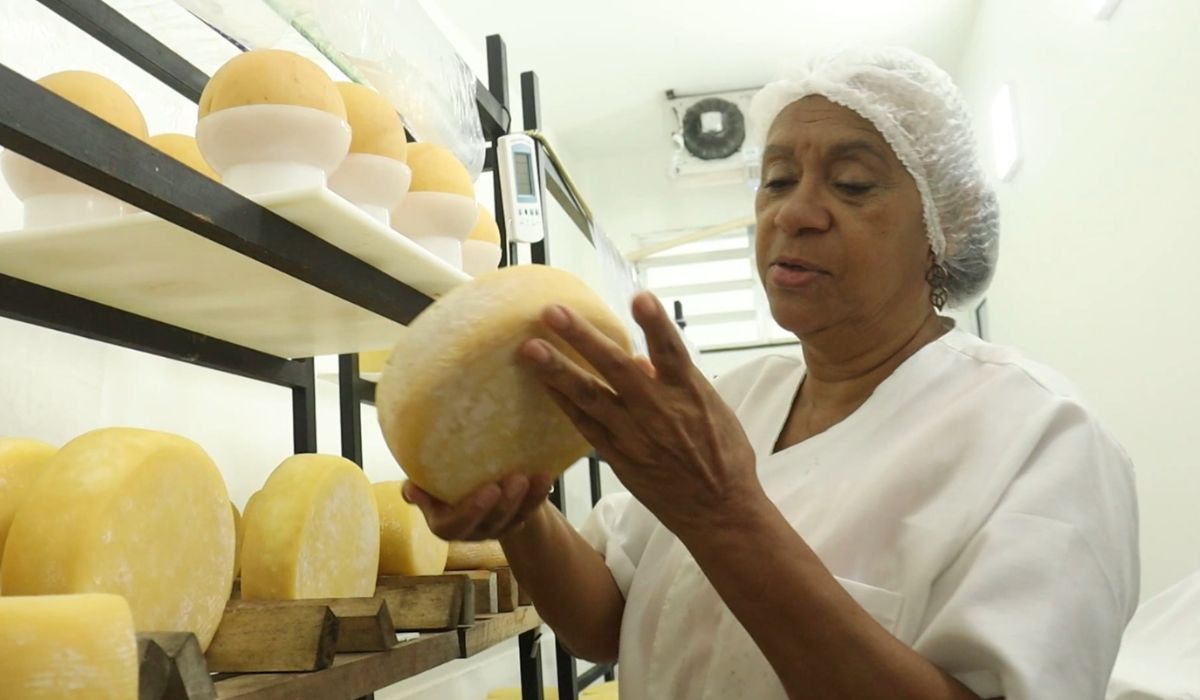
Awards increased the visibility of Sítio Primavera
Before the cream cheese bar award, Sítio Primavera had already obtained silver and gold medals at the Expo Queijo de Araxá, in 2021.
Fapemig also mentioned the property in content about projects that bring scientific research closer to artisanal cheese production in Minas Gerais.
The evolution of the cheese factory, according to reports by Maria Elisa published by sector institutions, occurred with tests and adjustments in production.
She stated that she made changes in details such as the amount of salt and the volume of milk used before entering the products in competitions.
The approach with technicians and researchers increased control over processes and the use of raw materials.
This monitoring is relevant in cheese factories that work with raw milk, because food safety depends on continuous care.
Among the factors observed are the health of the animals, the cleanliness of the utensils, storage, maturation, and compliance with sanitary standards.
In the original text, Maria Elisa states that the property is certified free of brucellosis and tuberculosis and that the cheeses have certification.
Rural tourism became part of the business
In addition to the production of dairy products, Sítio Primavera began to accommodate guests.
Rural tourism became a way to present the property’s routine, bring consumers closer to the manufacturing process, and expand the sales channels of the products.
The activity also allows visitors to closely follow part of the work that supports the cheese factory.
Jorge reported, in the original text, that many guests arrive interested in understanding how the transition from a large urban center to rural life occurs.
The experience, in this context, is not limited to accommodation.
It involves contact with the rural environment, with the animals, with milk production, and with the transformation of the raw material into cheese.
The interest in this type of visit occurs at a time of greater visibility for Minas cheeses.
In December 2024, the Methods of Making Minas Artisanal Cheese were included by UNESCO in the Representative List of the Intangible Cultural Heritage of Humanity.
The international recognition reinforced the relationship between food, territory, technique, and the transmission of knowledge.
Courses and certifications structured the production
Adapting to the field required continuous training.
Maria Elisa and Jorge took courses related to animal management, brush cutter, pit, calf raising and rearing, dairy products, special cheeses, and good manufacturing practices.
The training was offered with the support of the Faemg/Senar System and the Rural Union of Lima Duarte, according to the sources consulted.
Lília Ramos, rural development agent of the union, reported in the original text that the couple participated in different training programs and that the property also started to receive educational activities.
The practice allows new students to follow experiences applied in a functioning production unit.
The president of the Rural Union of Lima Duarte, Olivier de Paula Campos, also stated that the couple sought the entity shortly after arriving in the municipality and sought guidance to develop the activities.
The statements indicate that professionalization was part of the process of setting up the cheese factory.
The current routine combines production, herd care, technical updating, sale of artisanal foods, and reception of visitors.
Although the countryside is associated with a more peaceful life, the couple’s experience shows a sequence of tasks that depends on planning, regularity, and compliance with sanitary standards.
The story of Sítio Primavera also shows how the transformation of milk into cheese can change the economic logic of a small rural property.
Instead of relying solely on the sale of raw material, artisanal production allows adding value to the food, provided there is technical control, certification, and a consumer market.


