






 Portuguese
  Spanish


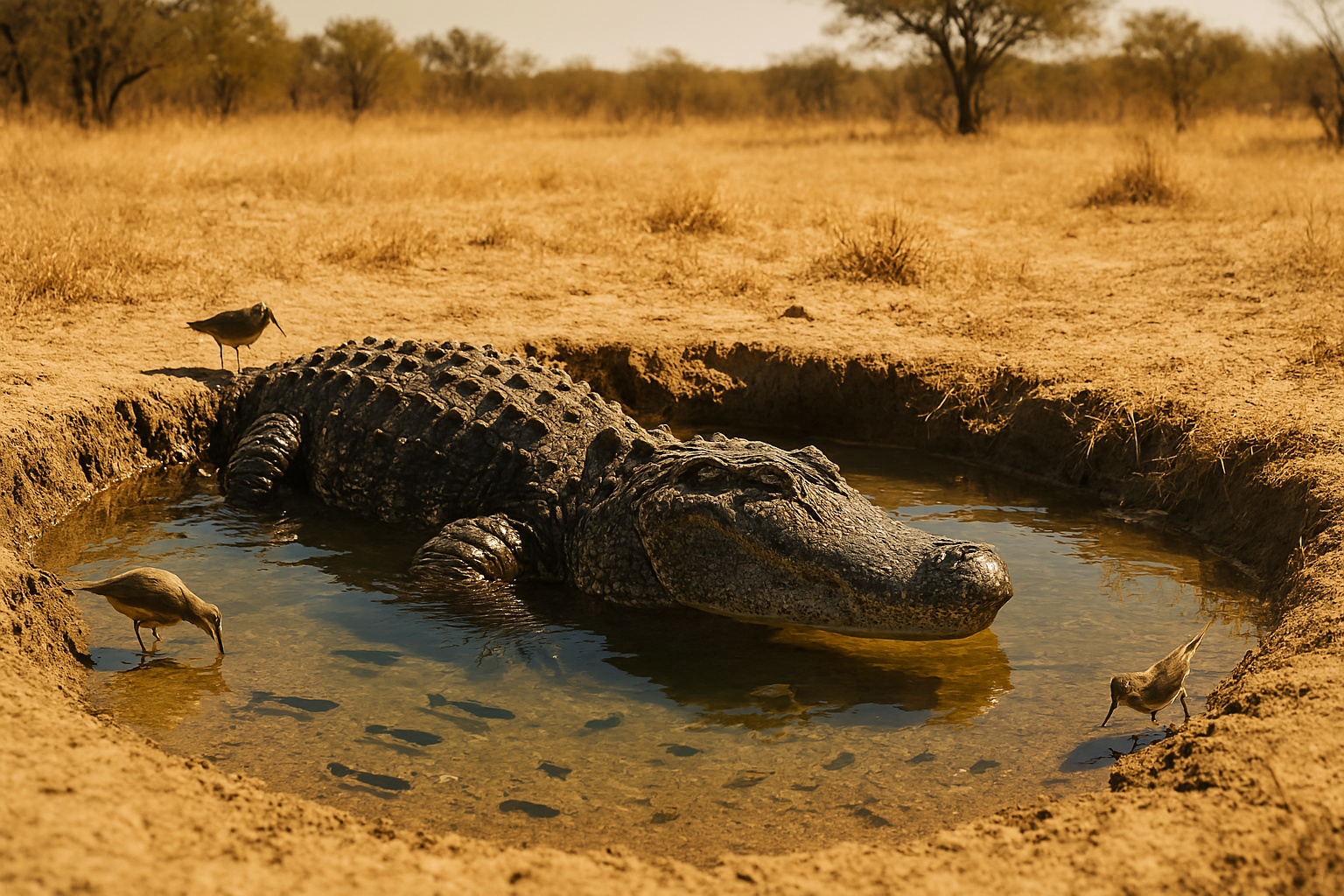


In Texas, Researchers Reveal That Alligators Create Permanent Pools That Sustain Fish, Amphibians, and an Entire Ecosystem During Severe Droughts.
Wetlands are not just a flooded piece of land; they are ecosystems that hold floods, filter water, control the local climate, sustain food chains, and serve as nurseries for dozens of species. In Texas, much of these areas have been drained throughout the 20th century, mainly for agriculture, livestock, and urban expansion. The result was predictable: more unstable rivers, more stressed lakes, reduced biodiversity, and fewer areas capable of buffering climate extremes.
And it is in this same scenario of environmental losses that an unlikely protagonist comes in: the American alligator (Alligator mississippiensis). It not only acts as a top predator but also functions as an ecological engineer, modifying the landscape in direct and lasting ways. And in Texas, Louisiana, and Florida, these “wetland engineers” have been playing a particularly important role.
How the Alligator “Oases” Are Born
The key behavior that transforms the alligator into an ecological restorer is the excavation of permanent pools, known in the scientific literature as alligator holes. These cavities are mainly dug in wet soils, pond edges, swamps, or areas subject to seasonal flooding.
-
World’s Largest Particle Accelerator Begins Four-Year Hiatus for Magnet Overhaul, Aiming to Hunt Dark Matter by 2030

-
“Sahara Dust Turns Rain Red, Startling Residents Across Europe”
-
Stanford Scientists Develop 20-Cent Paper Centrifuge Inspired by Ancient Toy, Spins at 125,000 RPM Without Electricity, Separates Plasma in 1.5 Minutes, Aiding Diagnostics in Remote Areas

-
World’s Largest Vaccine Manufacturer, Immunizing Two-Thirds of Global Infants, Originated in a Pune Horse Farm




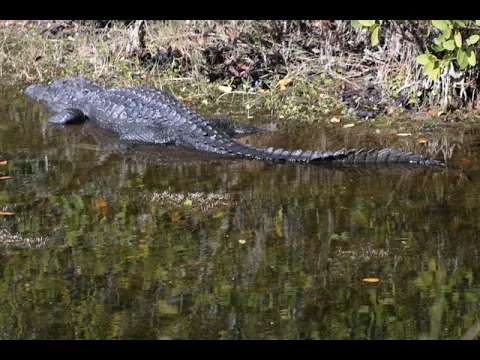
The biological goal is simple: to ensure that the alligator has water and food during dry periods. In regions like South Texas, where summer temperatures can easily reach 104°F, this difference can mean survival.

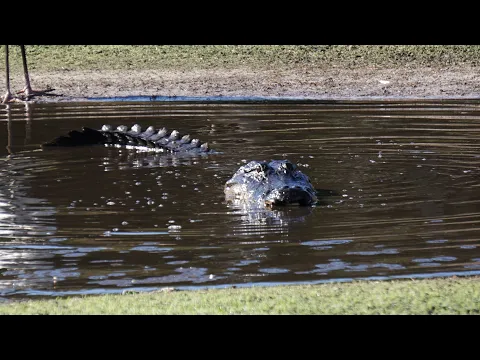
The most interesting aspect is the side effect: by digging these pools and maintaining some degree of water even during prolonged droughts, the alligator transforms areas that would completely dry out into temporary reservoirs full of life.
What Happens Biologically Inside These Pools
Once formed, alligator pools become permanent refuges of biodiversity. Ecological studies show that they transform into:
• Nursery for Amphibians — species like frogs, toads, and salamanders lay eggs in these locations because the water doesn’t evaporate as quickly, and predation is relatively lower than in rivers.
• Habitat for Small Fish — fish get trapped in these pockets of water during seasonal retreats of rivers and ponds. This creates a robust food base for the alligator but also keeps fish populations alive until the rainy season.
• Source of Water for Birds and Mammals — wading birds, ducks, herons, deer, and even raccoons visit these pools to drink and feed.
• Hotspots for Aquatic Insects — which become a food base for birds and amphibians.
The result is that each alligator hole turns into a multi-protocol microecosystem: water + refuge + food + reproduction.
Why This Matters So Much in Texas
Texas is not a wet state like Louisiana. In much of the territory, the ecological dynamics alternate between wet (rains or floods) and very dry periods.
Regions such as the Gulf Coast, Big Thicket, and areas adjacent to the Brazos, Trinity, Sabine, and San Antonio rivers suffer from wetland loss due to urbanization, drainage channels, and agricultural retention.
When the alligator acts as an engineer, it creates what ecologists call “points of hydric persistence”, which have three direct effects:
- reduce the population collapse of water-dependent species,
- increase ecological connectivity between habitat fragments,
- prolong the ecological cycle during severe droughts.
These pools function as ecological batteries that keep the ecosystem “on” while everything around it dries up.
The Predator That Provides Food for Others
It is easy to imagine that, as a predator, the alligator only generates fear and imbalance. But ecologically, top predators are essential for the flow of energy. When the alligator opens a pool:
• it attracts fish,
• which attract birds,
• which attract insects,
• which attract amphibians,
• which attract other predators.
It’s a cascading effect. The alligator eats some of these organisms, but the existence of these organisms is only possible because the alligator created water where there was none.
This phenomenon of “ecological engineering by predators” also appears elsewhere:
• Beavers and dams (North America)
• Wolves and trophic cascades (Yellowstone)
• Elephants and clearing openings (Africa)
• Herbivorous fish and coral reefs (Caribbean)
In the case of the alligator, the impact is especially strong because water is the biggest ecological limiting factor in Texas.
Alligator Holes Versus Climate Change
With more frequent extreme droughts and prolonged heat waves, functional wetlands are disappearing faster, along with a whole range of environmental services. It is precisely in these scenarios that the alligator becomes even more relevant.
These pools help to:
• delay ecological desertification,
• reduce amphibian mortality,
• maintain aquatic food chains,
• preserve migratory bird populations,
• provide water for territorial fauna.
Researchers from Gulf Coast Ecology and regional universities have been discussing that conservation programs should not focus only on the animal but also on preserving the type of habitat that allows it to continue playing this role.
Without the Alligator, What Happens?
If the alligator disappears or is removed from the system:
• the pools disappear,
• the amphibians lose their nurseries,
• birds have less access to water,
• fish die with the disappearance of refuges,
• aquatic insects drastically reduce,
• the summer ecological chain collapses.
In other words, the alligator is not just a species; it is a vector of ecological infrastructure.
Why This Surprises So Many People
A large part of the lay audience still associates the alligator only with risk or attack. But scientifically, the animal is:
• an habitat engineer,
• a predatory regulator,
• a mediator of the local hydrological cycle.
It is rare to see a predator being responsible for preventing indirect extinctions. But ecologically, it happens. And in Texas, this has been documented for decades, although little publicized outside the academic sphere.
As cities encroach on wetlands and the climate makes dry periods increasingly extreme, one of the last allies in the ecological reconstruction of wetlands does not have trucks, pumps, infrastructure, or technology.
It has teeth, claws, and a simple instinct: to dig water pools to survive. The rest, nature takes care of itself.


