Portuguese
  Spanish


A New Scientific Analysis Indicates That Mars May Hide a Massive Subterranean Water Reservoir. According to Researchers, the Volume Would Be Sufficient to Cover the Whole Surface with More Than Two Meters of Water
A new discovery on Mars is attracting the attention of scientists from around the world. Beneath the Medusae Fossae Formation (MFF), a vast area near the planet’s equator, the largest subterranean water reservoir ever identified in this region of the Red Planet may be hidden.
With updated data from the MARSIS radar from the Mars Express mission, researchers found signals suggesting a rich ice deposit with a depth of up to 3.7 kilometers. If confirmed, the water reservoir would be comparable to that of the Red Sea here on Earth.
Water Reservoir on Mars: Discovery Surprises Scientists
The study was led by Thomas Watters from the Smithsonian Institution. “We explored the MFF again using the latest data from the MARSIS radar of Mars Express and found that the deposits are even thicker than we thought,” he stated.
-
Berries, Strawberries, and Blueberries Could Transform Agriculture in Northeastern Brazil, New Tests Reveal

-
Danish Resident Discovers Six Viking Gold Bracelets Weighing 762.5 Grams, Third Largest Gold Treasure in Denmark

-
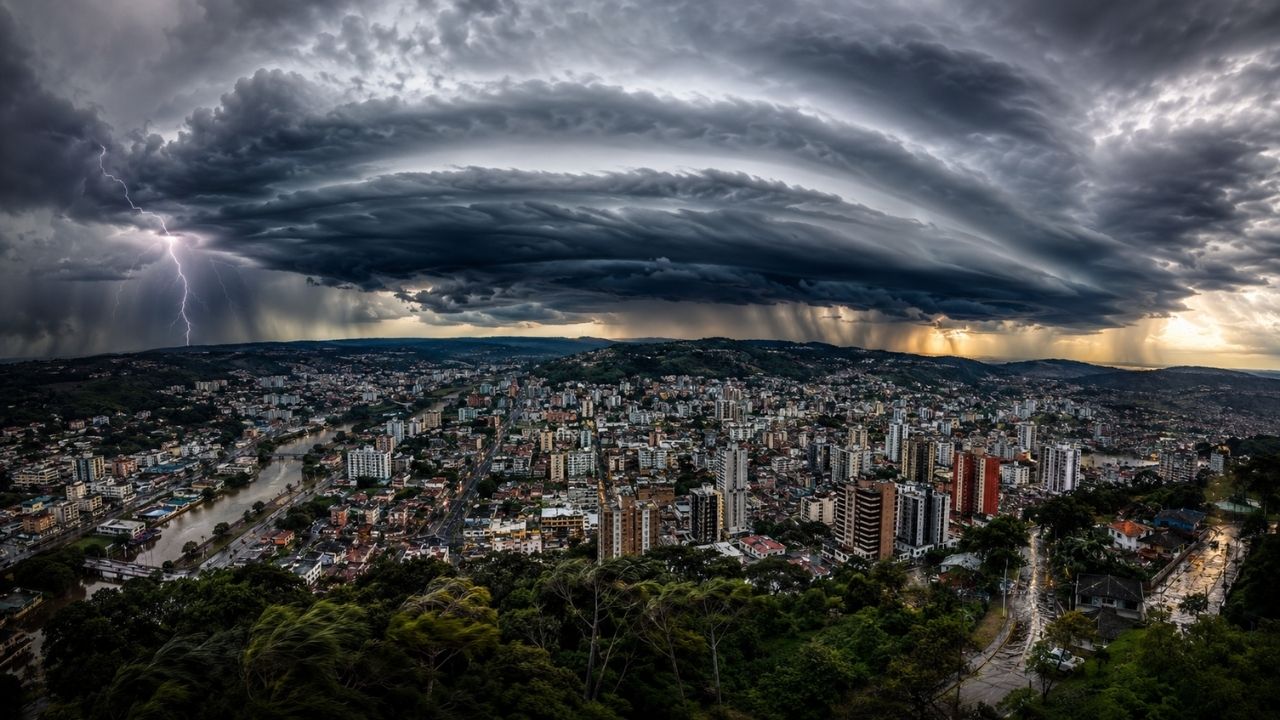
Over 200 Cities in Southern Brazil on Storm Alert as Cyclone Near Uruguay Brings Heavy Rain, Hail, and Winds Up to 100 km/h

-
Archaeologists Discover 2,300-Year-Old Beer in Sealed Bronze Vessel from Ancient Chinese Tomb



“The most exciting thing is that the radar signals match what we would expect from layered ice, similar to Mars’ known polar caps,” he concluded.
The presence of so much ice in this formation could change how the Martian environment is understood. According to scientists, if this frozen water reservoir were to melt, it would have the potential to cover the entire planet with more than two meters of water.
An Increasingly Complex Geological Enigma
The Medusae Fossae Formation has been a topic of debate for years. It extends for hundreds of kilometers and, at some points, reaches over a kilometer in height. Located between the southern highlands and the northern lowlands, its origin has always intrigued experts.
Old theories suggested that the MFF could be made of dust accumulated by winds, volcanic ash, or various sediments. Early radar measurements already indicated unusual signals, such as transparent structure and low density, which raised suspicions about the presence of ice.
Now, with this new analysis, the hypothesis of subterranean ice has gained strength. The study also suggests that these deposits are ancient and have been influencing the Martian climate for millions of years, helping to shape the atmosphere and surface.
A Potential Resource for Human Missions
The poles of Mars contain ice, but they are difficult regions for human landings due to rough terrain and energy-related challenges. Therefore, finding ice near the equator could represent an important strategic advantage.
Water could be used in various ways: for human consumption, oxygen production, and even fuel generation. This would reduce the need to bring so many supplies from Earth, making missions more viable.
Even buried under thick layers of dust, the MFF deposits attract interest. Colin Wilson, a scientist from the ESA involved in the project, explains that this discovery raises new questions.
“How long have these ice deposits been forming, and what was Mars like at that time? If confirmed as water ice, these massive deposits would change our understanding of Mars’ climatic history. Any ancient water reservoir would be a fascinating target for human or robotic exploration,” Wilson said.
Windows into the Past of Mars
Beyond the practical interest, the find may reveal details about the history of the red planet. The presence of ice in deep equatorial regions indicates that Mars once had a very different environment. Wetter, perhaps more active.
Scientists believe that, being protected by layers of dust or ash, these ice reserves may have preserved clues about Mars’ past. This includes information about the climate, water, and even possible conditions for life at some distant point.
The study shows that, even without direct access, each new discovery helps to piece together the puzzle of the planet. And reinforces the role of the MFF as one of the most important points of scientific interest on Mars.
According to the analyzed data, if all the ice from the MFF were to melt, it would have the potential to cover all of Mars with a layer of more than two meters of water.
With information from Interesting Engineering.