






 Portuguese
  Spanish


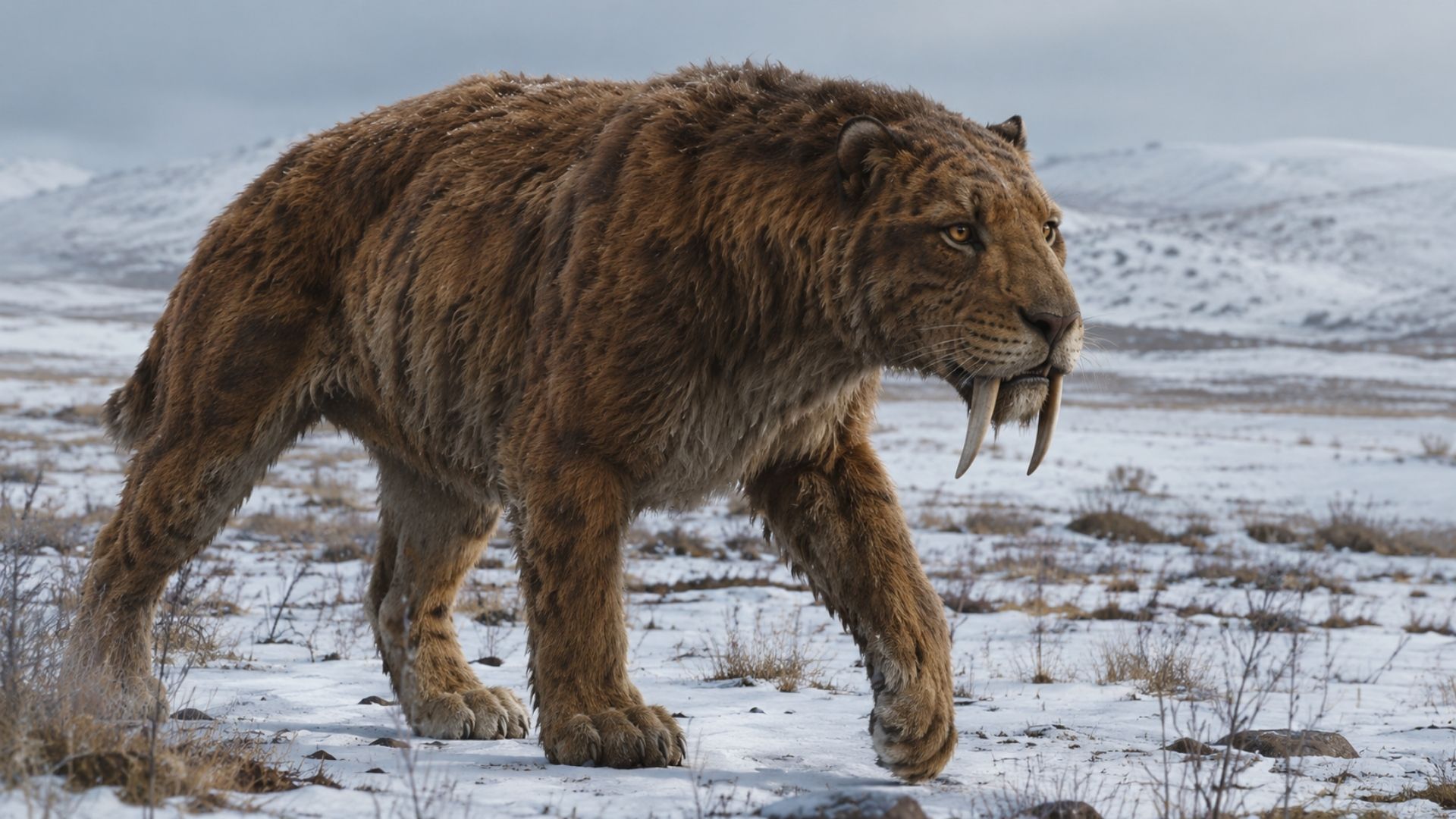

In the permafrost of Siberia, Russia, scientists found the frozen mummy of a saber-toothed tiger cub that lived about 35,000 years ago. The Ice Age animal was preserved almost intact, with whiskers, claws, and skin, in an extremely rare find for world paleontology.
The ice of Siberia has returned a ghost from the Ice Age. Scientists studied the frozen mummy of a saber-toothed tiger cub that died about 35,000 years ago and was preserved in the permafrost, with whiskers, claws, and skin still in place. The discovery was reported by the magazine Smithsonian.
It is a milestone for science. For the first time in the history of paleontology, researchers were able to actually see what an extinct predator with no living relatives looked like, instead of trying to imagine it only from bones. The cub became an open window directly into the frozen world of the Pleistocene.
The find also carries a message from the present. It was the thawing of the permafrost, accelerated by warming, that has been exposing Ice Age remains preserved for millennia in the Siberian soil. The same phenomenon that delivers treasures to paleontology is, at the same time, a warning sign about the climate.
-
Scientists Uncover “Amazon Stonehenge” with 127 Giant Rocks, Shedding Light on Indigenous Solar Observations Before European Arrival

-
Six-Year-Old Uncovers 400-Million-Year-Old Coral Fossil in Backyard, Revealing a Pre-Dinosaur Ocean World

-
India Gains 2.1 Million Hectares of Dry Tropical Forest in a Decade, but Scientists Warn Much of It May Be Commercial Plantations, Not Genuine Biodiversity Recovery

-
Canada Builds World’s Largest Electric Car Battery Repurposing Plant in 6 Weeks, Aiming to Power Grids, Factories, Hospitals, and Data Centers Before Recycling Lithium, Nickel, and Cobalt



The discovery in the Siberian permafrost
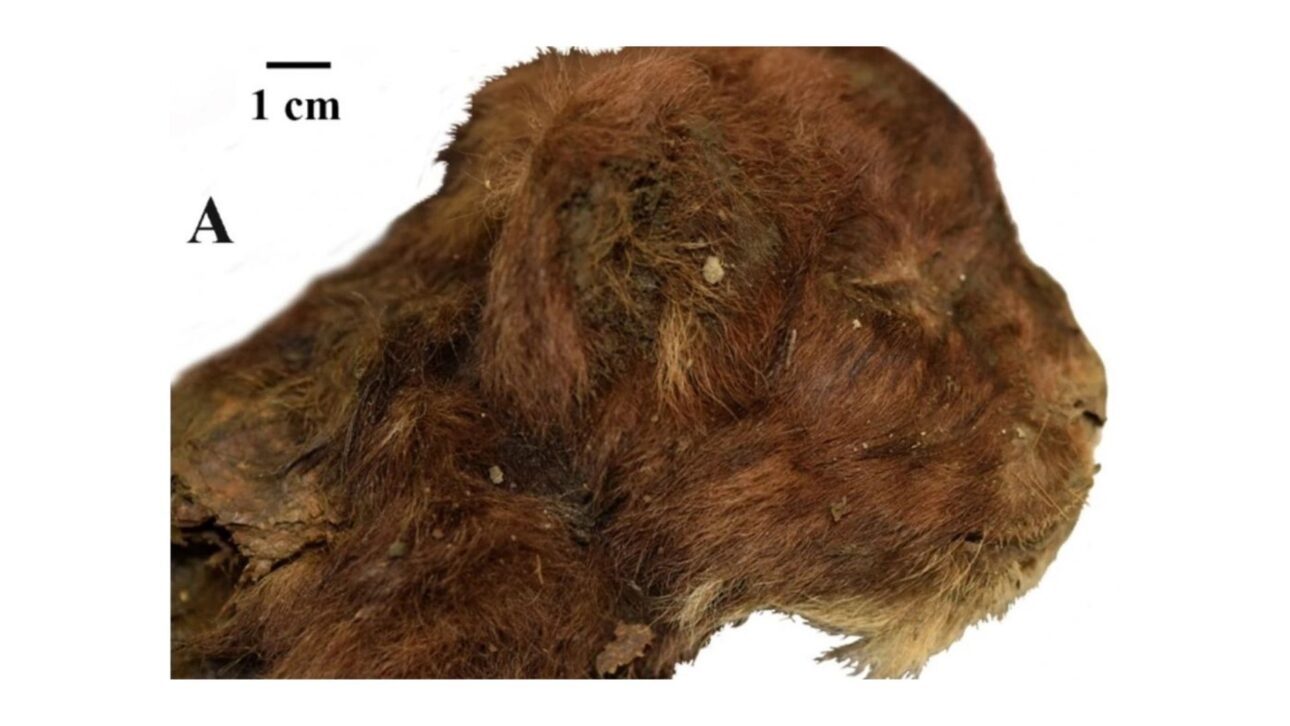
Homotherium latidens* and was unearthed at the Badyarikha River in Yakutia, Siberia.
AV Lopatin et al., Scientific Reports 2024
The encounter began with a search for something else. In 2020, prospectors looking for mammoth tusks in northeastern Yakutia, Siberia, noticed a tuft of fur sticking out from the riverbank. What seemed like an insignificant detail was actually the frozen mummy of a saber-toothed tiger cub, according to the Smithsonian.
The location explains the preservation. The body was found on the banks of the Badyarikha River, in a region of deep permafrost, the soil that remains frozen all year round. It was this permanent ice that acted as a natural freezer for tens of thousands of years, preventing the decomposition that normally erases any trace of soft tissue.
The condition of the animal impressed the researchers. The mummy preserves the head and the front part of the body, with skin, fur, and even the whiskers and claws intact, something that practically never remains from such ancient creatures. Instead of a skeleton, paleontology gained a body, with texture, color, and shape preserved by the Siberian permafrost.
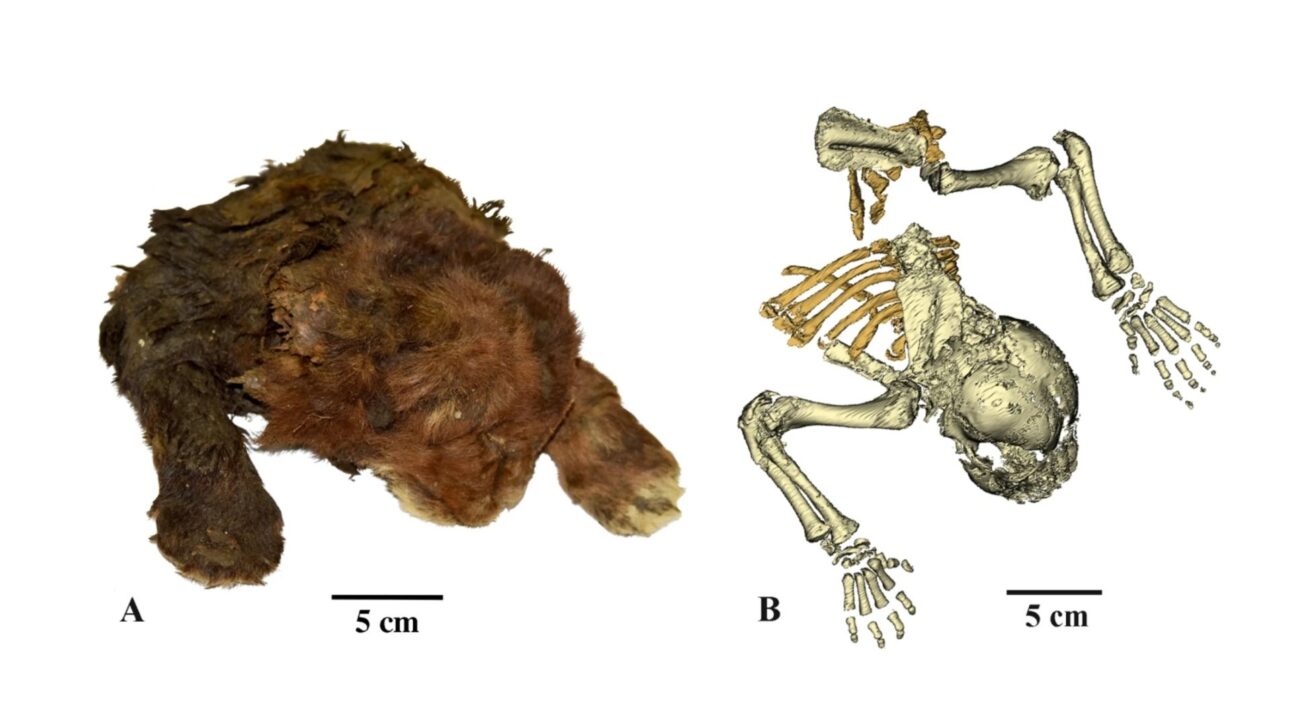
The section of what remained is also revealing. The mummy preserves the head and the front portion of the body, up to the chest, with parts of the pelvis and hind legs found separately, trapped in the ice. Even incomplete, the material is sufficient to describe, for the first time, the external appearance of the animal.
Why this finding is historic for paleontology
The scientists’ own words summarize the magnitude of the achievement. According to the study, it was the first time in the history of paleontology that the real appearance of an extinct mammal with no equivalent in the current fauna could be studied. There is nothing alive similar to a saber-toothed tiger, so until now, science could only guess what it really looked like.
The difference between bone and body is enormous. With fossils and skeletons, researchers reconstruct the size and structure of an animal, but lose the external appearance: the color of the fur, the shape of the snout, the thickness of the neck. The permafrost mummy delivered precisely this layer that was always missing, and that no bone can tell.
That’s why the finding entered the annals of science. The work describing the cub, published in the scientific journal Scientific Reports, is considered a watershed in the study of prehistoric big cats. It’s paleontology of flesh and bone, in the most literal sense possible.
The impact is expected to change even books and museums. For over a century, reconstructions of saber-toothed tigers in illustrations, films, and exhibitions were guesses based on bones and distant living relatives. Now, with real skin, fur, and snout available, artists and scientists can correct these portraits and show the animal as it truly was.
What is a saber-toothed tiger?
Here it is worth clearing up a common confusion. Despite the nickname, the saber-toothed tiger is not a tiger, nor a close relative of current tigers. The popular name encompasses several extinct felines with enormous fangs, and this cub belongs to the species Homotherium latidens, a group known as scimitar cats, which lived during the Ice Age.
The trademark was the canines. These predators had very elongated upper teeth, blade-shaped, used to take down large prey during the Pleistocene, the era of the great glaciers. The Homotherium hunted in the cold landscapes of the Northern Hemisphere and disappeared thousands of years ago, along with much of the Ice Age megafauna.
Understanding the species helps to gauge the rarity. As these animals disappeared without leaving direct descendants, each new piece of data about them is precious. Having a saber-toothed tiger cub preserved with skin and fur is like receiving a photograph of an animal that no one has ever seen alive, taken 35,000 years ago.
The Homotherium had its own hunting style. Unlike the Smilodon, with shorter fangs and a stocky body, the scimitar cat had long legs and was adapted to chasing prey in open, cold fields. It spread across much of the Northern Hemisphere during the Ice Age, before disappearing with the rest of the megafauna.
What the frozen body revealed
The analysis of the cub brought anatomical surprises. According to the study, compared to a lion cub of the same age, the saber-toothed tiger had a snout with a much larger mouth opening, small ears, a much thicker and more muscular neck, and elongated front legs. It was a body clearly different from any modern feline.
The fur also told a story. The cub’s fur was dark brown and unspotted, unlike many large modern felines, which gives clues about how these predators camouflaged themselves in Ice Age landscapes. Such details could only be known because the permafrost preserved the animal’s outer covering.
There were also marks of adaptation to the cold. The paws were wide, with almost square-shaped pads and missing one of the typical feline pads, characteristics that would help the animal walk on snow. For paleontology, each of these details is a new piece about how the Homotherium lived in a frozen world.
To reach these conclusions, researchers went beyond the eye. The cub’s skull underwent a CT scan, the same technology used in medical exams, which revealed internal structures typical of saber-toothed cats and confirmed the species. The comparison with current lion cubs helped measure, number by number, how different the Homotherium was from today’s felines.
How does permafrost preserve bodies for millennia?
The answer lies in the constant cold. Permafrost is the name given to soil that remains frozen year-round, for at least two consecutive years, common in regions like Siberia, Alaska, and northern Canada. When an animal dies and is covered by this soil, the extreme cold almost completely halts decomposition.
The secret is to block the bacteria. Decomposition depends on microorganisms that need heat and liquid water to act, and the permafrost takes both away. Frozen, the body does not rot, and delicate structures like fur, skin, and whiskers can last tens of thousands of years almost as they were on the day of death.
That’s why Siberia has become an Ice Age treasure chest. The region’s permafrost has already yielded mammoths, woolly rhinos, wolves, and prehistoric horses with preserved tissues, and now the saber-toothed tiger cub. Each of these finds is studied by paleontology as a natural time capsule, sealed by ice.
This preservation, however, is fragile when the ice gives way. As soon as a mummy is exposed by thawing, it starts to decompose quickly, creating a race against time to recover and cool the material again before it is lost. Therefore, each well-preserved specimen, like the cub, is treated as a scientific urgency by researchers.
The thaw that delivers treasures and the warning that comes with it
There is a climatic irony behind these discoveries. Many of the Ice Age mummies are appearing precisely because the permafrost is melting as Siberia warms. The warming that threatens the planet is the same that unlocks the soil and exposes the remains frozen for millennia.
The phenomenon has two well-defined sides. On one hand, paleontology gains an unprecedented flow of fossils and mummies to study, expanding knowledge about extinct fauna. On the other, the thawing of permafrost releases greenhouse gases trapped in the soil and threatens villages and roads built on what was once firm ground.
Therefore, the saber-toothed tiger cub is more than a curiosity. It is also a thermometer of what is happening in the far north of the planet, where the ice that preserved the past begins to give way. Each treasure that emerges from the permafrost comes with this silent warning about the climate.
The permafrost, after all, holds much more than mummies. It traps enormous amounts of carbon in the form of frozen organic matter that, when thawed, turns into greenhouse gas and fuels global warming. That is why the thawing of Siberia worries climate scientists as much as it excites paleontologists.
Siberia, showcase of the Ice Age
No place in the world delivers as much prehistoric material as northern Russia. Yakutia, where the cub was found, is one of the coldest inhabited regions on Earth, and its permafrost holds one of the largest natural collections of Ice Age megafauna. Mammoth ivory prospectors find these treasures almost by chance.
The trade of tusks drives the discoveries. Since mammoth ivory is legal and valuable, many people scour the banks of Siberian rivers for it, and end up stumbling upon frozen carcasses of other animals. It was in this search for mammoth that the saber-toothed tiger appeared, an example of how economy and science intersect in the ice.
For paleontology, Siberia is an open-air laboratory. Every summer, with the thaw, new pieces emerge from the permafrost and reach Russian research institutes, which lead the study of frozen megafauna. It is from there that the most faithful images of what life was like in the last Ice Age come.
The list of Siberian treasures is impressive. From there came the almost complete mammoth Lyuba, a wolf pup tens of thousands of years old, and cave lion cubs named by scientists, all preserved by the same permafrost. The saber-toothed tiger now joins this gallery of findings that rewrite what is known about the Ice Age.
What does this have to do with Brazil and the megafauna
Brazil also had its saber-tooths, and this surprises many people. During the Ice Age, South America was home to the Smilodon populator, the largest saber-toothed feline that ever existed, a predator even more robust than the Siberian Homotherium. Fossils of it have already been found in several Brazilian states.
The difference lies in how each country preserves its past. Without permafrost, Brazil doesn’t have frozen mummies, but it preserves the megafauna in bones, fossils, and in caves and natural wells, like the famous fossil deposits of the Northeast. Our paleontology works with skeletons, not with skin and fur, but it tells the same story of extinct giants.
The Brazilian megafauna went far beyond felines. Here lived giant sloths the size of elephants, giant armadillos, and other creatures that disappeared at the end of the Ice Age, in the same period when the Siberian cub died. The Siberian find, therefore, speaks directly to the natural history of Brazil, reminding us that the country also lost its ice monsters.
Brazil has its own famous fossil sites. The region of Lagoa Santa, in Minas Gerais, and the so-called natural tanks of the Northeast hold megafauna bones that help tell how these giants lived and disappeared. It was at the end of the last Ice Age that many of them vanished, a mystery that paleontology still investigates.
Did you know that saber-tooths existed around here?
The Siberian mummy shows the power of the permafrost: a saber-toothed tiger cub frozen about 35 thousand years ago, found intact with whiskers, claws, and skin, gave paleontology the first real image of an extinct predator from the Ice Age. A scientific treasure released by the thawing of Siberia’s frozen soil.
And you, did you know that the Ice Age also had saber-tooths in South America, with the Brazilian Smilodon? Share in the comments what fascinates you most about these extinct animals and if you think the thawing of the permafrost will still reveal many surprises for science.


