Portuguese
  Spanish




Scientists Create Metal Alloy With Memory That Operates At Extreme Temperatures, Opening The Way For Safer Space Probes And More Efficient Cryogenic Systems
A new discovery made by Japanese researchers promises to revolutionize the aerospace sector and the cryogenic industry. It is a copper, aluminum, and manganese-based metal alloy that retains its functional structure even at -200 °C, a common condition in deep space.
According to the study published in July 2025 in Nature Communications Materials, the new alloy can recover its original shape even after severe deformations, operating as an actuator without relying on electricity or sensors. The team led by Hirobumi Tobe successfully tested the material at cryogenic temperatures, making it ideal for space missions, satellites, and liquid hydrogen applications.
A Material That Withstands The Extreme Cold Of Space
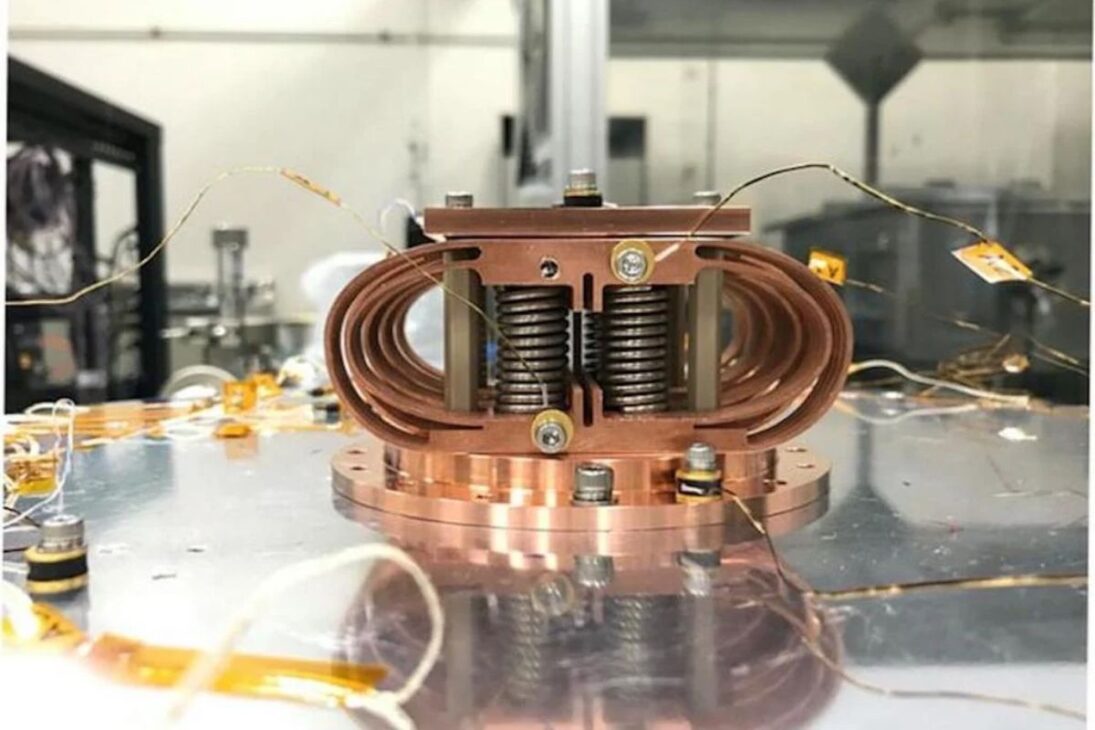
In the vacuum of space, temperatures can drop to -270 °C. Most metals with “shape memory” cease to function around -20 °C. The new discovery surpasses this limit, maintaining stability and performance at -198 °C. This is only possible due to the internal structure of the metal, which rearranges its atoms in response to cold, generating precise mechanical movement.
-
A young Kenyan engineer collects plastic waste from the streets and transforms it into robots that translate physics lessons into sign language in real-time, a machine made with old bottles that teaches what was missing to deaf children left out of science.

-
What is the dark substance found in the sand of Ipanema Beach? Civil Police conduct an examination, collect samples of the material, and initiate an investigation to identify the composition, clarify the origin, and verify if there was an environmental crime.
-
The beer that was hidden for 3,000 years has returned to the world: scientists find yeast preserved in Ancient Egyptian vessels and recreate a pharaoh’s drink to discover the lost taste of an ancient civilization.
-
NASA spotted a giant “surfboard” crossing the Moon’s orbit at 11,500 km/h, and the truth behind the mysterious object required a 0.338 millisecond photo to be revealed.





This phenomenon is called thermoelastic phase transformation, and allows for the creation of mechanisms that open, close, or contract on their own, without motors or electricity. This reduces the risk of failure in satellites or probes facing severe thermal cycles.
Practical Applications In Space Missions And Clean Energy
The research team developed a mechanical thermal switch using this alloy, capable of automatically opening and closing a heat channel upon reaching a specific temperature. The system was successfully tested at -170 °C and can be used in space telescopes like the James Webb, which operates at -223 °C.
Additionally, the new discovery can be applied in systems using liquid hydrogen, such as fuel tanks for rockets or clean energy technologies. Passive actuators, activated only by ambient temperature, could serve as emergency valves — simple, lightweight, and without energy consumption.
Potential For The Future Automation
The material also impresses with its ability to “learn”. By adjusting the ratio of the elements in the alloy, scientists can calibrate the exact temperature at which it will be activated. This enables the creation of custom components, with surgical precision, for extreme environments.
According to the authors of the study, this new discovery represents more than a technical advance. It can enable long-duration missions in deep space, increase the reliability of satellites, and open new frontiers for industrial automation and intelligent cooling systems.
Do you believe this new technology can accelerate space exploration? How could this material be used here on Earth? Share your thoughts in the comments.