






 Portuguese
  Spanish
  5 min of reading
  0 comments


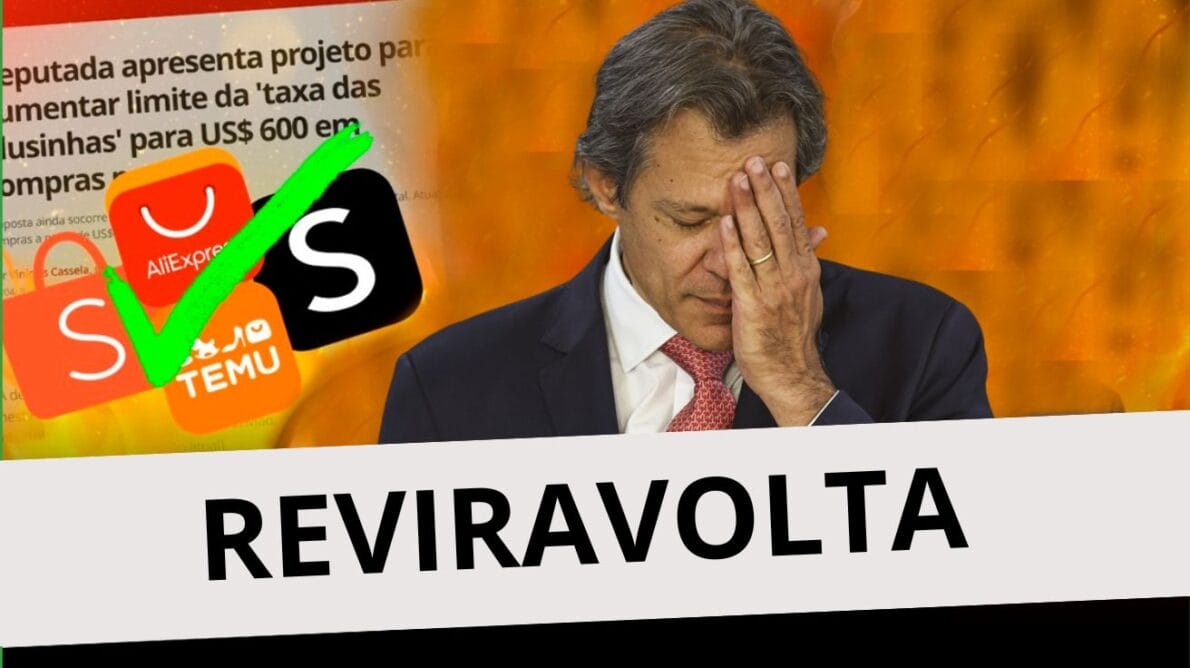
New Bill Aims to Transform the International Shopping Scenario in Brazil by Proposing Exemption for Values of Up to US$ 600, Promising Significant Changes in Digital Commerce and Sparking Reactions in the National Retail Sector.
A legislative proposal presented in the Chamber of Deputies could radically change the way Brazilians shop on international websites.
The bill, drafted by federal deputy Dani Cunha (União-RJ), aims to exempt individuals from taxation on purchases made abroad valued at up to US$ 600 (approximately R$ 3,480, based on the exchange rate of March 2025), provided the products are shipped by Correios.
Currently, the tax exemption limit is only US$ 50 (approximately R$ 290).
-
Survivor of 1966 SS Daniel J. Morrell Shipwreck in Lake Huron Recounts 38-Hour Ordeal in Extreme Cold

-
The Greatest Hoax in World Cup History? The Film That Denied Brazil’s 1958 Victory and Exposed How Fake Evidence Can Seem Convincing on TV
-
Fake South Korean Online Stores Offer Shopping Thrill Without Spending Money or Receiving Products
-
Brazilian Joins Homeownership Consortium, Faces Decade of Dual Payments Totaling $141,000, Surpassing Traditional Mortgage


Any purchase above this amount, even if sent by an individual to another individual, is subject to import tax.
The proposal aims to change this reality, creating a new annual quota that allows more freedom and purchasing power for Brazilian consumers.
Annual Quota Per CPF and No Tax Per Purchase
The proposal suggests a different approach than the current one: instead of taxing each order individually, the bill provides for an annual quota of US$ 600 per CPF, which would be equivalent to about US$ 50 per month.
This means that, over the course of a year, a person could import products up to this total limit without paying import tax, as long as they follow the rules of the new legislation.
“This legislative proposal creates an annual quota of 600 US dollars (equivalent to 50 dollars per month), per individual,” the deputy explained during the presentation of the text.
According to the parliamentarian, the initiative aims to balance the tax treatment between those who shop online and those who travel abroad, as currently, tourists can bring back much higher amounts in goods without paying taxes — which ends up penalizing the less fortunate classes who cannot afford to travel.
Inequality Among Consumers
The creation of the so-called “blouse tax” has faced criticism since it came into effect.
According to Dani Cunha, the measure has widened social inequality, as the wealthier continue to be exempt during international trips, while low-income consumers, who depend on sites like Shopee, AliExpress, and Shein, are the most affected by the new taxes.
Today, anyone traveling abroad by air or sea can return to Brazil with up to US$ 1,000 in goods without taxation, and those traveling by land have a quota of US$ 500.
The discrepancy between these limits and the values applied to international e-commerce caught the attention of the parliamentarian.
“There is a clear imbalance. The citizen who buys a basic necessity product online pays tax, while those who travel abroad can bring back high-value clothing, perfumes, and electronics without paying anything,” Cunha stated.


Proposal Has Not Yet Been Forwarded
Although the bill has been officially presented in the Chamber, the proposal has not yet begun to be processed in the responsible committees.
The president of the House, deputy Hugo Motta (Republicanos-PB), has yet to send the text for review. Without this step, the matter cannot proceed to discussion and voting in the plenary.
Nonetheless, the initiative is already generating debates behind the scenes in Congress, particularly among parliamentarians representing sectors of the national retail trade.
Entities linked to the fashion industry and traditional retail have expressed opposition to the exemption, arguing that it may harm domestic production and encourage tax evasion.
Public Debate Reignited with Popular Support
Despite the resistance from some economic sectors, the proposal has gained support on social media and among e-commerce consumers, who have been complaining about high taxes and the lack of clarity in customs charges.
Many Brazilians reported having given up on international purchases after the implementation of the “blouse tax,” which has caused confusion even among foreign retailers.
Sites like Shein, Shopee, and AliExpress have become popular precisely because they offer affordable prices on a wide variety of products, from clothing and accessories to electronics, stationery, and household items.
The new legislation, if approved, could restore the competitiveness of these sites compared to the domestic market.
According to the Federal Revenue Service, Brazil recorded a 20% increase in the volume of international purchases in the past two years, primarily driven by young consumers from classes C and D.
With the new bill, these purchases could be resumed on a large scale, encouraging consumption and access to cheaper consumer goods.
Comparison with International Rules
Brazil is among the countries with the highest tax burden on low-value imports.
In the United States, for example, the exemption limit for international purchases can reach US$ 800, while in the European Union there is an exemption for products valued at up to 150 euros, as long as they are purchased by end consumers.
The Brazilian proposal, therefore, is moving closer to international standards for digital commerce.
Moreover, experts point out that CPF control could facilitate enforcement and prevent fraud, such as the use of shell companies to send products to third parties, which is common in tax evasion schemes.
Prospects for Approval
If approved in the committees and in the Chamber’s plenary, the proposal will proceed to the Senate and then to presidential sanction.
Political analysts believe that, despite the resistance from some economic sectors, the popularity of the measure among voters could drive its progress.
In times of high inflation and loss of purchasing power, measures that ease the consumer’s burden have great popular appeal.
Deputy Dani Cunha expresses confidence in the approval: “We are advocating for the right of Brazilians to consume with dignity. It is not about opening the doors to smuggling, but correcting an injustice,” she emphasized.
Do you believe that the tax exemption for international purchases of up to US$ 600 could really benefit Brazilian consumers or will it harm the national economy?
Leave your opinion in the comments!





Be the first to react!