Portuguese
  Spanish


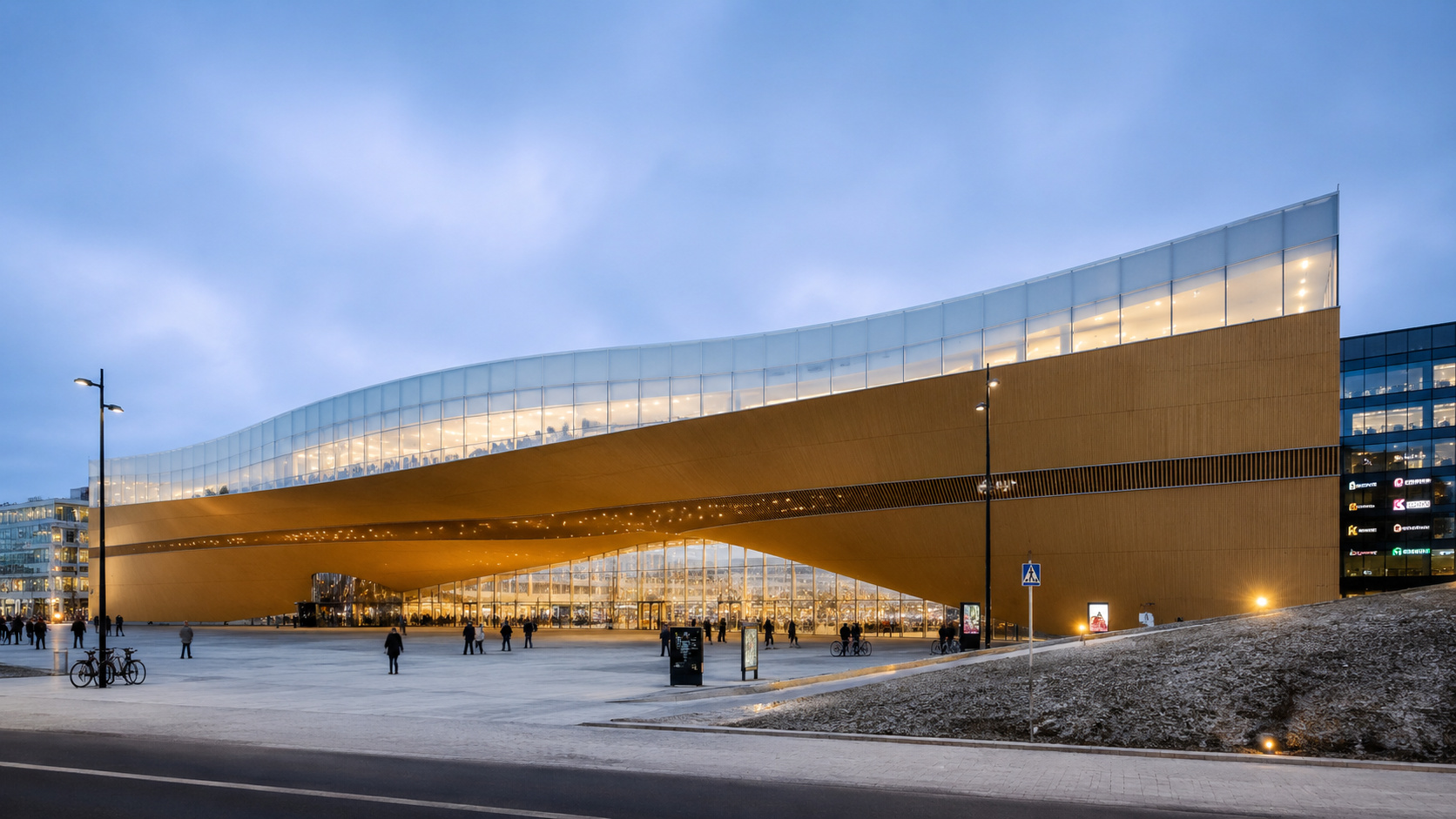

The Oodi Central Library in Helsinki shows how a modern library can become a public square, an engineering marvel, and a cultural space open to the city
The Oodi Central Library in Helsinki stands out because it does not function like a typical library. Instead of resembling a closed and silent building, it was designed as a bridge library over 100 meters long, with the ground floor open for people to circulate.
The information was released by ubm magazine, UBM Development’s digital magazine on architecture. The construction combines books, social areas, an observation deck, a cinema, and workshops, creating a suspended public space that changes the way many people imagine a library.
In practice, Oodi shows that a modern library can be much more than shelves and reading tables. It can function as a covered square, meeting point, cultural center, and a living part of the city.
-
American Youth Transforms from Severe Obesity to U.S. Air Force Enlistment, Losing 90 Kilograms in Two Years

-
11-Year-Old Entrepreneur Sells 60 Homemade Sweets Daily, Mastering Cost Calculation, Social Media Promotion, and Client Negotiation Since Age 7

-
Peruvian Mountain’s 5,200 Aligned Holes May Unveil Ancient Indigenous Market for Corn and Cotton
-
The Little-Known Story of a Home-Built Airplane That Promised Freedom but Faced Safety Issues After Numerous Accidents


Why the Oodi Central Library is called a bridge library in Finland
The idea of a bridge library comes from the building’s own structure. Oodi spans over 100 meters across the open ground floor, without turning the building’s base into an area full of pillars.


This gives visitors the feeling that part of the library is suspended over the city. The building does not completely block the public space. On the contrary, it creates a free area underneath, where people can continue to circulate.
This solution makes the structure easier to understand. A bridge spans a space. Oodi does this too, but with rooms, books, a cinema, workshops, and social areas within the structure.
How the large steel arches support the free span of over 100 meters
The central point of the engineering lies in the large steel arches. They help support the free span of over 100 meters and allow the ground floor to remain open.
The structure also uses steel beams and trusses. In simple terms, these are strong pieces that distribute the building’s weight to the main support points. Thus, the library can have large internal areas without relying on many pillars in the way.
The reinforced concrete slab helps to lock the set. This type of slab mixes concrete and steel bars, creating a strong base to give firmness to the construction. With this, Oodi functions as a inhabited bridge, made to welcome people every day.
Open ground floor transforms the library into a covered square in the center of Helsinki
The open ground floor is one of the most striking parts of the Central Library Oodi. Instead of creating a small and closed entrance, the design leaves the base of the building more open, like a covered square.
This detail changes the relationship between the building and the city. People can pass through, meet others, wait, circulate, and stay in the place without feeling like they are entering a restricted space.
The result is a library that communicates with the street. The architecture is not just for impressing. It organizes public use and transforms the building into an extension of the urban space.
Observation deck, cinema, and workshops show that Oodi goes far beyond books
The Central Library Oodi is not limited to lending books. It brings together environments focused on reading, but also offers spaces for workshops, collective use rooms, leisure areas, a café, a restaurant, and a cinema.

Ubm magazine, UBM Development’s digital magazine on architecture, detailed that the building separates its functions on different levels. The ground floor has more active use, the upper part houses quieter areas, and the intermediate floor concentrates specific activities.
This division helps explain why Oodi became an example of a modern library. Those looking for silence find space to read. Those seeking interaction find open areas. Those who want to create or learn also find environments prepared for that.
Suspended public space changes the way of thinking about modern libraries
Oodi draws attention because it transforms the library into an urban experience. The visitor does not just find a building to consult books. They find a suspended public space, with views, circulation, social interaction, and cultural activities.
This idea brings the library closer to people who might not frequent a traditional building. The environment becomes more inviting, less rigid, and more connected to everyday life.
The case draws attention because it shows a different way of investing in public facilities. A library can also be a place for meeting, resting, learning, leisure, and participating in the city.
Why the Helsinki bridge library became a reference in public architecture
The strength of the Central Library Oodi lies in the mix between engineering and social use. The free span of over 100 meters creates a visual impact, but also frees the ground floor for the population.
The steel arches are not just a technical solution. They make possible a more open library, with fewer physical barriers and more space to circulate. The structure helps transform the building into a meeting point.
Instead of hiding the library behind closed walls, the project places the building in dialogue with the city. This choice makes Oodi a reference when it comes to public architecture, modern library, and urban space.
A library that looks like a bridge and functions as part of the city
The Central Library Oodi shows that a public work can unite reading, culture, and engineering in a simple idea to understand: a library that spans space like a bridge and leaves the ground floor open for people.
With more than 100 meters of span, large steel arches, an observation deck, cinema, workshops, and social areas, Oodi proves that modern libraries can play a much larger role in urban routine.
If a library can become a square, observation deck, and meeting point, what is missing for Brazilian cities to treat these spaces as an essential part of public life? Share your opinion and share this publication.