






 Portuguese
  Spanish


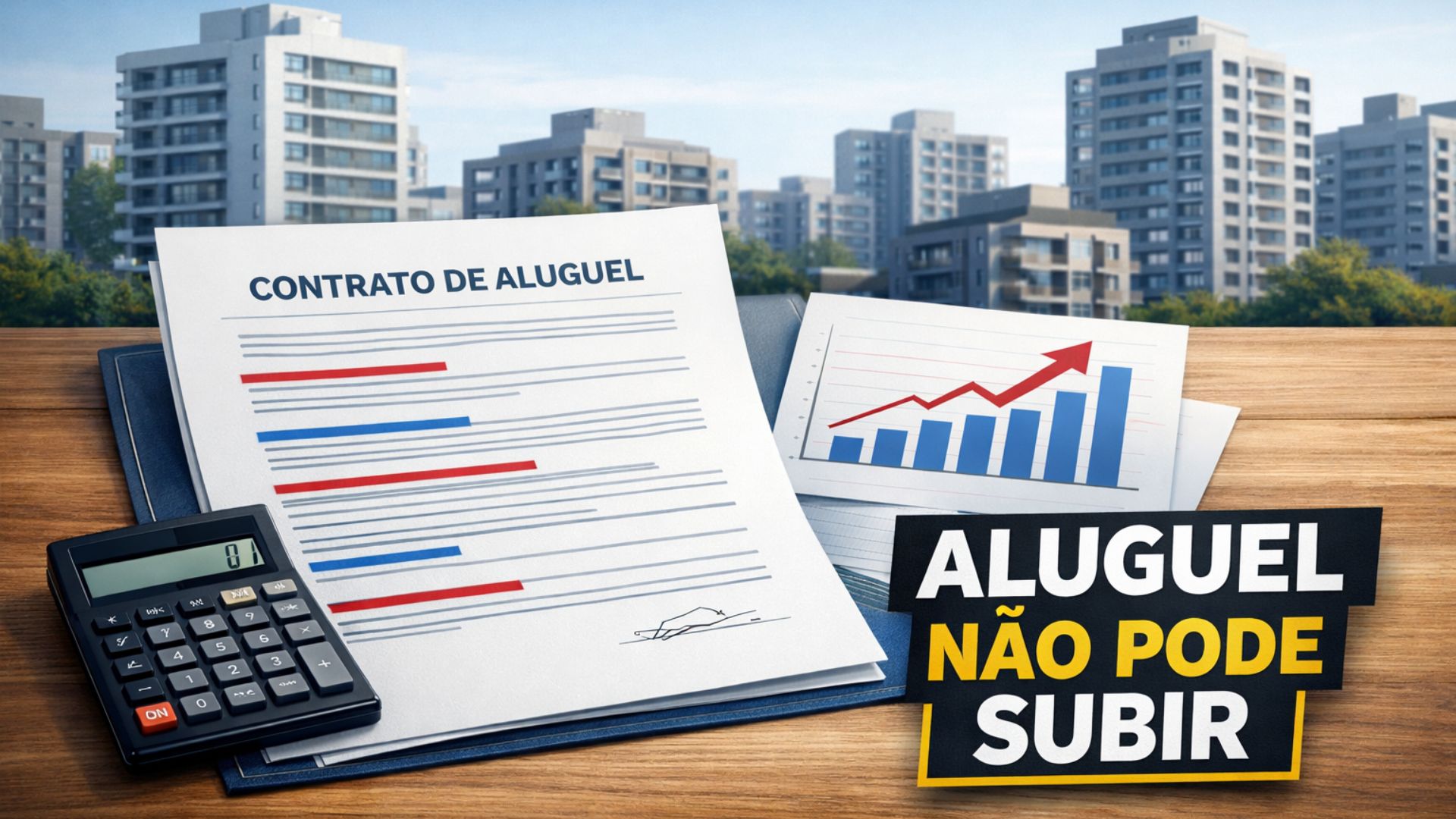


Contractual Protection Against Unexpected Increases Gains Attention Amid Changes in Inflation Indices and Revives the Debate on Rent Adjustment, Reinforcing the Importance of Clear Clauses, Defined Periodicity, and Attention to Official Indicators Used to Correct Residential and Commercial Contracts.
Rules for rent adjustment have returned to the spotlight with the circulation of content suggesting a supposed “new tenant law” starting in February 2026.
In Brazil, however, the basis that prevents unexpected increases during the term of the contract has been established for years and remains valid.
Rent can only be adjusted according to what was agreed upon between the parties and respecting the usual minimum periodicity of 12 months, unless there is formal negotiation between landlord and tenant.
-
Hurry: Wikipedia pays up to R$ 2,500 for those who write about Minas Gerais, contest entries end on July 10, 2026, and even beginners can “earn,” with prizes starting at R$ 200.

-
A city with 8,000 inhabitants will receive R$ 25 billion to host the largest single-stage pulp mill in the world, with a production of 3.5 million tons per year and a cost of R$ 45 million.
-
He left India for Oman in 1976, entered through the door of luxury finishes, and took Sobha to the premium real estate market in the Middle East.

-
China wants to impress the world once again with a mega canal featuring giant locks, deep waters, and space for the largest ships, in a project aimed at shortening journeys, reducing queues, and rivaling the Panama Canal in global trade.



In Argentina, on the other hand, the repeal of the rental law has profoundly altered the rental landscape, making predictability even more dependent on the signed clauses and the chosen index.
In practice, there has been no change in the principle of protection against arbitrary increases during the contract.
What has changed is the level of attention required in reading the contract and monitoring the economic indicators used for correction.


With inflation more controlled in Argentina throughout 2025 and distinct indices in Brazil, the choice of indexer and the frequency of updates began to define the size of the adjustment and the risk of budget impact.
Rent Adjustment Is Not a Free Increase During the Contract
Part of the confusion that fuels rumors about a “new law” arises from the mixing of the concepts of adjustment and renegotiation.
Adjustment corresponds to the update of the rent value based on an index provided in a clause, applied at the time defined in the contract, usually on the anniversary of 12 months of the lease.
Renegotiation, on the other hand, involves a price discussion outside the automatic indexer’s rule and usually occurs during renewal processes, changes in conditions, or judicial reviews.
In Brazil, the Tenancy Law preserves the freedom of the parties to agree on the rent amount but imposes clear limits on the forms of correction.
Among these restrictions is the prohibition of linking the rent to foreign currency, the minimum wage, or exchange rate variation.
In practice, this sends a direct message to the landlord.
As long as the contract is in force, there is no room for an increase by unilateral decision, even if there is appreciation in the neighborhood, growth in demand, or comparison with recent listings.
At the end of the contract term, however, the legislation does not impose an automatic ceiling on the suggested renewal value.
At that moment, the tenant’s protection depends on negotiation, analysis of similar properties, and, when applicable, the use of legal review instruments.
How Rent Calculation Works by CPI in Argentina
After the repeal of the rental law in Argentina, many contracts began to adopt official correction indices as the main reference.
The most commonly used is the Consumer Price Index, published by INDEC, in addition to arrangements with a periodicity of less than one year.
This combination increased the need to monitor official data closely.
The monthly inflation percentages should not be applied directly to the rent amount.
They need to be accumulated within the defined interval before any practical application.
In December 2025, the CPI recorded a monthly increase of 2.8%. For the year, the official inflation reached 31.5%, a percentage that usually serves as a basis for contracts with annual adjustment.
When the adjustment is quarterly, quadrimonthly, or semiannual, the calculation requires summing the index variation over the stipulated period.

Only after that is the accumulated percentage applied to the current rent amount.
The defined periodicity directly influences the impact on the tenant’s budget.
Shorter updates tend to dilute the increase throughout the year but require constant financial planning.
ICL Still Weighs on Old Rental Contracts
Despite recent changes in the Argentine market, contracts signed under previous rules continue to produce effects.
Many of them remain linked to the Rental Contract Index, known as ICL.
The indicator is published by the Central Bank of Argentina and combines, equally, the variation of the CPI and the RIPTE.
The RIPTE reflects the evolution of the average remuneration of formal workers, which causes the ICL to follow both inflation and salary dynamics.
For contracts with annual adjustment applied in January, the index was around 36% in the comparison between equivalent periods of 2025 and 2026.
This level represents a significant impact for old contracts, especially in large urban centers.
Still, the adjustment does not occur arbitrarily. The percentage must be provided for in the contract and can only be applied on the correct date established by the parties.
Rent Adjustment in Brazil in 2026 Follows Contract Index
In Brazil, the legal structure of rentals remains stable and familiar to the market. Rent adjustment typically occurs once a year, always on the contract anniversary.
The decisive factor for calculation is the index chosen in the contractual clause. The most common ones continue to be IPCA, IGP-M, and, to a lesser extent, INPC.
The difference between these indicators can lead to quite distinct results over 12 months.
The IGP-M, for instance, is more influenced by wholesale prices and exchange rate variation. Meanwhile, the IPCA more closely tracks the cost of living for Brazilian families.
Additionally, the Tax Reform approved by Constitutional Amendment No. 132 has drawn additional attention to the rental issue.
The effects tend to be more noticeable in commercial contracts.
Even in this context, no tax change permits adjustments outside what is stipulated in the current contract.
Additional costs may be considered in future negotiations, but do not allow unilateral changes during the term of the agreement.
How to Calculate Rent Adjustment Without Error

The correct calculation starts with a careful reading of the lease contract. It is essential to identify the start date of the lease and verify when the adjustment anniversary occurs.
Next, one should confirm which index was defined and what the correction periodicity is.
The adjustment can be annual, semiannual, quarterly, or follow another specific interval. The central rule remains the same.
One must always apply the accumulated inflation from the full period, not the isolated variation of a single month.
After that, the accumulated percentage is applied to the current rent amount. Keeping a record of the index source used and saving the calculation helps avoid conflicts.
When the indicator is official, transparency reduces disputes and strengthens the relationship between landlord and tenant.
When Can the Tenant Contest the Rent Increase
The contestation of the adjustment usually occurs in two main situations. The first arises when the increase is applied outside the contractual deadline or above the agreed index.
In these cases, the tenant can demand strict compliance with the contract, even through administrative or legal channels.
The second scenario involves discussion about distortion relative to the market value. This type of debate generally arises in renegotiations or review actions.
This is not an automatic limit but a mechanism to correct proven excesses. In the day-to-day of rentals, protection against unexpected increases revolves around a central point.
What is written in the contract and the proper way to apply the index on the agreed date remain decisive.





Aqui em Guarulhos -SP os proprietários estão almetano muito o valor do aluguel passando de 1.150.00 para 1.250.00 já com o IPTU incluso.
Existe contrato que inicialmente é acordado com valor abaixo do mercado e nada impede de o locador chamar o inquilino e adequar ao preço de mercado …
Deveria ter fiscalização nas imobiliaria