






 Portuguese
  Spanish


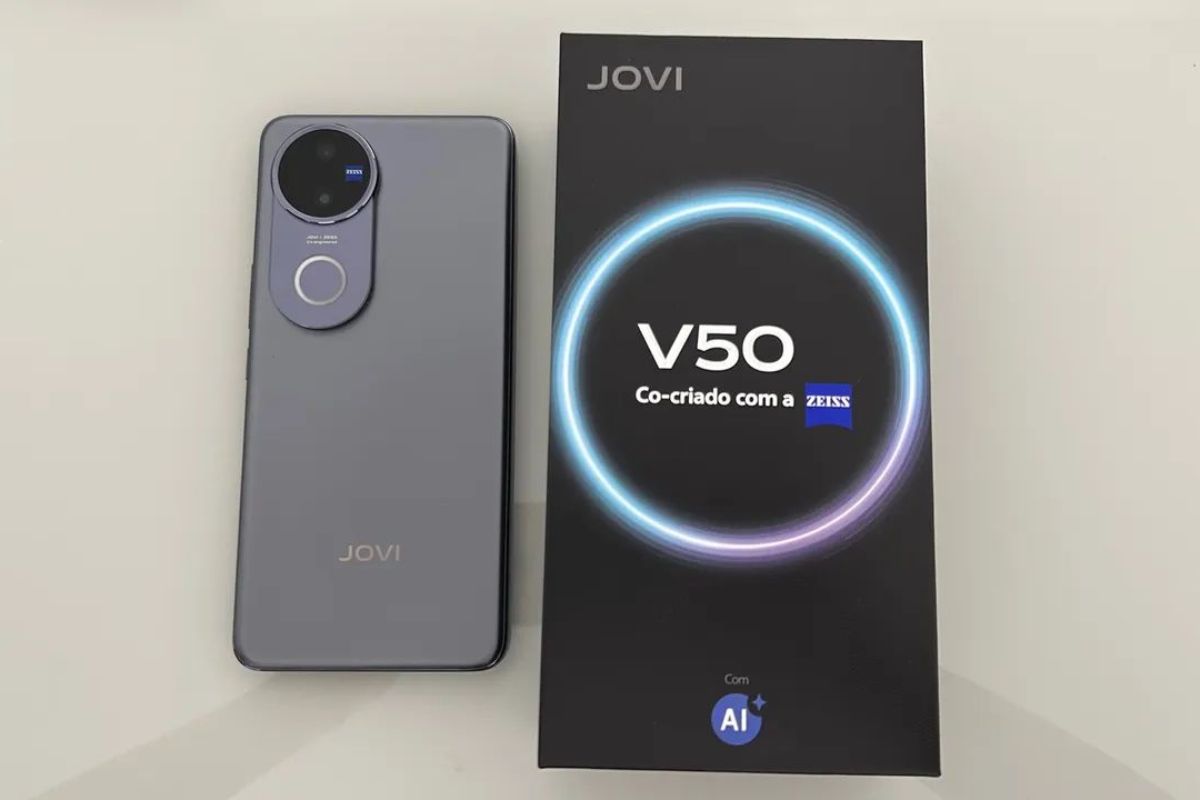


New Chinese Bet in the Technology Sector Brings Accessible Cell Phones to Brazil, with Long-Lasting Battery, Advanced Cameras, and Focus on Challenging Leading Brands.
The Brazilian smartphone market gained a new competitor in 2025: JOVI, a Chinese brand that arrives with the proposal to offer cheap cell phones, with giant battery, artificial intelligence features, and high-performance cameras. The company aims to carve out a space in a market dominated by giants like iPhone, Samsung, and Motorola, betting on competitive prices and robust specifications.
According to a report by Ashley Menezes, for TechTudo, JOVI’s strategy is clear: to win over the audience seeking more performance for less money, with models ranging from basic options to premium devices with 5G connectivity and heavyweight partnerships, such as the one established with the German company ZEISS for the camera system.
Entry Models from JOVI Prioritize Cost-Benefit
The cheapest model presented by JOVI is the Y19S, which hit Brazilian stores with an initial price of R$ 1,349. It stands out for its 5,500 mAh battery and 256 GB of internal storage, features that are generally not found in devices at this price point.
-
Brazil to Install First Operational Quantum Computers in the Northeast and Establish New Center to Boost Technological Sovereignty

-
Potential Starlink Rival: Company Tests 60-Meter Balloon to Deliver 5G Internet Without Satellites, Prepares for Unprecedented Mission in Japan
-
Android Phones Can Detect Earthquakes Before You Feel Them: How Accelerometers in Billions of Devices Confirmed Two Strong Quakes in Venezuela and Warned Residents Seconds in Advance

-
Scientists Warn WHO: Cat-Linked Parasite Infects One-Third of Global Population, Poses Risks to Vision, Pregnancy, and Neurological Health



Additionally, it has a 6.68-inch IPS LCD display with a 90 Hz refresh rate, Unisoc T612 processor, and a rear camera of 50 MP, delivering good performance in everyday tasks.
Another highlight is the Y29, sold starting at R$ 1,709. This model targets an audience looking for more speed and autonomy, with Snapdragon 685 processor, 8 GB of RAM, and a 6,500 mAh battery with 44 W fast charging.
The screen, also 6.68 inches, reaches a 120 Hz refresh rate and 1,000 nits of brightness, providing a superior experience for videos, browsing, and light gaming.
5G Connectivity and Artificial Intelligence as Differentiators
Among the mid-range models, JOVI bets on the Y29s, the first in the line with support for 5G, available for R$ 2,299. Besides connectivity, the device offers artificial intelligence features, such as image optimizer and eraser, as well as two guaranteed Android updates.
It has a 6,000 mAh battery, 44 W fast charging, and 50 MP cameras on the rear and 8 MP on the front.
Meanwhile, the V50 Lite, sold for R$ 2,899, emerges as an option for those seeking a mid-range phone with flagship performance. The BlueVolt 6,500 mAh battery ensures up to 27 hours of YouTube videos, with 90 W charging being the fastest among the models.
The main camera uses a 50 MP Sony IMX882 sensor, accompanied by an 8 MP ultra-wide and a 32 MP front, aimed at those who prioritize selfies and social media.
JOVI V50 Bets on ZEISS Cameras to Challenge Giants
At the top of the line is the JOVI V50, sold for R$ 4,499. The premium model is designed to compete directly with iPhones and Galaxy in the high-end category, offering two rear cameras of 50 MP with ZEISS OIS optical stabilization and a 50 MP front camera with autofocus.
The exclusive AURA LIGHT flash ensures sharper night photos.
In addition to the camera setup, the device features a Snapdragon 7 Gen 3 processor, 12 GB of RAM, IP68/IP69 protection against water and dust, and a 6,000 mAh battery with ultra-fast charging of 90 W.
These specifications position the V50 as the brand’s main bet to attract consumers looking for a high-end phone at a competitive price compared to traditional rivals.
Impact of JOVI’s Arrival in Brazil
Experts point out that JOVI’s arrival could pressure competitors to rethink prices and features offered in the Brazilian market, as the brand combines long-lasting battery, advanced cameras, and affordable cost.
Furthermore, the strategy to sell in large retailers like Casas Bahia and Mercado Livre expands the company’s reach among consumers of different profiles.
According to industry data, Brazil is one of the countries with the highest smartphone replacement rate in Latin America, making the market attractive for new brands.
JOVI aims to position itself precisely in this space, offering a variety of models ranging from basic to premium, all with a focus on autonomy and photographic performance.
The arrival of JOVI in Brazil in 2025 represents a significant strategic move in the smartphone sector, which could change the dynamics among the main manufacturers.
Cheap cell phones, giant batteries, and advanced cameras are the cards the Chinese brand plays to win consumers.
Do you believe that JOVI has the potential to dethrone Samsung, Motorola, and even challenge the iPhone in Brazil? Have you considered switching to a model from the brand?
Share your opinion in the comments; we want to hear your experience and expectations about this news.


Matéria comprada, os preços tão longe de pressionar a concorrência. São celulares com processadores fracos e de baixa longevidade, podem enfiar a perfumaria que for, em relação a câmeras, carregamento, continuam sendo celulares de entrada. O V50 até parece ser um intermediário interessante, mas por 4500 mais vale pegar um top de linha de outras marcas em promo.
Já foi a época de trazer coisa ruim para brasileiro comprar a marca vivo apostou em trazer os piores celulares para o mercado brasileiro e com preço la em cima tendo apenas 4 g básico . Se lascou porque o brasileiro não é mais o mesmo que aceita qualquer coisa
a Jovi conheço bem lá fora como Vivo sei que carrega nome de peso que se destaca na Benchnark entre os primeiros acima da Apple e Samsung, e até mesmo da preferida e mais conhecida chinesa Xiaomi. Bem como outras marcas como Realme. Agora terá concorrência no mercado.