






 Portuguese
  Spanish


New Generation of Biological Concrete with Bacteria Developed in the Netherlands Regenerates Itself, Doubles the Longevity of Structures, and Promises to Revolutionize Global Civil Engineering.
For over a century, concrete has been considered the most reliable and indispensable material in civil engineering. Present in bridges, skyscrapers, dams, and tunnels, it supports the modern world. But it also carries an old problem: inevitable cracks and fissures over time, which compromise its durability and require high repair costs. Now, an innovation emerging from the labs of Delft University of Technology (Netherlands) is set to change this reality. Scientists have developed a new generation of concrete that is capable of self-regeneration, using microscopic bacteria that “heal” internal cracks when they come into contact with moisture.
The technology, already in real-world application in bridges and tunnels across Europe, can increase the lifespan of concrete structures by up to 200% and reduce annual maintenance costs by billions.
The Concrete That Heals Itself
The idea of what is called “biological concrete” came from observing nature. Professor Henk Jonkers, a microbiologist and researcher at Delft University, noticed that certain species of bacteria are capable of precipitating calcium carbonate (CaCO₃), the same mineral compound found in limestone and sea shells. This characteristic inspired the creation of concrete that “heals” itself without human intervention.
-
Giant Robots Build Entire Neighborhood of 100 3D-Printed Homes in the U.S., Showcasing Technology’s Impact on Construction Industry

-
Helsinki Residents Receive Water That Travels 120 Kilometers Through a Hidden Rock Tunnel from a Lake Before Treatment

-
Brazil’s Sertão Region Nears Completion of Latin America’s Longest Artificial River, Transforming Water Access in Drought-Prone Ceará
-
Pre-mixed stabilized mortar set to revolutionize construction in 2026: extends usability to 36 or 72 hours, boosts productivity, and minimizes waste in building projects.


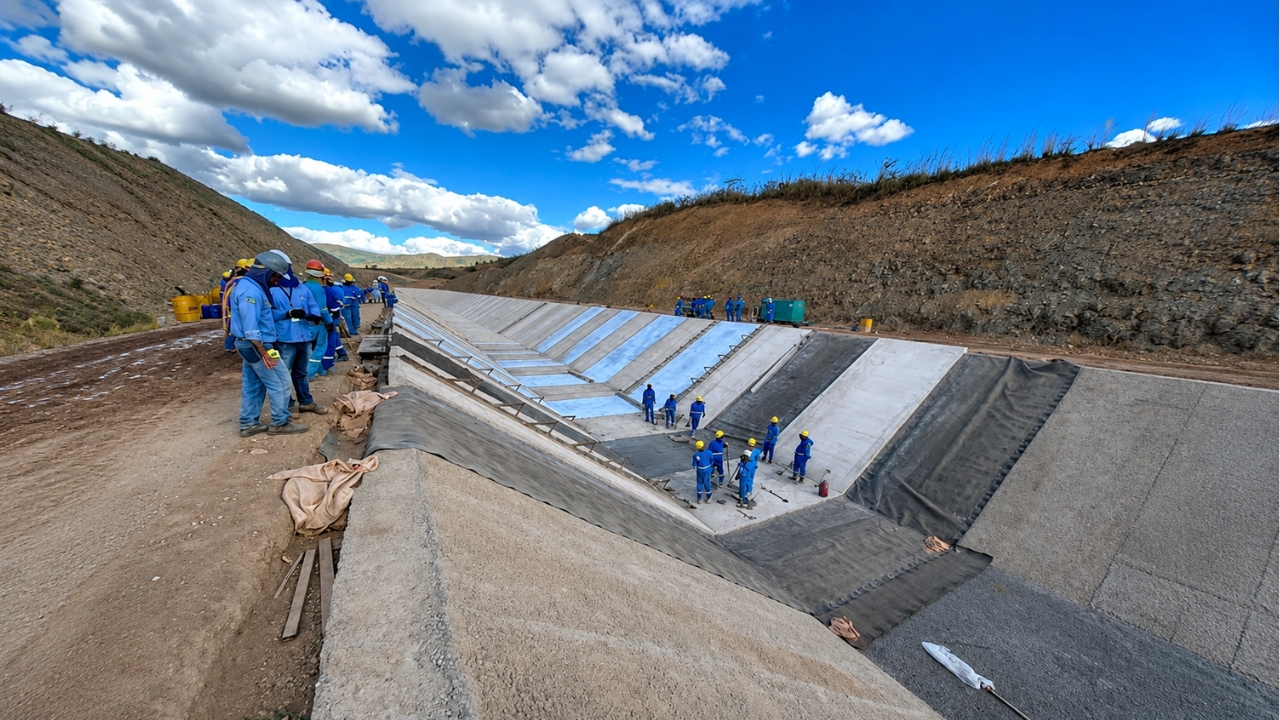

The process works like this: during the manufacture of the concrete, bacteria of the species Bacillus pseudofirmus and microcapsules of calcium lactate are added, which serve as food for them.
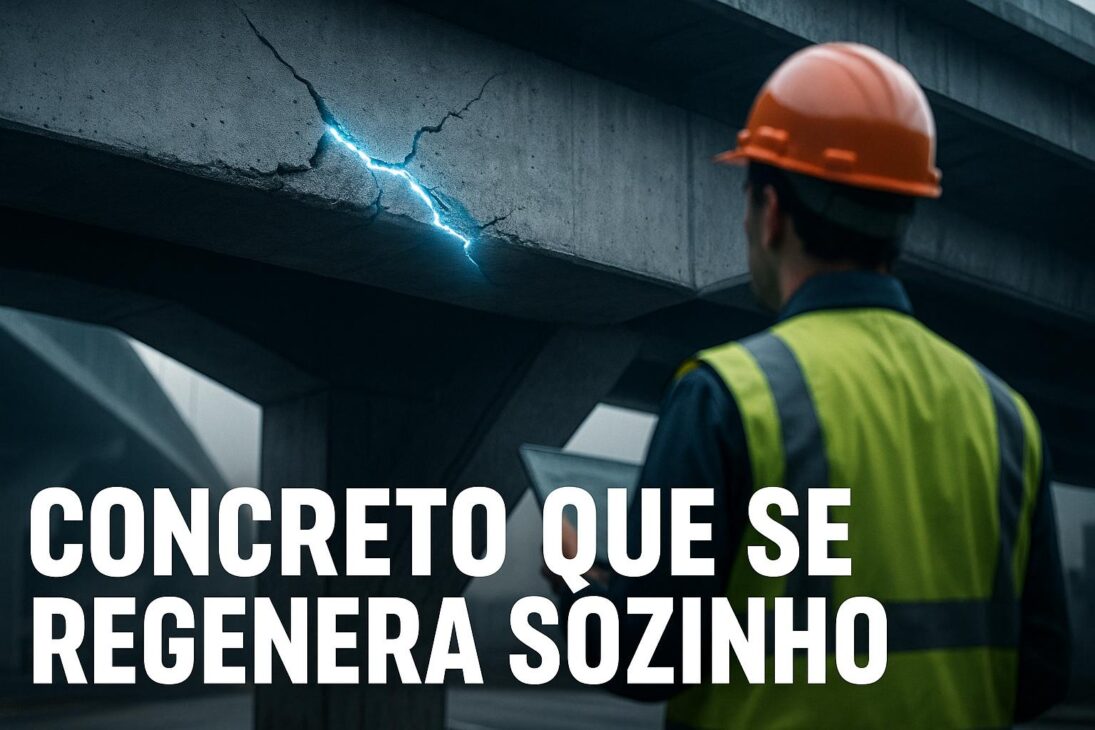
When the structure experiences a microcrack and water seeps in, these bacteria “wake up” from their dormant state and initiate a chemical reaction that produces calcite. This substance fills the cracks from the inside out, restoring the impermeability and structural integrity of the material.
Professor Jonkers explains:
“These bacteria can remain dormant for up to 200 years. When water penetrates a crack, they reactivate and begin to produce limestone, naturally sealing the concrete. It’s as if the material has its own immune system.”
Results That Impress Engineers
The first field tests were conducted in 2019, on bridges and walkways in the Netherlands, and the results were promising. The regenerative concrete completely sealed cracks of up to 0.8 millimeters thick in just 28 days, even under variations in temperature and humidity.
Studies published in the journal ScienceDirect and on the Engineering Structures portal show that biological concrete increases compressive strength and permeability by 150% compared to conventional concrete. Furthermore, it dramatically reduces chloride penetration, one of the main causes of corrosion in metal reinforcements in bridges and overpasses.
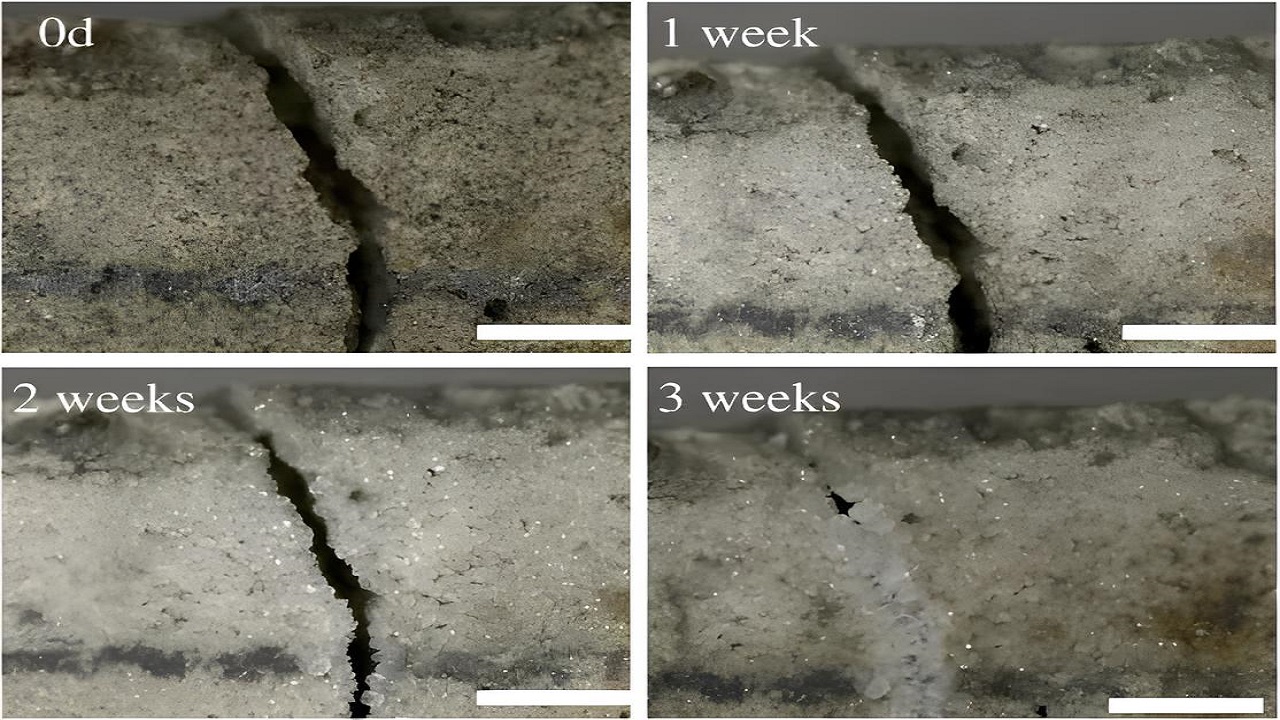
In practice, this means that structures exposed to the elements could last twice as long without major interventions, reducing public spending on maintenance and prolonging the lifespan of critical infrastructure works.
Real-Scale Applications in Europe
The technology has already moved beyond the laboratory phase. In 2023, the material was used for the reinforcement of the Scharsterbrug bridge in the province of Friesland and in sections of drainage tunnels in Belgium and Germany. In all cases, the self-healing concrete showed complete sealing of microcracks in less than a month, even under direct exposure to rain and intense vibrations.


Engineering companies like Basilisk Self-Healing Concrete and Heijmans NV are now producing the material on a commercial scale, with the support of the Dutch government and European innovation funding. According to data from the European Concrete Platform, the use of biological concrete could reduce maintenance costs by up to 50% in infrastructure projects over the next 20 years.
Structural engineer Mark van Tittelboom from Ghent University (Belgium), who also participated in the studies, highlights the importance of this innovation:
“This technology is a game changer for civil engineering. We are facing the first building material with truly biological behavior.”
Economy, Sustainability, and Environmental Impact
Beyond durability, self-healing concrete brings significant environmental advantages. It is estimated that the construction sector is responsible for about 8% of global CO₂ emissions, largely due to cement production and frequent maintenance.
With the new technology, less concrete will need to be replaced, representing a direct reduction in carbon footprint. A report from the Carbon Leadership Forum (2024) estimates that if 20% of the world’s concrete adopted the regenerative model, annual CO₂ emissions from the sector would drop by over 400 million tons, equivalent to the impact of 90 million fewer cars on the road.
Furthermore, since the material is based on natural biological processes, there are no toxic risks or negative environmental impacts. The bacteria used are safe, inactive until they come in contact with moisture, and die after sealing the cracks.
The Challenge: Cost and Scalability
Despite its advantages, biological concrete still faces challenges for large-scale adoption. Currently, the cost is 25% to 35% higher than regular concrete due to the process of encapsulating the bacteria and using special mineral additives.
However, experts point out that the return on investment is quick, as savings in maintenance offset the initial cost within a few years. According to a study by TU Delft, a bridge constructed with self-healing concrete could reduce its life cycle cost by up to 40%.
Engineer Jonkers states that the team is already working to make the product more affordable:
“We are developing cheaper versions adapted for different climates. Soon, it will be possible to use biological concrete even in tropical countries, with the same efficiency.”
The Future of Smart Material
Parallel research is exploring even more sophisticated variants of the technology. Scientists at the University of Colorado Boulder (USA) have created a type of “living” concrete that uses photosynthetic cyanobacteria to capture CO₂ from the air and form new mineral bonds.
The University of Bath (UK) is studying the incorporation of self-healing polymer microcapsules that can release sealing resin upon detecting internal pressure.
These advances are part of a global trend called “bioadaptive engineering”, which aims to create materials capable of responding and adjusting to the environment, mimicking natural processes.
A Silent Revolution in Structures
Regenerative concrete represents a new era in civil construction, an era in which structures take care of themselves, save resources, and withstand the elements without relying on constant interventions.
Bridges, overpasses, and buildings constructed with this technology could last over 200 years, becoming icons of sustainability and smart engineering. What once seemed science fiction is now in the phase of commercial expansion and promises to redefine how the world builds and preserves its heritage.
In a planet seeking to balance development and sustainability, self-healing concrete is not just an innovation: it is a concrete step toward the future.







A ideia é muito boa! Como engenheiro civil creio que irá a médio prazo resolver muitos problemas nas construções! O preço talvez ainda não seja acessível! Obrigado.