Portuguese
  Spanish


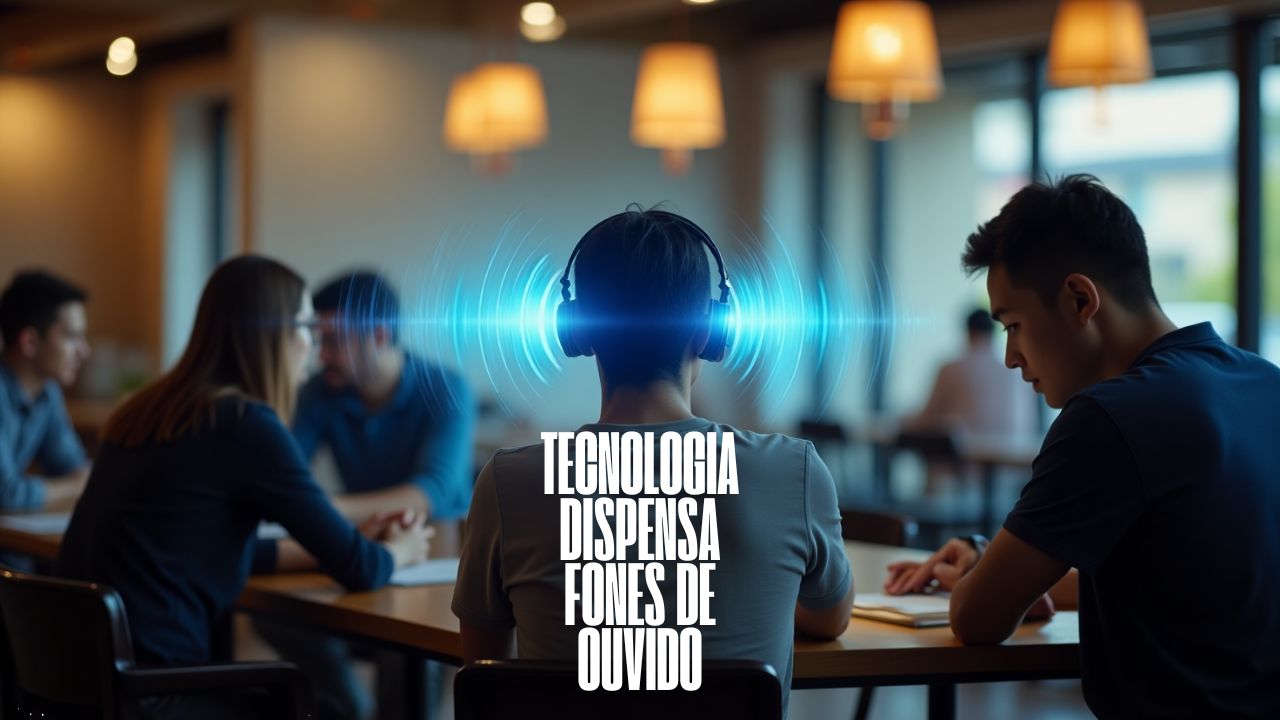

Created by researchers at Penn State University, the innovation uses ultrasound to create invisible sound enclaves, where sound is audible only to the listener. The technology can transform public spaces, offices, public transport, and the advertising industry.
Listening to music in the subway or watching videos in a café, without headphones and without disturbing those around, seems impossible — but it is no longer. A team from Penn State University in the United States has developed a new technology that precisely directs sound to a single point in space, allowing only the user to hear the audio, even in public places.
The research was published in March 2025 and caught the attention of outlets such as Olhar Digital and the Terra website, which explain that the innovation works through what’s called nonlinear acoustics, creating “silent sound zones” for those outside the range. The sound bends, avoids obstacles, and reaches the listener’s ear with precision, without external noise or interference for others.
How The Technology That Dispenses Headphones Works

The solution is based on ultrasound beams that interact with each other to form an audible enclave — that is, an exact point where sound can be heard. The researchers explained to the journal Applied Physics Letters that, outside of this point, the beams remain at frequencies inaudible to humans.
-
China Develops Custom 140-Ton Electric Mining Truck with 770 kWh Swappable Battery, Deploys 290 Units in Xinjiang’s Largest Zinc Mine

-
Meta to Launch Arena, a New Prediction App Targeting 3.56 Billion Users, Competing with Polymarket and Kalshi

-
Scientist Challenges Famous Human Evolution Theory, Argues Homo Sapiens Evolved Gradually Over Thousands of Years
-
15-Year-Old American Builds Ocean Generator with PVC Pipe and 3D-Printed Propeller for $12, Wins National Prize, Presents at White House, and Makes Forbes 30 Under 30 List




Acoustic engineer Amir Eftekhar Azam, one of the study’s leads, stated that the intention was to create a private audio system, without physical isolation, ideal for personal use or in shared environments. According to him, “this technology could transform the way we listen to music, participate in virtual meetings, or even receive advertising information in public places.”
Applications: From Offices to Public Transport
Among the practical applications already mapped are subway stations, waiting rooms, shared offices, and even autonomous vehicles. As the sound is only audible to the recipient, it would be possible to listen to a call or video without the need for headphones or speakers. Corporate environments would also benefit from more privacy in calls and less overall noise.
According to the Terra portal, technology and advertising companies have already shown interest in the novelty. The ability to create “sound bubbles” directed at specific consumers could pave the way for new formats of interactive ads in shopping malls, airports, or sports events.
Challenges and Next Steps
The Penn State team acknowledges that there are still challenges. The first is the size of the equipment, which currently occupies a laboratory bench. The next phase of the project involves miniaturizing the ultrasonic emitters and increasing the efficiency of directionality.
Another crucial point is regulation. As the system operates via ultrasound, it will be necessary to follow safety standards and usage in public spaces. The Federal Communications Commission (FCC) is already studying standards for directional sound technologies that could be used commercially.