

Created in Curitiba, the platform manages 51 million ads, monitors 600 thousand competitors, and reached R$ 12.3 billion transacted by clients in 2024, after being born from a debt-ridden operation and almost going bankrupt
Seconds, an intelligence platform for marketplaces created in Curitiba, moves about R$ 900 million per month in online sales. Without external investors, the company reached R$ 12.3 billion transacted by clients in 2024, after being born amidst debts, supplier charges, and loans that forced the founding couple to sell assets, including their own house, to keep the project alive.


Seconds manages 51 million ads in marketplaces
The volume of R$ 12.3 billion recorded in 2024 does not correspond to the company’s revenue. The number represents sales made by clients with the support of the technology developed by the company.
The platform is used by retailers to manage prices, ads, competition, and profitability in digital channels.
-
Brazil’s 2026 Tax Refund: Record 9.58 Million Filers in Largest Payout Ever, But a Key Detail on Priority Recipients Draws Nationwide Attention

-
Itaú Alters Hybrid Work Model, Increasing Office Days from 2028, Prompting Employees to Adjust to New Routine
-
Facing Labor Shortage, Japan Plans to Invest $34 Million to Attract Foreign Workers in Construction, Healthcare, Industry, and Commerce

-
Brazilian City Makes Remarkable Leap, Becomes 4th Wealthiest in the Country with GDP of R$ 134.1 Billion




Currently, the system manages more than 51 million ads and monitors approximately 600 thousand competitors in real-time.
This data places the company among the leading Brazilian platforms dedicated to the management and profitability of sellers operating in marketplaces.
The journey, however, was built without venture capital funds or investment rounds. The company grew with resources generated by its own operation, after its founders faced financial problems in a previous business.

Technology was born from a difficulty faced by the couple
Before developing the platform, Leonardo Vilar worked as a salesman. With a degree in Information Systems, he began his career as a programmer but left stability to venture into projects related to technology and e-commerce.
Later, he became a partner in a motorcycle parts operation sold online. Although the business was growing, the costs of customer acquisition, media, fees, and operational expenses compromised a significant portion of the revenue.
The change began when Vilar decided to test sales on Mercado Livre. At the time, the platform still faced skepticism among some traditional retailers.
Within a few months, he reached the Platinum category and began managing tens of thousands of ads simultaneously. However, the increase in sales also increased the complexity of the operation.
Prices needed to be updated constantly, while rules and algorithms affected the visibility of the products.
At the same time, competitors modified offers in real-time, making it difficult to maintain sellers’ margins.
Unable to find a tool capable of meeting the operation’s needs, Leonardo Vilar began developing his own technology. Before the system could become a product, however, the business collapsed.
The family faced bank debts, loans, and supplier charges. To keep the project running, they sold part of their assets, including their own house.
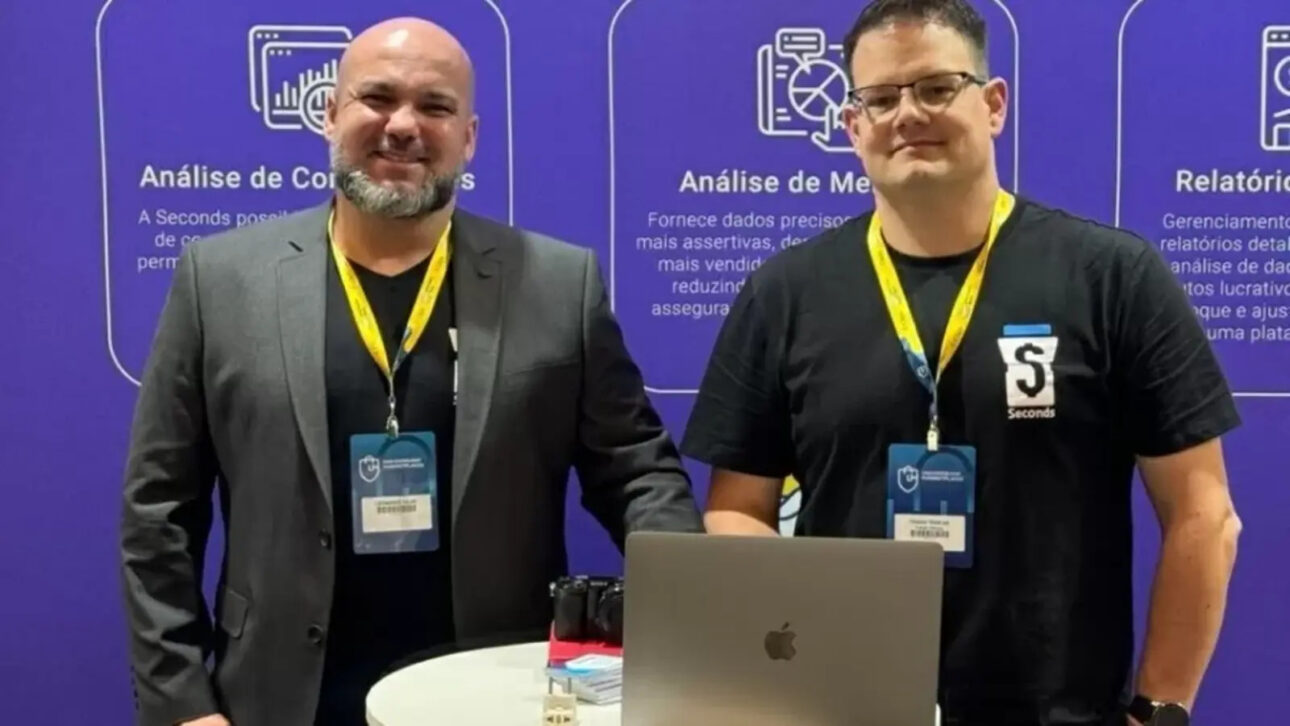
Image: Reproduction/Instagram
Greyce Minatti took over the survival of the operation
While Leonardo Vilar worked on technological development, Greyce Minatti, his wife, took the lead in the business.
Even without technical training, she began to learn logistics, customer service, conflict management, and online sales.
Over time, Greyce became one of the few women in a prominent position among the platform’s sellers and took on a central role in the creation of the future Seconds.
The first clients were served in an almost artisanal way. As the software was still in development, the company combined technology with consulting, spreadsheets, in-person visits, and operational support.
This direct contact allowed the founders to accumulate knowledge about the problems faced by retailers. The experience helped define the platform’s focus: improving the profitability of operations, rather than just prioritizing sales growth.
The proposal stemmed from the founders’ own realization that selling more does not necessarily mean earning more. Technology began to support decisions on pricing, positioning, competition, and operational management.
Professionalization prepares company to scale up
Specialization in Mercado Livre allowed the company to accumulate knowledge about rules, ad management, market behavior, and dynamics among sellers.
In the company’s assessment, this practical experience created a barrier for competitors who master software development but have not directly experienced the routine of online sales.
With active clients, validated product, and cash generation, the company needed to reduce its dependency on the founders. Thiago Trincas joined the company in 2022 to structure processes, develop leadership, and professionalize the operation.
The reorganization allowed Leonardo Vilar to gradually leave operational activities and focus on strategy, product, and expansion.
The change marked the transition from a phase focused on survival to another dedicated to scaling, maintaining growth without external funding.
This article was prepared based on information provided by Seconds, with data, numbers, and statements preserved as per the consulted material.