Portuguese
  Spanish


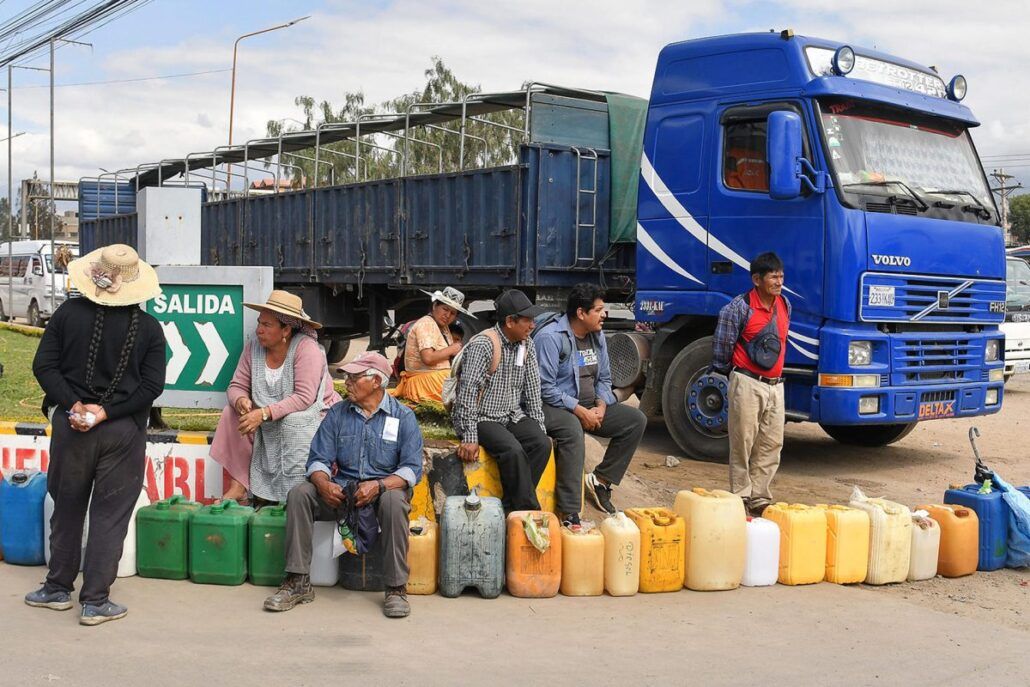

A Neighboring Country of Brazil Is Facing a Serious Economic Crisis Marked by a Lack of Gasoline, Diesel, and Dollars, Raising Concerns About Its Stability.
Bolivia is experiencing widespread chaos, with political instability and economic collapse. In June, a rebellious general attempted a coup, highlighting the government’s fragility. Meanwhile, the country is facing a currency and economic crisis that worsens month by month.
Since February 2023, with the central bank’s reserves depleted, weekly reports on available dollars have ceased publication.
The government has since been trying to accumulate dollars, while the gap between official exchange rates and the illegal market is rapidly widening. Imported products are disappearing from shelves, and prices are skyrocketing, signaling a possible imminent devaluation.
-
As 9,215 Brazilians Join Millionaire Ranks by 2025, 69% of Adults Still Have Less Than $10,000, Keeping Brazil Among World’s Most Unequal Nations

-
Entrepreneur Sells Car to Launch Healthy Meal Business, Now Runs Mr. Fit with 880 Stores in 3 Countries and $40 Million Annual Revenue

-
End of an Era: Renault Plans Major Overhaul, Cutting Jobs to Compete with Chinese Rivals and Transform Engineering by 2027
-
Brazil’s Largest Grain Port Faces Delays in the Hinterlands, Missing Rail Link Costs Agribusiness Billions


The Collapse of an Economic Model in Crisis
The Movement for Socialism (MAS) has governed Bolivia almost continuously since 2006, structuring its crisis-stricken economy around subsidies, a fixed exchange rate, and public investments. This model, financed by dollars from natural gas exports, brought stability and growth in the past.
However, declining commodity prices and a drop in natural gas production have weakened this foundation. International reserves plummeted from US$ 15 billion in 2014 to just US$ 2 billion currently, with only US$ 153 million in liquidity. This has made it difficult to pay for essential imports, such as fuels, leading the country into a scenario of “prolonged agony.”
Impacts on the Real Economy
Shortages and high prices are suffocating the population and businesses. Importers face empty stocks, supermarkets have bare shelves, and exporters struggle to obtain supplies. The situation is critical: GDP is expected to grow only 1.6% this year, the lowest rate in two decades, excluding the pandemic period.
Billboards featuring images of President Luis Arce praising economic stability have been removed. Inflation, once a source of government pride, is now one of the highest in the region.
Divisions in the Government and Political Challenges
The Arce government faces pressures from all sides. Private sectors are calling for liberalizations, while unions demand greater control over exporters and forced repatriation of dollars. Publicly, Arce avoids definitive decisions, but the political impasse is evident.
The internal dispute within MAS, with Evo Morales seeking to be a candidate in the upcoming elections, paralyzes governance. The approval of US$ 1 billion in loans in Congress remains stalled, further compromising the recovery of a crisis-stricken economy.
Protests and an Uncertain Future
Workers, the MAS’s electoral base, are beginning to show dissatisfaction. The combination of shortages, rising prices, declining purchasing power, and increasing poverty fuels discontent. Gabriel Espinoza, former director of the central bank, warns that the current scenario could escalate into social conflicts soon.
Luis Arce is trying to postpone painful reforms until after the elections, but the population’s patience is running thin. Bolivia is at a critical juncture, and the country’s future depends on decisions that may challenge the government’s principles and change the course of recent history. With information from The Economist and local news sources.