






 Portuguese
  Spanish
  3 min of reading
  0 comments


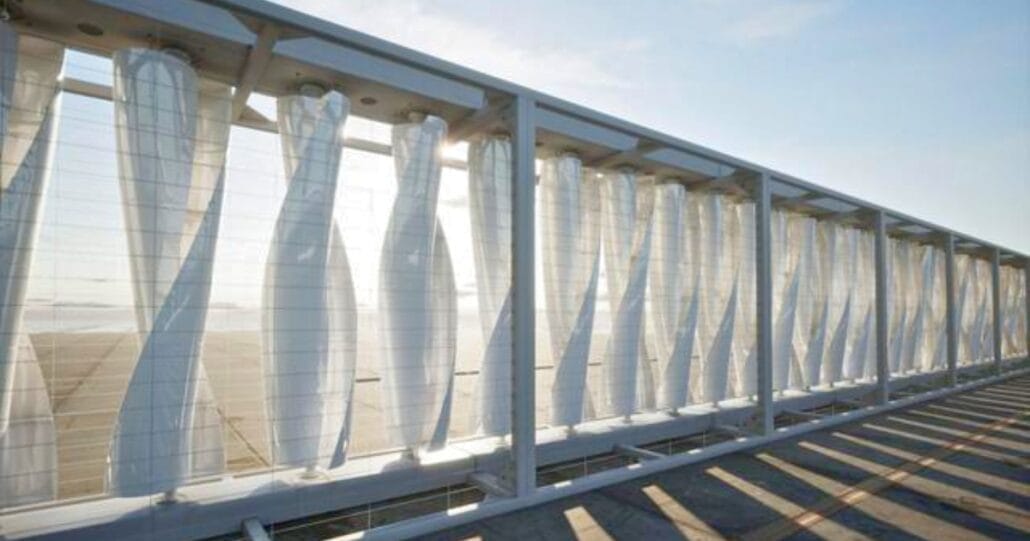
New York Company Develops Innovative Vertical Wind Turbine, Revolutionizing the Clean Energy Sector. Discover How the Vertical Wind Turbine Wall Works
A new solution for renewable energy generation is being developed by designer Joe Doucet, from New York, USA. This involves a fence made up of vertical wind turbines, known as the Wind Turbine Wall. This innovation promises to revolutionize the clean energy sector by providing an efficient and aesthetically pleasing way to generate electricity from the wind, utilizing spaces that would typically be underutilized.
Understand How the Idea of the Urban Vertical Wind Turbine Came About
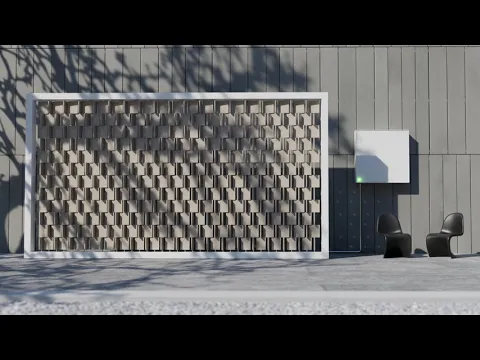

The wall with vertical wind turbines, besides being efficient in energy production, is modular and aesthetically pleasing, making it a great option for hotels, large corporate buildings, and residential units. Wind energy has proven to be an essential part of the “mix” of clean energy sources, being used in various countries as an alternative to fossil fuels.
Traditionally, to maximize electricity production, turbines have been developed in increasingly larger sizes, suitable for large installations. However, this approach limits the application of wind energy in urban areas and distributed generation, unlike solar panels, which can be easily installed in gardens and on rooftops.
-
Brazilian scientists are simultaneously advancing two research projects on clean hydrogen and driving solutions that could transform the energy matrix, enhance industrial competitiveness, and accelerate large-scale emission reduction targets.

-
Advancement in renewable energy: A R$ 150 million project launched by Petrobras and Finep aims to create state-of-the-art electrolyzers for green hydrogen, strengthening national research and preparing Brazil to compete in a billion-dollar energy market.
-
Illiterate or semi-literate grandmothers were trained to repair solar systems, open rural workshops, and light up homes that still depended on kerosene.
-
The world has bet on green hydrogen as the fuel of the future, but now faces the side effect: producing 1 kilogram requires about 9 liters of ultrapure water, and the largest projects on the planet are precisely in the driest regions of the Earth, where water is already scarce for people.


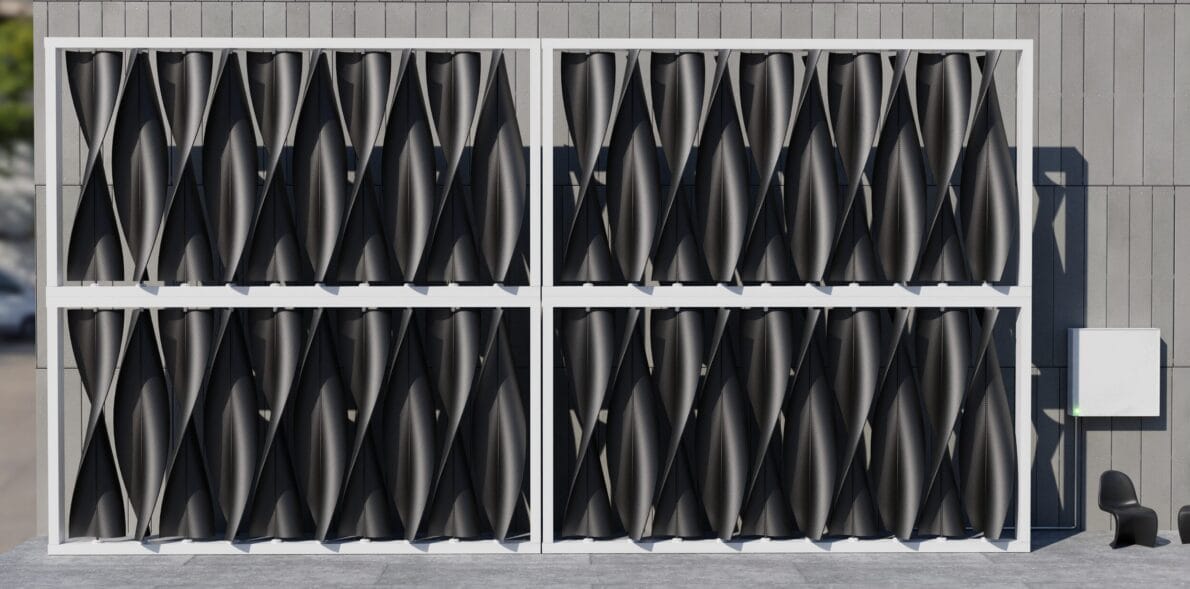
With this in mind, in 2021, while researching distributed energy products, Doucet noticed the lack of efficient and visually appealing options for wind energy. Determined to change this reality, he developed a new vertical wind turbine that combined aesthetics and efficiency.
Over the past two years, the designer and his team, along with the company Airiva, co-founded by him and energy expert Jeff Stone, developed and tested the concept of the vertical wind turbine wall. After several design and blade size modifications, 16 prototypes were tested, resulting in three final versions that passed wind tunnel tests.
New Vertical Wind Turbine Can Generate 2,200 Kilowatts Per Year
Rigorous testing at two installations in the USA confirmed that the helical structure of the vertical wind turbine blades was the most efficient. Although helical blades are not a significant novelty, the company managed to optimize performance by having several blades operating simultaneously.
The vertical wind turbine wall, in a standard configuration with eight helical blades, is capable of generating about 2,200 kilowatts of energy per year.
For an average home in the USA, 5 units of this vertical wind turbine wall would be needed to completely eliminate reliance on the power grid. Each unit measures about 4.2 meters tall by 2.1 meters wide.
Despite this, the responsible company is not focused on residential clients. Since the concept was introduced in 2021, interest has mainly come from corporations, public institutions, and real estate companies, who see the vertical wind turbine wall as an efficient and aesthetically acceptable way to generate clean and renewable energy and to make a statement on sustainability.
What Are the Advantages of This Type of Equipment?
The modularity of this vertical wind turbine wall allows for the installation of multiple units to increase energy production at a facility.
Although the Wind Turbine Wall cannot compete in capacity with large horizontal turbines, it offers the advantage of reducing energy losses during transmission because generation occurs close to the point of use.
The Airiva plans to produce the equipment with 80% recycled material, further contributing to sustainability. Although it is some time away from large-scale commercialization, the company hopes to conduct custom pilots as early as 2024, with the first orders being fulfilled next year.
For comparison, the largest wind turbine in the world, called Ming Yang Smart Energy (MySE) 16-260, located off the coast of Fujian Province in China, has a total diameter of 260 meters.








Be the first to react!