






 Portuguese
  Spanish





Railway Project Seeks to Reactivate Stretch Between the Coast and the Ribeira Valley, Promising to Integrate Tourism, Cargo, and Regional Transport in a New Faster and More Sustainable Mobility Axis in the State of São Paulo.
The Government of São Paulo has initiated a railway project to connect Santos to Cajati in the Ribeira Valley, covering a route of 223.6 kilometers focused on passenger and cargo operations.
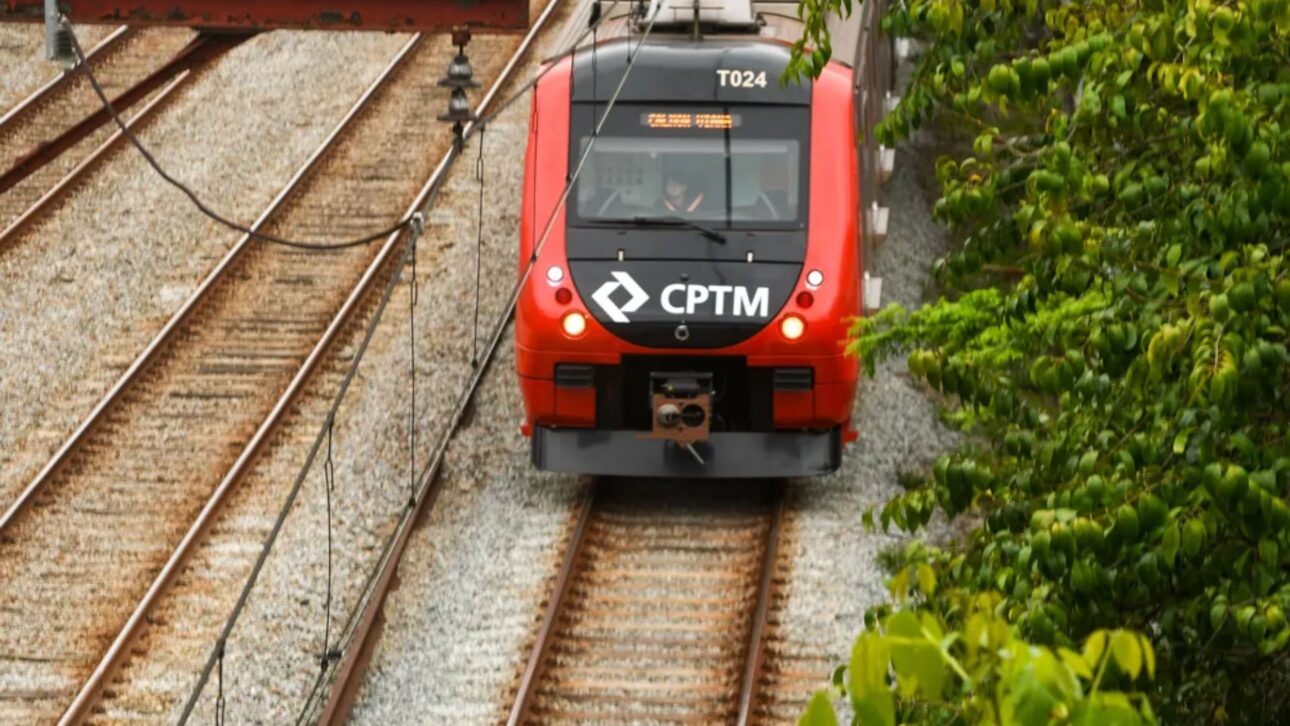
The proposal, under the responsibility of CPTM, is part of the state’s intercity train program and aims to reactivate currently idle stretches, promising to shorten travel times and reduce pressure on the southern coast highways.
Functional studies published in recent weeks detail the design of the service and provide preliminary estimates of time and capacity.
-
At 14 years old, she worked in a factory in Hong Kong, studied economics abroad, and then entered the Chinese real estate market, which helped change the landscape of Beijing.

-
While NATO secured more than $10 billion in missiles and space surveillance at a single forum, Brazil still spends 1.1% of its GDP on defense and is stalling its own anti-aircraft system.

-
Corn ethanol attracts R$ 23 billion in 21 new plants and prepares for a nearly 50% jump in Brazilian production by 2027, even with high interest rates.
-
A newly opened terminal in the middle of the Amazon has begun transporting soy and corn through Amapá, eyeing the queue of ships that is congesting the ports in the South.


Travel Time and Operation of the Santos–Cajati Train
The route under analysis includes three types of operation, with a Santos–Cajati express making strategic stops, in addition to two local services—one between Santos and Peruíbe and another from Peruíbe to Cajati.
According to the functional study presented, the complete trip of the express is projected to take about 2h20.
For freight trains, the technicians estimate a cycle time of around 3 hours, utilizing the same right-of-way with operational adjustments.
The numbers still depend on the engineering preliminary design and additional simulations, but they guide the public discussion on capacity, frequency, and investments.
Utilization of the Existing Railway Network
The state’s guideline is to reuse the existing railway network whenever possible.
The recovery of deactivated tracks and yards along the route of the former connection between the Baixada and the Ribeira Valley is seen as a shortcut to reduce timelines and costs, as well as to limit interventions in environmentally sensitive areas.
At the same time, the CPTM study indicates segments that will require geometric correction works, grade crossings, and, at some points, elevated solutions to increase the average speed and ensure safety in coexistence with urban traffic.
Expected Benefits in Mobility, Economy, and Tourism
The official expectation is that the new connection will decrease traffic flow on the highways, enhance the level of road safety, and reduce logistics costs, especially in the transport of agricultural and industrial products from the southern region of the state.
For tourism, the view is that the integration between the coast and the Ribeira Valley can increase access to nature and historical-cultural tourism destinations, with a direct impact on local commerce and services.
The CPTM summarizes the goal of integrating daily mobility, tourism, and logistics into a single rail corridor, with lower carbon emissions per passenger kilometer compared to road transport.
Project Stages and Upcoming Technical Studies
The functional study of the Santos–Cajati was released at the end of September and early October, and the company identifies the next milestone as the preparation of the engineering preliminary design.
This stage deepens the route, stations, systems, rolling stock, demand, and costs, in addition to supporting environmental licensing and public consultations.
The released technical schedule mentions the start of the preliminary design later this year, which paves the way for the model of concession or definition of the contracting method starting in 2026, subject to government approvals.
Municipalities Served on the Route
The route connects Santos to the Ribeira Valley, serving municipalities in the southern coast and the Registro region.
Recent publications mention places such as São Vicente, Praia Grande, Mongaguá, Itanhaém, Peruíbe, Itariri, Pedro de Toledo, Miracatu, Juquiá, Registro, and Cajati, among others.
Part of the promotional materials refers to 11 municipalities, while reports and social media notes mention up to 13 cities served, a difference that stems from adjustments in the route and counting between technical stops and commercial stations.
The final list of stations will be finalized in the preliminary design.
Insertion into the São Paulo Intercity Trains Program
The Santos–Cajati is included in the state package of intercity trains (TIC), which focuses on studies for regional connections along the North, West, East, and South axes, in addition to connections between inland hubs.
In the North Axis (São Paulo–Campinas), the project is the most advanced: the bidding was held at the end of February 2024 and the contract was signed on May 29, 2024 with the Consórcio C2 Mobilidade sobre Trilhos, formed by Comporte and CRRC.
The model envisions integration with the current Line 7-Rubi.
In the Sorocaba, São José dos Campos, and Santos axes, state and federal governments reported ongoing studies, with public consultations and technical hearings planned in subsequent phases before potential bidding.
Governance and Integration with the SP nos Trilhos Program
The Secretariat of Partnerships and Investments and CPTM link the Santos–Cajati to the umbrella of the SP nos Trilhos program, which organizes initiatives over more than 1,000 kilometers of network, including metropolitan expansions, contract renewals, and regional proposals.
Within this structure, each corridor undergoes qualification, study, consultation, and modeling before a decision on concession or direct public contracting.
The Santos–Cajati is on this methodological pathway: it has consolidated its functional study and progresses toward engineering, demand, and cost definitions.
Impact on Road Transport
As the project advances, trips between the Baixada Santista and the Ribeira Valley continue to be concentrated on the Anchieta/Imigrantes and Régis Bittencourt highways, with travel times subject to seasonality, construction, weather, and accidents.
The combination of a regional express train and two local services is expected to provide an alternative with more predictable times during holidays, in addition to creating last-mile routes via urban and intercity buses integrated with the stations.
The goal of shifting some of the demand from the roads to the tracks is central to the safety and emissions benefits indicated in the studies.
Timelines, Risks, and Next Steps
The implementation timelines depend on environmental licensing, investment capture, and coordination with freight, as the right-of-way has a historical railway use.
The projected travel time, the number of commercial stops, and the final list of stations may undergo adjustments as the study transitions to the preliminary design.
The government states that the plan seeks technical and financial feasibility without sacrificing mobility and regional development gains, especially in the Ribeira Valley, an area that has long sought more efficient integration with the rest of the state.
With the reactivation of a forgotten railway corridor and the promise of faster connections between the coast and the hinterland, what aspect do you consider a priority to monitor going forward: the route and stations, the operating model, or the economic impact along the Ribeira Valley?








O melhor meio de transporte de cargas é o trem, pois caminhões causam acidentes nas estradas, danificam o asfalto, dificultam as ultrapassagens e aumentam o tempo das viagens. Precisamos acabar com esse atraso começando por unir as grandes cidades e depois as menores com trens de carga e passageiros…