






 Portuguese
  Spanish


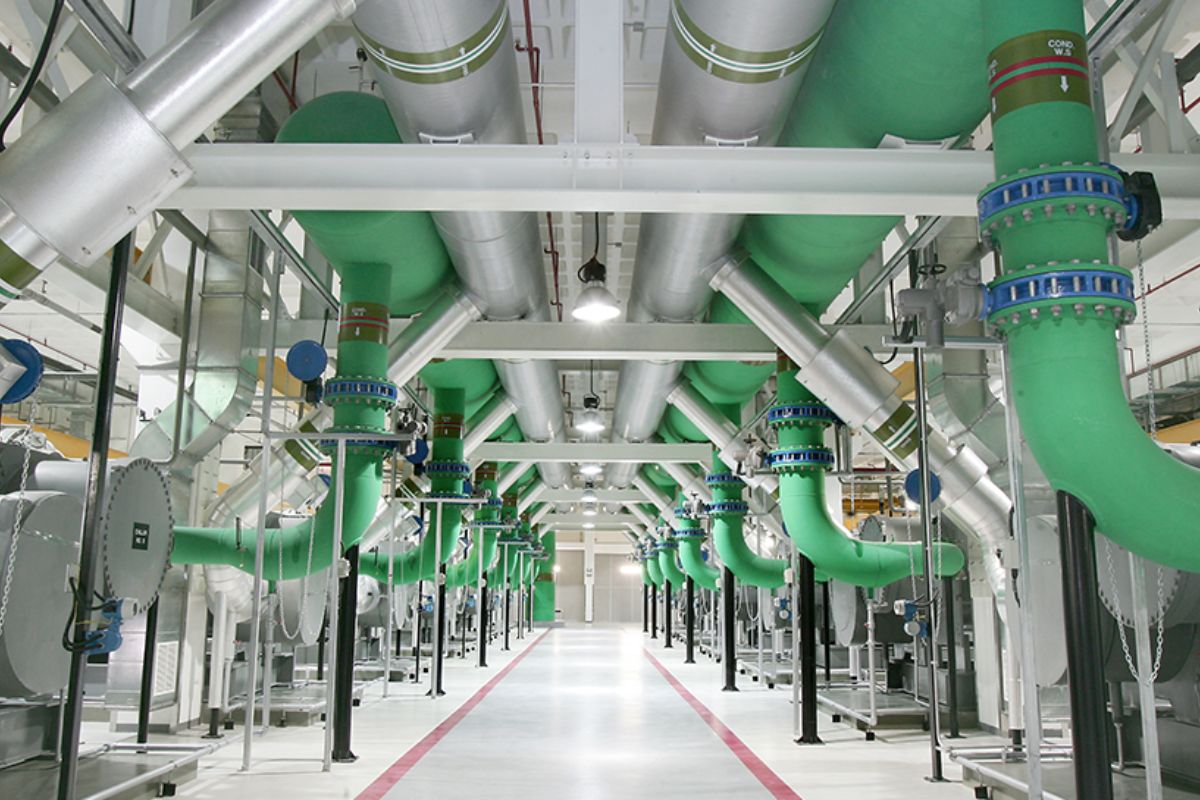


The Air Conditioning System of the Burj Khalifa in Dubai Not Only Faces the Extreme Heat of the Desert, But Also Recycles Its Own Water, in One of the Largest and Smartest Engineering Feats. Understand Everything About the Air Conditioning of the Largest Building in the World.
Maintaining comfort inside the Burj Khalifa in Dubai is one of the greatest engineering challenges on the planet. The air conditioning of the largest building in the world needs to not only cool a structure over 828 meters tall but also contend with an external climate that easily exceeds 40°C. The solution found was a colossal and intelligent system.
The power required for this task is so great that it is equivalent to melting nearly 13,000 tons of ice per day. However, the system was designed in such an ingenious way that, at the same time it cools, it produces its own water. It’s a true water factory in the middle of the desert, generating millions of liters per year from the humidity in the air.
The Chilled Water System and the External Refrigeration Plant of the Burj Khalifa
To climatize such a gigantic structure, the solution could not be common. The Burj Khalifa does not have its own air conditioning; it is served by an external distrital refrigeration plant, which also supplies other luxury buildings in the region, like the Dubai Mall.
-
15-Year-Old Entrepreneur Malu Lira Publishes 20 Children’s Books on Financial Education, Earns $500,000, and Expands Her Project to the Amazon Rainforest

-
U.S. City Builds Tiny Home Village on Water Company Land to House 136 Homeless People: Inside the Social Housing Units
-
Entrepreneur Turns Rio Cemetery Canteen into a Successful Snack Chain Generating $4.9 Million Annually and Expanding to Metro Stations

-
Woman Turns Shipping Container into Home, Embraces Rural Life to Cut Monthly Expenses to Just Over $330




This plant pumps chilled water at a very low temperature of 3.3°C through 75 cm diameter pipes to the basement of the building.
An important curiosity is the source of this water: to save Dubai’s drinking water, the plant mainly uses Treated Sewage Effluent (TSE), which undergoes an advanced purification process before entering the system.
The Ice Battery: How the Thermal Storage System (ITS) Was Created in 2004 to Save Energy

The most innovative part of the air conditioning of the largest building in the world is its ice storage system. The idea, which has been part of the project since the beginning, in 2004, functions as a gigantic thermal battery.
During the night, when consumption and energy prices are lower, the refrigeration plant works to produce and store tons of a mixture of water and small ice crystals, called “ice slurry”.
During the day, when the heat rises and the demand for cooling peaks, this ice melts, and the super-cooled water is used to cool the building. This strategy reduces the electricity bill for cooling by up to 40%.
The Water Factory in the Middle of the Desert: The 15 Million Gallons of Condensation Generated Per Year
One of the most impressive results of the system is its ability to produce water. The hot and humid air of Dubai, when coming into contact with the chilled coils of the air conditioning system, condenses and turns into water.
This process generates about 15 million gallons (approximately 57 million liters) of condensation water per year. Instead of being discarded, this pure water is collected in a large tank in the basement and used to irrigate the entire lush park surrounding the Burj Khalifa, turning what would be a problem into a sustainable solution.
How the Honeywell Control System, Implemented in 2010, Optimizes the Maintenance of the Air Conditioning of the Largest Building in the World

This entire complex operation is managed by a state-of-the-art automation system, largely provided by the Honeywell company. Since the inauguration of the building in January 2010, an integrated platform monitors thousands of temperature, humidity, and pressure sensors in real-time.
Interestingly, the system utilizes artificial intelligence to conduct predictive maintenance. Instead of waiting for a part to break, the sensors detect minor anomalies, such as an increase in motor vibration, and alert the team that a failure is about to occur. This approach, implemented in a pilot project, resulted in a 40% reduction in maintenance hours and ensured that the air conditioning system operated 99.95% of the time.
Why the Internal Temperature is 24°C and How the System Combats the “Chimney Effect”?
Visitors and residents of the Burj Khalifa may notice that the internal temperature rarely drops below 23-24°C. This is not a failure, but an engineering decision. This standard temperature was adopted in Dubai about five years ago to optimize energy efficiency, as maintaining lower temperatures would require an even greater energy expenditure.
Another challenge of such a tall building is the “chimney effect”, where the temperature difference between the base and the top creates air currents and wind noises. The air conditioning of the largest building in the world was designed to combat this, maintaining a slightly positive internal air pressure, which prevents the entry of outside air and ensures the acoustic comfort of the occupants.







Muito bom para desenvolvimento econômico.
Apresento um projeto de grupos de geradores de energia que não usa combustível. Para maiores informações 14991049210 eng eletrico edmundo
Reprovado em todos os quesitos.
É por este tipo de LOUCURA que colaboram para PIORAR AS ALTERAÇÕES CLIMÁTICAS.
Vc é ****?
Adotar uma temperatura interna do prédio entre 23 e 24⁰C é devido a essa faixa atender o conforto térmico do corpo humano, tanto no verão quanto no inverno, resultando, evidentemente em economia de energia. Em ambientes com muitas pessoas aglomeradas, cada corpo é responsável por gerar calor, o que se torna difícil manter a temperatura na faixa do conforto térmico.