






 Portuguese
  Spanish


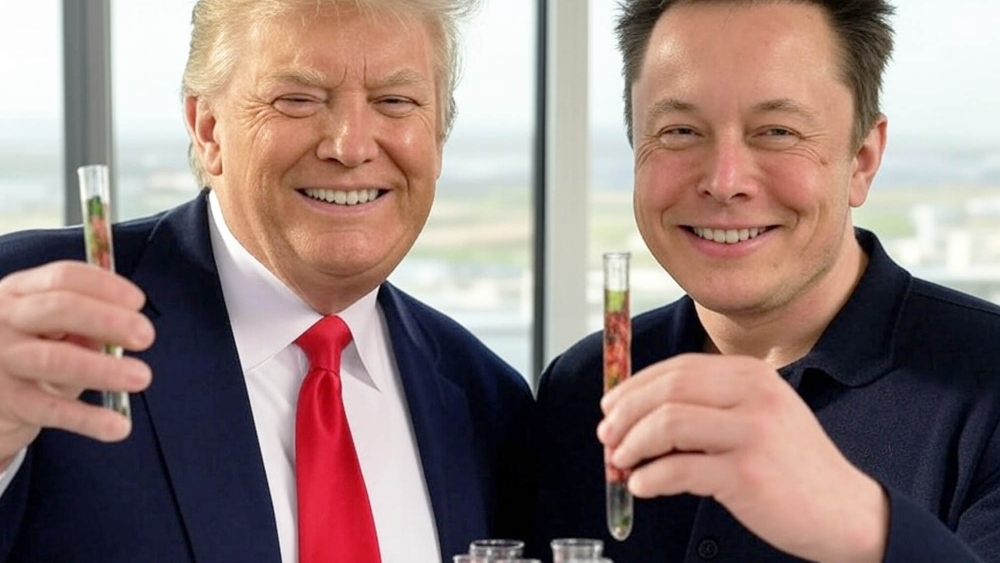

Rare Earth Reserves in Brazil Draw Attention Due to Their Technological and Economic Importance
Recently, Volodymyr Zelensky, President of Ukraine, refused to give up nearly half of Ukraine’s rare earth minerals in exchange for future guarantees deemed insufficient. This decision is one of the main reasons for Donald Trump’s irritation with the Ukrainian president.
Zelensky stated that the exploitation of these valuable natural resources will be essential for rebuilding the country’s economy and cities after the war.
In the previous week, Trump had already made another demand. He requested Kiev to deliver US$ 500 billion in rare earths. These minerals are essential for defense sectors and high-tech industries. The request was justified as a reimbursement for three years of U.S. support to Ukraine.
-
China Builds Underwater Wall After Discovering Technology That Could Shift Military Balance in the Pacific, Study Reveals Why the Asian Power Reacted Now

-
After Over 8 Months in a Simulated Mars Habitat in Houston, 4 NASA Volunteers Communicate Almost Silently and Will Exit in October
-
Natural Phenomenon Turns Black Sea Turquoise Blue Due to Billions of Microscopic Organisms

-
Scientists Develop Innovative Material That Converts Visible Light to Ultraviolet, Unlocking New Possibilities for Optical Equipment and Advanced Communications


Why Donald Trump and Elon Musk Are Eyeing Rare Earths
Permanent magnet motors, widely used in industry, rely on materials like neodymium and dysprosium to produce high-power magnets. These magnets, known for being lightweight and compact, provide greater energy efficiency, extending the range of vehicles and optimizing overall performance.
Essential for Clean Energy Technologies
Critical minerals, such as copper, nickel, graphite, cobalt, lithium, and rare earths, are essential for clean energy technologies.
They are used in solar panels, electric car batteries, and wind turbines. Their unique properties, including magnetic characteristics and distinctive electronic capabilities, make them indispensable for enhancing the efficiency of these technologies.
On the other hand, the extraction and processing of these minerals are complex processes. Separating valuable elements from waste and ensuring sustainable production are challenges that limit the availability of these resources.
Brazil’s Potential in Rare Earths
According to data from the International Energy Agency (IEA), the demand for critical minerals for clean energy is expected to double by 2030 and triple by 2040.
Since 2012, the majority of new power generation facilities in the world have come from renewable sources. In 2022, around eight out of ten installed projects were from clean sources. This demonstrates the global trend towards sustainability.
Brazil: In this global scenario of high demand, Brazil emerges as a potential key player. The country has significant reserves of critical minerals.
A report from the consulting firm Deloitte, in partnership with AYA Earth Partners, highlights Brazil’s strategic role in the transition to a low-carbon economy. According to the study, Brazil can add significant value to its economy by investing in the processing of the minerals it already extracts.
It is estimated that this activity could contribute about R$ 30 billion to the Gross Domestic Product (GDP) by 2030. This value could rise to R$ 42 billion when considering the positive impact on related sectors.
If Brazil goes further and invests in exploring new mines and active production, the economic impact could be even more significant. The country could reach up to R$ 233 billion by 2050. If it also invests in refining, the impact could reach R$ 243 billion over the next 25 years.
Brazil in the Spotlight
Brazil holds approximately 10% of the world’s critical minerals. It has the largest global reserve of niobium, the second largest of graphite, and the third largest of rare earths and nickel.
There is also availability of lithium, copper, and cobalt, which are fundamental for emerging technologies. However, currently, the country accounts for only 0.09% of the global production of these resources. This shows an underutilized potential that can be transformed with the right investments.
In 2021, a strategic classification for these minerals was established. They were divided into three groups: those whose importation is vital for key economic sectors; those essential for high-tech products, such as graphite, lithium, and rare earths; and those that provide competitive advantages for generating trade surplus. This division reinforces the need to rethink the exploration and use of the country’s natural resources.
Global Competition for Rare Earths
The global competition for these resources, evidenced by tensions between the U.S. and Ukraine, shows how critical minerals have become key pieces on the geopolitical chessboard.
For Brazil, investing in the entire value chain — from extraction to refining — represents not only an economic opportunity but also the chance to play a central role in the global energy transition.
By strengthening its national production capacity, Brazil can consolidate its position as one of the world’s main suppliers of these essential resources. This move would be decisive in driving economic growth and promoting a more sustainable future.
With information from Valor and hibridosyelectricos.







Todos Vocês estão de parabéns pelo artigo, olha eu vi também que Elon Musk esta querendo ou ja comprou terras em Minas Gerais eu li neste artigo. reidoouro.com/elon-musk-e-minas-gerais