






 Portuguese
  Spanish


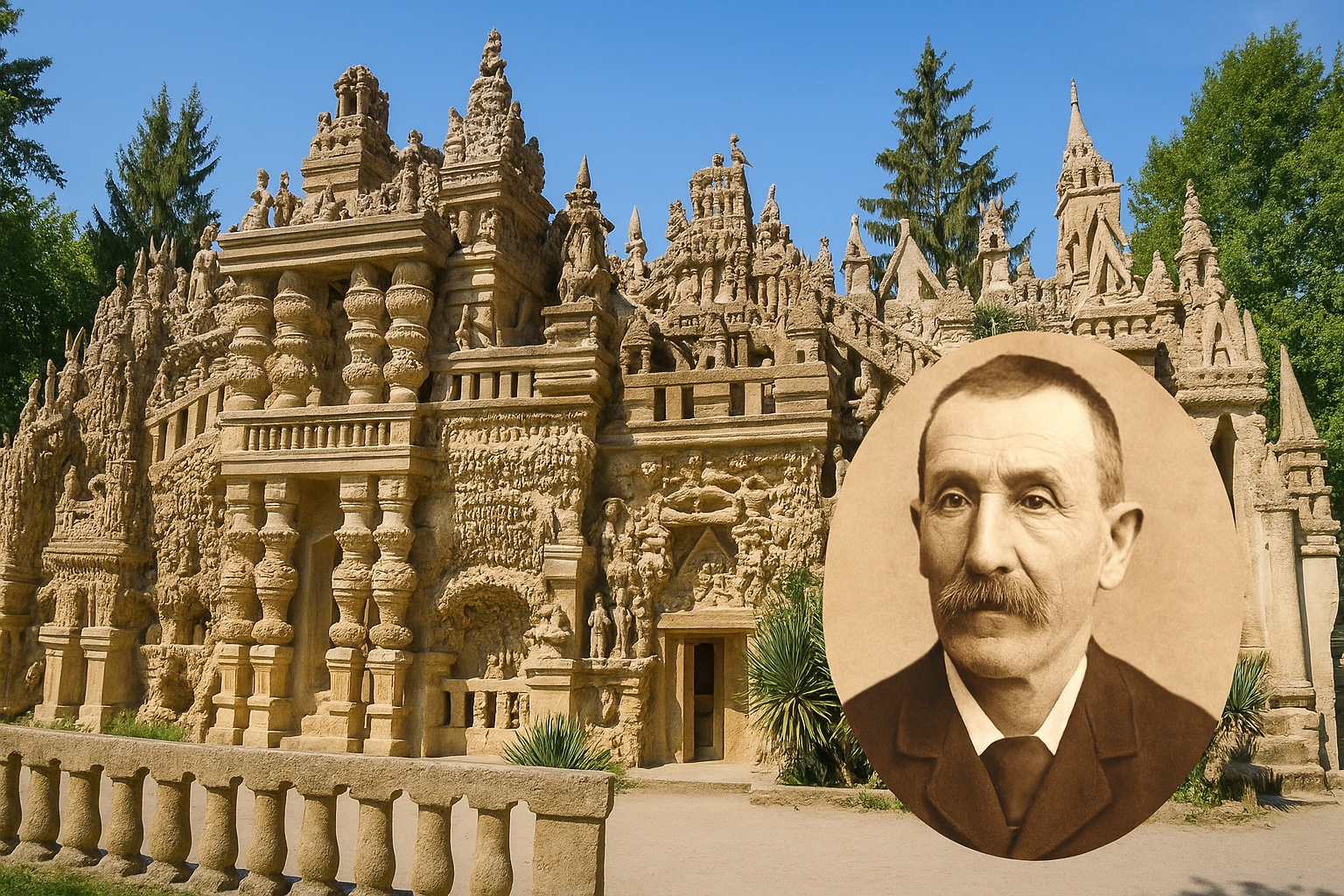

For 33 Years, A French Postman Built A Stone Palace By Himself, Now Recognized As A Masterpiece Of Naïve Art.
In the small commune of Hauterives, in the French countryside, there is one of the most unusual and impressive constructions ever built by a single man: the Ideal Palace (Palais Idéal). The work was constructed over 33 years, from 1879 to 1912, by Ferdinand Cheval, a simple rural postman who, without any training in architecture or engineering, transformed common stones into a world-renowned monument.
The Ideal Palace was not just an architectural project: it was an act of stubbornness and creativity. With his own hands and rudimentary tools, Cheval collected thousands of stones during his long daily walks as a postman and used them to build a structure that is now considered one of the greatest expressions of naïve art ever created.
Ferdinand Cheval: The Postman Who Became A Self-Taught Architect
Ferdinand Cheval was born in 1836, into a simple family in the French countryside. For most of his life, he worked as a postman on rural routes, walking daily dozens of kilometers between villages and fields.
-
Two-Bedroom Home Built in a 40-Foot Shipping Container Delivered and Ready for Same-Day Living in São Paulo Countryside

-
China Constructs Artificial Island 32 km Offshore for Yangshan Port, Connected to Shanghai by 32 km Bridge, Unloading 3,000 Containers in 20 Hours
-
China’s $70 Billion River Diversion Project, the World’s Largest, Moves 44.8 Billion Cubic Meters Annually, Crosses Under the Yellow River, and Displaced 330,000 People
-
Indian Driver Spends 14 Years Digging 10-Meter Tunnel Through Mountain to Connect Isolated Village to the World





In 1879, at the age of 43, he stumbled upon a strangely shaped stone. Inspired by its form, he began to collect other rocks he found along the way.
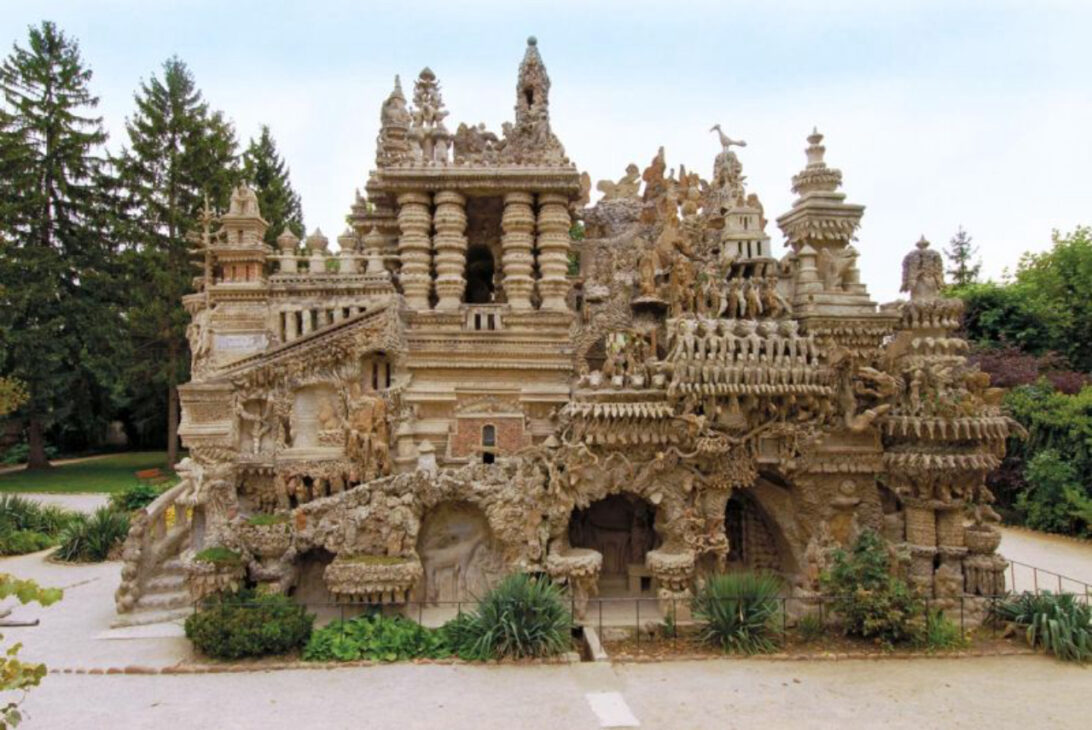
Over time, this activity turned from a habit into an obsession: he decided that he would build a fantastic palace, something that would unite elements from different cultures, religions, and architectural styles.
For decades, he carried stones in his pockets, bags, and even wheelbarrows, often walking extra kilometers after work to collect the necessary material.
How The Ideal Palace Was Built
The Ideal Palace is primarily made of local stones, bonded by lime and cement. Each day, after delivering the mail, Cheval would spend hours stacking and shaping blocks of rock.
The result was a structure measuring 26 meters long, 14 meters wide, and up to 12 meters high, featuring towers, galleries, arches, and embedded sculptures.
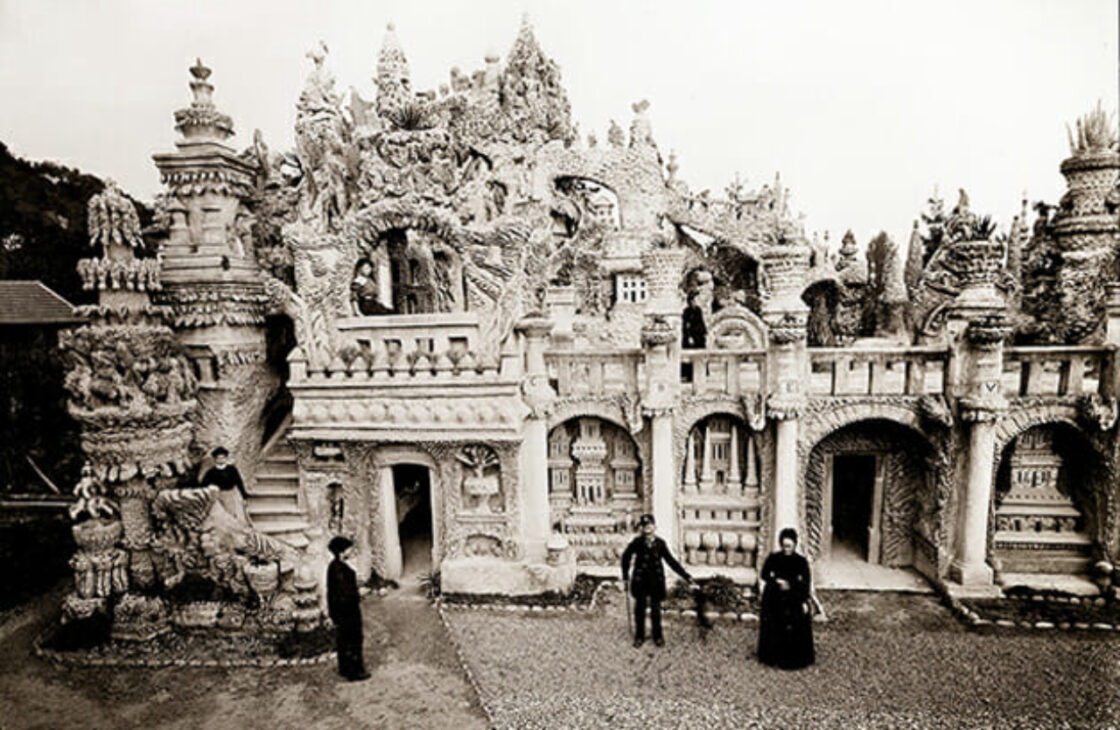
The details are impressive: figures of animals, plants, religious symbols, mythical scenes, and even poetic inscriptions created by Cheval himself.
Among the elements that stand out are:
- The Tower of Barbarity, with inscriptions about perseverance.
- The Temple of Nature, celebrating the power of natural creation.
- Sculpted Animals: elephants, camels, birds, and even mythical creatures.
- Universal References: from Hinduism to Christianity, from Egypt to the East.
Everything was made with simple tools: spoons, shovels, and the strength of his hands.
The Artistic Style: Naïve Art In Stone
The Ideal Palace is now recognized as the supreme work of naïve art — a style that values spontaneity, lack of formal technique, and creative purity.
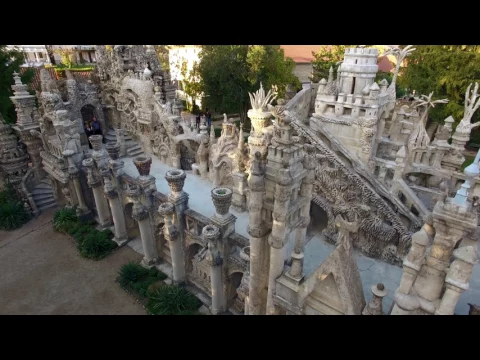

Cheval never studied architecture but created a unique monument that blends Gothic, Romanesque, Indian, and Arab styles into a fantastic synthesis. Many critics describe his work as a “petrified dream” or “dream architecture.”
Recognition And Preservation
When he completed his work in 1912, Cheval was already elderly and had no idea of the impact it would have. For decades, the palace was viewed with strangeness by some neighbors, who considered him eccentric.
But over time, the Ideal Palace gained notoriety. In 1969, it was officially classified as a Historical Monument of France, thanks to the support of artists like André Breton and Pablo Picasso, who saw in the work an aesthetic revolution.
Today, the site receives over 150,000 visitors per year, functioning as a museum and cultural space.
The Ideal Palace is remembered as an example of perseverance: a simple man, with limited resources, managed to transform a personal dream into a cultural heritage of global significance.
Comparisons With Other “Impossible” Works
Like the Coral Castle in Florida or Bishop Castle in Colorado, the Ideal Palace belongs to a rare group of constructions that seem to defy logic: works built by common individuals, without large teams or technologies.
These monuments defy time and show that human creativity can be as powerful as any formal engineering or architecture school.
The Lesson of The Ideal Palace: Transform Stubbornness Into Legacy
What makes the Ideal Palace fascinating is not only its aesthetics but the story behind it: a postman who, every day, after walking kilometers, still had the energy to collect stones and build.
What would be impossible for many, Cheval turned into a life project. His work not only endured the test of time but became a symbol of resilience, creativity, and the strength of human dreams.
More than a century after its completion, the Ideal Palace continues to inspire visitors and artists worldwide. It proves that genius does not need to come from academic titles or wealth but can arise from perseverance, sensitivity, and the determination of an ordinary man.
Like the pyramids, cathedrals, and medieval fortresses, the Ideal Palace has become eternal — not by the power of empires, but by the solitary stubbornness of a postman who dared to dream.






