





 Portuguese
  English
  Spanish
  5 min of reading
  0 comments


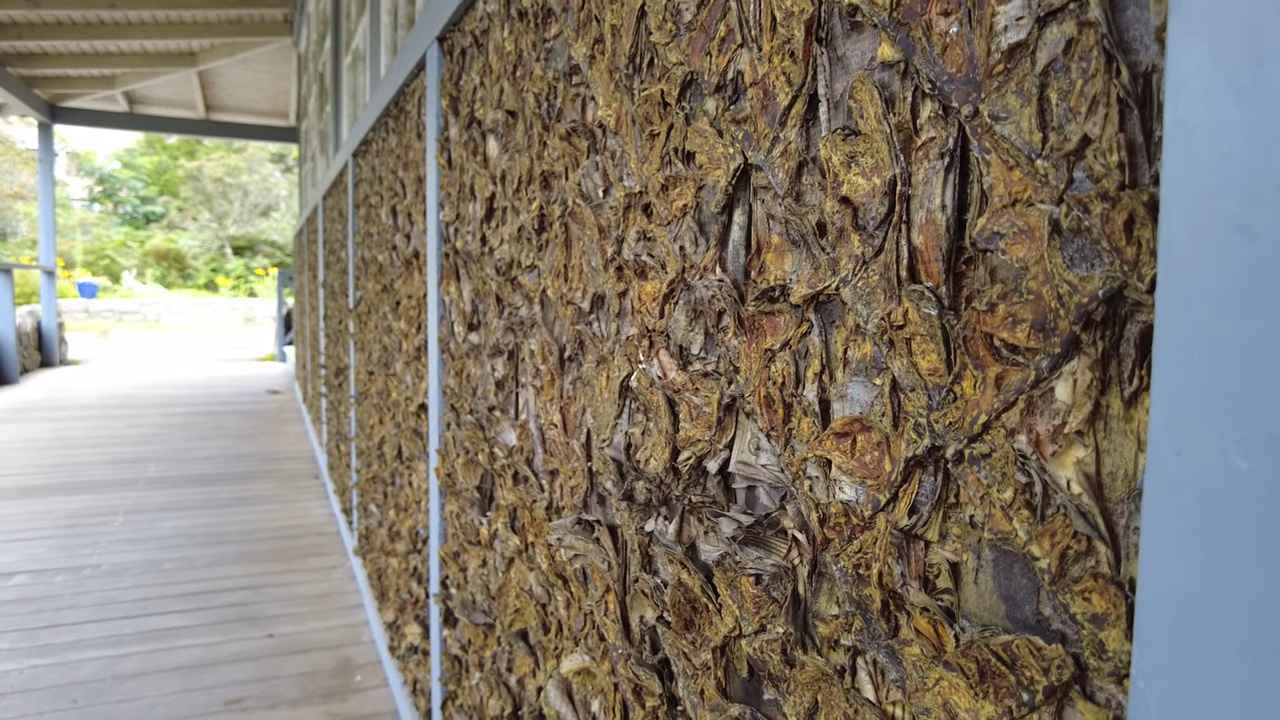
Built in 1922 by Elis Stenman, the Paper House uses more than 100,000 newspapers in the walls and furniture and still stands in Rockport, United States.
In 1922, Swedish mechanical engineer Elis F. Stenman began constructing a summer house in Rockport, Massachusetts, with an idea that seemed absurd even by the standards of the time: using newspaper as a building material. According to Roadtrippers and the official website of the Paper House, the project started with a conventional wooden structure but changed completely when Stenman decided to test whether pressed, glued, and varnished newspaper sheets could function as real walls. More than a century later, the house still stands and has become one of the most curious attractions on the Massachusetts coast.
The construction is estimated at more than 100,000 newspapers. What makes the story even more impressive is that Stenman did not stop at the walls. He also created much of the furniture with the same material, transforming the residence into a time capsule made of paper, varnish, and ingenious improvisation.
According to Roadtrippers, the most common question from visitors remains the same for decades: why would someone do this? The house’s own historical collection shows that no one has answered this in a completely definitive way.
-
A couple swapped Rio Grande do Sul for a styrofoam house facing the sea in Santa Catarina and went viral by revealing why they opted for EPS walls reinforced with steel and concrete to live near the beach.

-
Labor shortage halts construction in Canada: the country rushes to build houses, bridges, and billion-dollar projects while mass retirements turn carpenters, electricians, welders, plumbers, and machine operators into highly sought-after professionals by companies.

-
A R$ 370 million tender for the construction of 4 prisons in SC is released from blockage after correction of flaws, unlocking works in Chapecó, Lages, and Xanxerê, and reigniting the debate on the urgency of the Santa Catarina penitentiary system.

-
Mother and daughter build a 70 m² house with more than 8,000 discarded glass bottles and impress with their creativity; known as the Casa de Sal, the property is located on Itamaracá Island, in Pernambuco.



Elis Stenman turned newspaper into construction material by testing an engineering idea
Elis Stenman was neither an artist nor an experimental architect. According to the official website of the Paper House, he was a mechanical engineer who designed machines used to manufacture paper clips. This helps to understand why the house was born more as a technical experiment than as an aesthetic gesture. He wanted to know how far a cheap, abundant, and disposable material could go when treated with method and patience.


According to the account preserved by the family on the official website, Stenman mixed a homemade glue made of flour, water, and sticky substances like apple peel, then glued layer upon layer of newspaper until forming dense panels. The original intention was to use the paper only as insulation, but when he realized the rigidity the material gained after drying, he decided to keep the surfaces exposed instead of covering them with external boards.
The result was a house with walls of hardened paper protected by waterproof marine varnish. This coating is what allowed the material to withstand the coastal climate of Cape Ann for decades, preserving to this day texts and headlines printed in various parts of the structure.
The walls of the Paper House were made with hundreds of layers of pressed newspaper
According to the official website of the Paper House, the house has a wooden structure, wooden floor, and conventional roof, but the wall material is basically pressed paper about one inch thick, a little over 2.5 centimeters.
The construction logic was simple and at the same time unlikely: stacking and gluing successive sheets of newspaper until creating a rigid and stable mass.
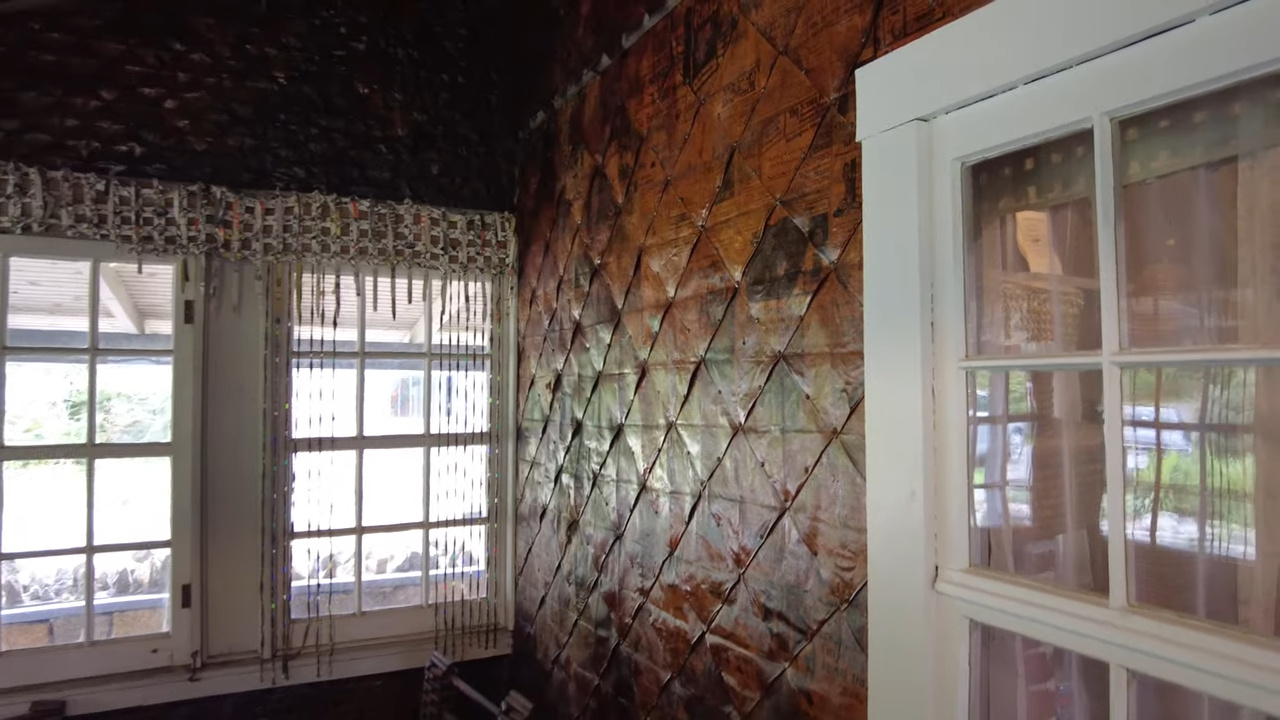
Inside the structure, Stenman also used newspaper rolls to fill spaces between the wooden parts, reinforcing the insulation function. The paper, treated in this way, began to act as filling, wall, and visual finish at the same time. This gave the house a unique characteristic: it was not only made of newspaper, but it still displays part of that newspaper to this day.
The durability of the result is the most impressive point. What should have been a fragile and temporary material has lasted for more than a hundred years with relatively simple maintenance, mainly based on new layers of varnish over time.
Newspaper furniture turned the house into a time capsule of the 1920s and 1930s
After completing the main structure, Stenman decided to take the idea to the end. According to Roadtrippers and the house’s official website, he produced a table, chairs, lamps, desk, sofa, grandfather clock, bookshelf, and other pieces using small newspaper rolls cut into different sizes, glued, and nailed to form functional pieces.

Some of this furniture preserves newspapers linked to significant historical events. The desk, for example, was associated with issues covering Charles Lindbergh’s flight to Paris in 1927, while the grandfather clock displays newspapers from the 48 states that made up the United States at that time.
The curtains also followed the paper logic, made by Esther Stenman with braided strips of magazine covers.
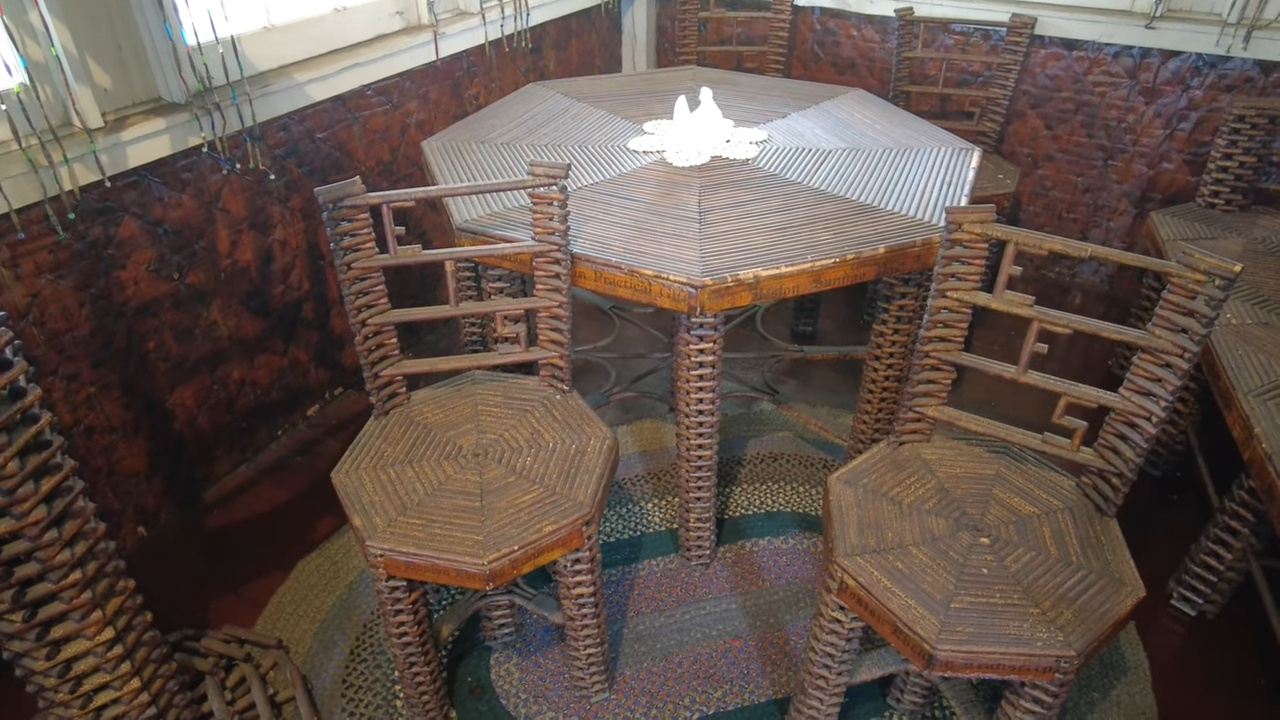
The most well-known exceptions are the piano, which was only covered with newspaper, and the fireplace, which is made of brick and could be used normally. This combination of functionality and eccentricity helped transform the house into an attraction even while it was being completed.
Paper House became an attraction in Rockport even before it was finished
According to the official site of the Paper House, curious visitors began to appear as early as the 1920s, when news that a man was building a paper house in Rockport started to circulate in the region. The project became a local topic and began to attract people interested in seeing the improbable construction up close.
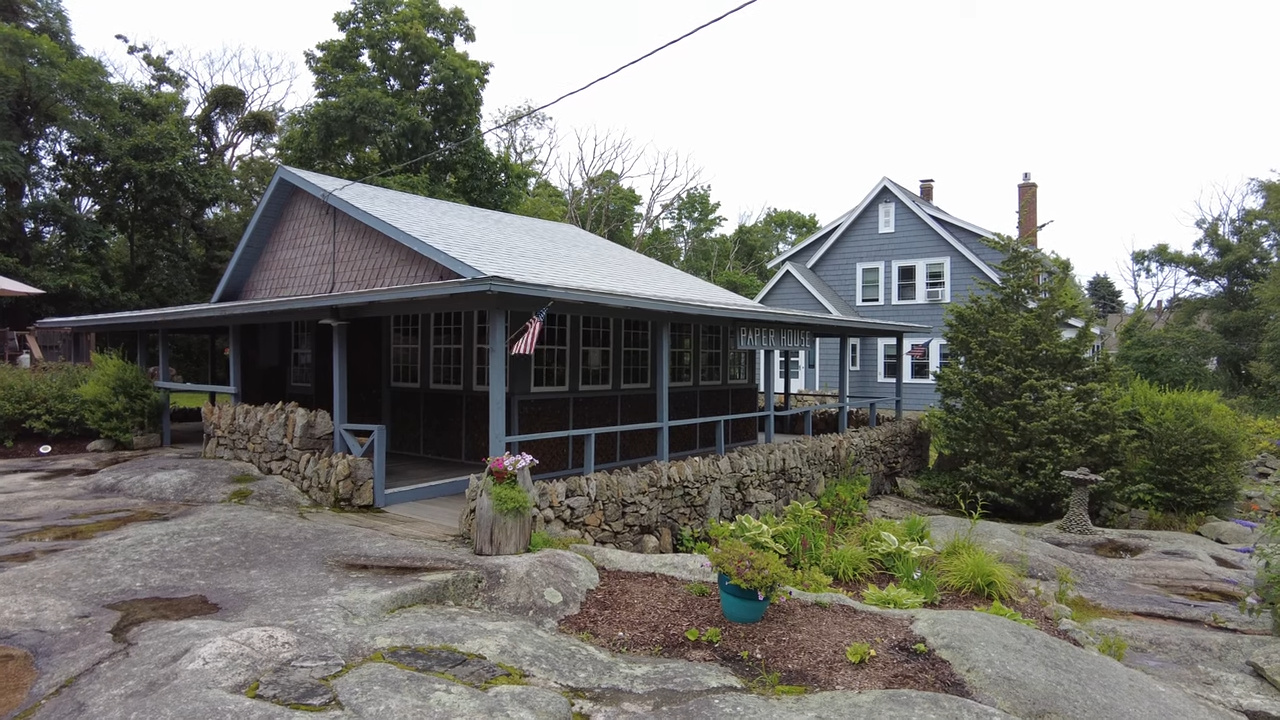
The house ended up being opened as a museum in the first half of the 20th century and remains under the administration linked to the Stenman family to this day.
It operates in Pigeon Cove, in Rockport, and receives visitors during the warmer season of the year, preserving not only the structure but also the atmosphere of a domestic experiment turned historical landmark.
The most curious aspect is that, from the outside, the Paper House looks relatively discreet. Without proper identification, it could go unnoticed among the other houses on the street. What sets it apart is precisely the material and the fact that its walls can still be read in several sections.
The newspaper house proves that technique and patience can transform trash into a durable structure
The Paper House has survived for more than a century and became concrete proof that a material considered disposable can have a long life when treated with technique, method, and proper protection. The newspaper that should have gone to waste was transformed into walls, furniture, covering, and preserved memory.
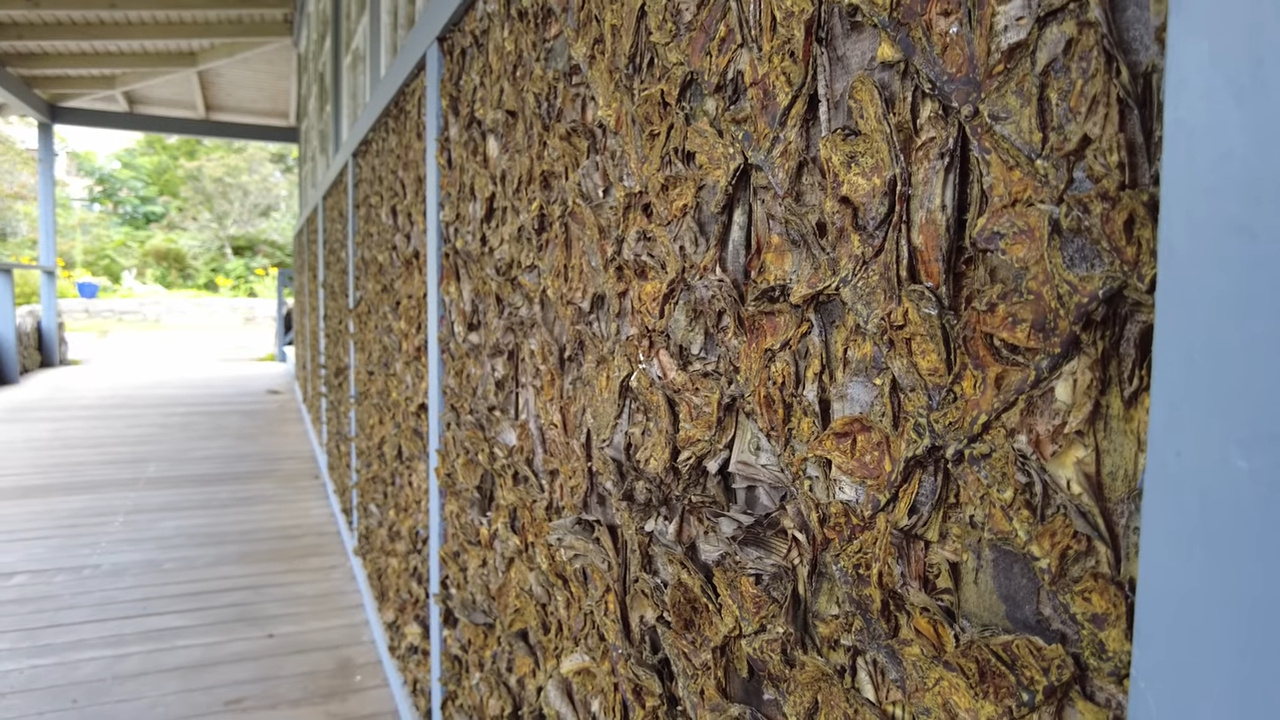
More than an architectural curiosity, the house also functions as a physical archive of an era. Headlines, advertisements, typographies, and entire pages were frozen under layers of varnish, as if the printed paper had found an unlikely way to escape its own obsolescence.
In the end, Elis Stenman’s work answers the central question without needing direct explanation. He built a newspaper house because he wanted to test how far a common material could go. What stood in Rockport shows that the answer was much further than any visitor would have imagined in 1922.







Be the first to react!