






 Portuguese
  Spanish


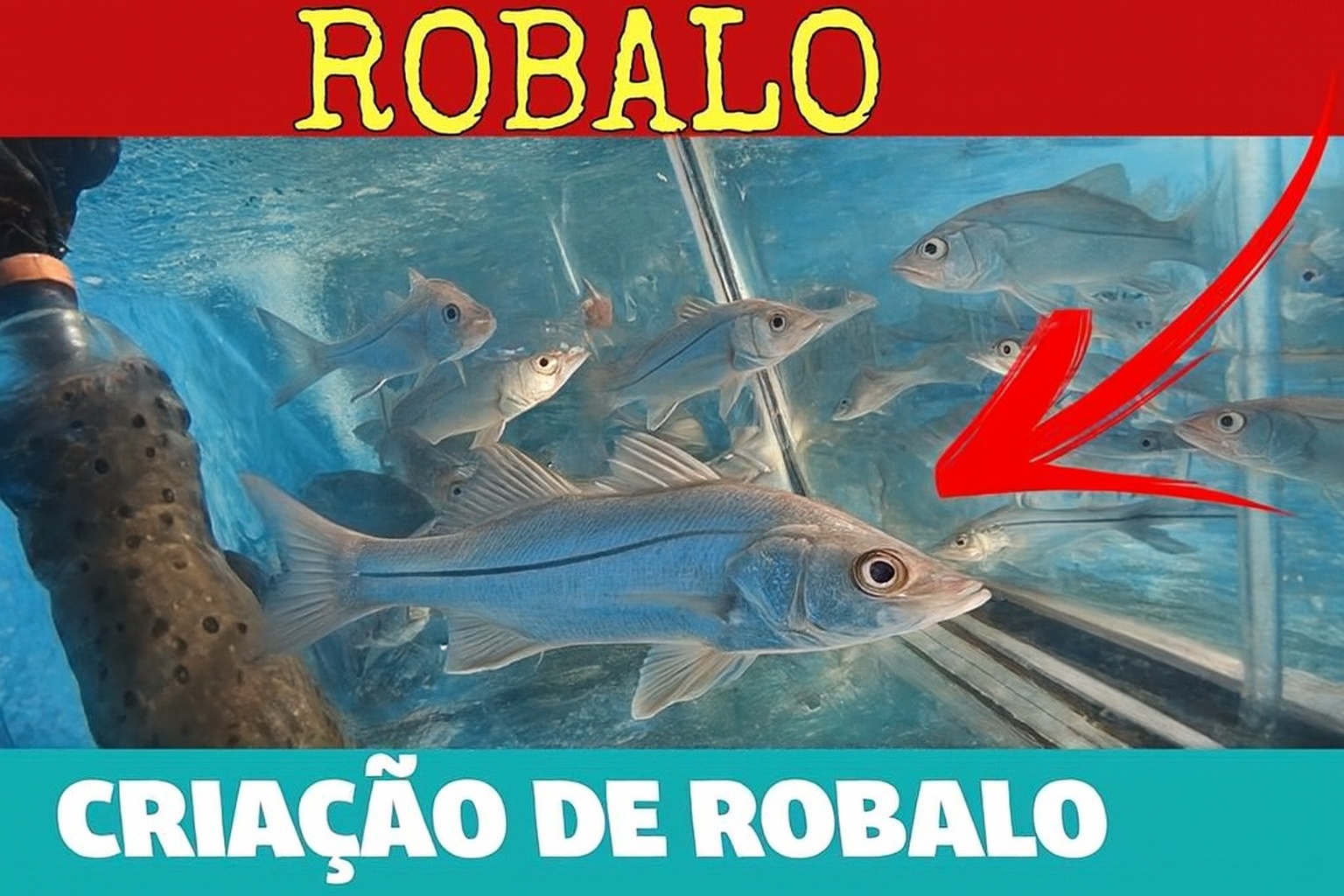


The Cultivation of Seabass Advances in Brazil with Controlled Ponds, Daily Management, and Accelerated Growth, Revealing an Intensive Routine of the New National Mariculture.
Brazil is witnessing the birth of a new frontier in aquaculture that does not come from rivers or the well-known net pens. While tilapia and shrimp dominate the production map, the seabass, a fish traditionally associated with sport fishing and the coast, is gaining ground in controlled structures, research laboratories, fattening units, and discreet coastal ponds that are beginning to operate as nuclei of a future marine production chain.
It is a silent but technically robust movement. Over the past two decades, universities, laboratories, and research centers — especially in the Northeast and Southeast — have been developing protocols for breeding, larviculture, feeding, and fattening of seabass that were previously considered unfeasible. Today, these studies are already translating into actual cultivations, supplied by water recirculation systems, saline ponds, and breeding structures that operate daily with industrial discipline.
A logic is simple: to transform a noble and commercially valued fish into a stable, predictable, and scalable production, exactly as has occurred with shrimp and tilapia. But in practice, this requires a level of attention that few can imagine.
-
Brazilian Family’s Cheese, Started with One Cow in 1984, Named Best in the World, Beating 2,700 Competitors from 30 Countries

-
Brazilian Ranchers Use Satellites to Optimize Pasture Management and Prevent Feed Loss in Cattle Farms

-
Russia Follows China in Recognizing Brazil as Free from Foot-and-Mouth Disease Without Vaccination, Boosting Meat Exports and Agribusiness Potential

-
23-Year-Old Brazilian Turns Beekeeping into College Tuition, Harvesting Honey Twice a Year from 50 Hives




The Invisible Routine of the Marine Ponds that Sustain Seabass
The farming of seabass depends on rigorously controlled environments. The process begins in larviculture, where the fry undergo sensitive stages of feeding, lighting, and salinity. It is the most delicate phase and demands the highest technical precision.


Small variations in the environment can compromise survival, which is why laboratories use climate-controlled tanks, filtered water, and inspection routines several times a day.
When the juveniles are ready, they move to saline ponds, circular tanks, or recirculation structures where management takes on a constant rhythm:
- Strict control of salinity and temperature;
- Monitoring of dissolved oxygen;
- Calculated feeding for weight gain and efficient conversion;
- Verification of behavior, appetite, and movement;
- Continuous cleaning to avoid water imbalances.
It is a silent job that operates like a gear: operators arrive early, check the water quality, adjust pumps, check feed, record data, and observe signs from the batch. All this, daily, without breaks, for months.
This intensive format is similar to what transformed tilapias, catfish, and shrimp into giant chains and is now beginning to be applied to seabass.
Why Seabass Attracts So Much Interest from Researchers and Producers
Seabass is valued for three main reasons:
- High commercial value — especially in seafood restaurants and premium markets;
- Rapid growth in controlled conditions, compared to other marine fish;
- Resistance to salinity variation, allowing cultivation in brackish, marine, or intermediate environments.
Moreover, its firm, white flesh with low bone content sparks interest from consumers seeking more premium products. For producers, seabass represents the chance to diversify Brazilian mariculture with a domestic species, well-accepted and with export potential.
Dr. Fabiano Bendhack and the Importance of His Work
Researcher Prof. Dr. Fabiano Bendhack, a marine aquaculture specialist from the Federal University of Paraná (UFPR), has been exclusively working on studies and projects related to seabass in Brazil for over 20 years.
He is responsible for the largest repopulation project of seabass ever undertaken in the country, in addition to leading research on nutrition, fattening systems, physiology, and environmental toxicity involving the species.
Bendhack coordinates the GEPeixe (Fish Farming Studies Group), located at the UFPR’s Marine Studies Center, where his team has successfully performed induced reproduction and production of seabass juveniles for three consecutive cycles.
The group has been accumulating noteworthy results: one student received the award for the best work at the Brazilian Aquaculture Congress, and another won the best work in session at the UFPR Scientific Initiation Congress in 2024.
The laboratory also recently obtained approval from the Araucária Foundation for a research project with millions of reais in investment, aimed at developing a seabass production system in marine cages, in collaboration with two international universities.
According to Bendhack, he is unaware of other Brazilian universities that have conducted such extensive scientific efforts dedicated to the species in the recent past.
This information reinforces the central role of UFPR and GEPeixe in advancing seabass aquaculture in Brazil, with continuous research, practical results, and the production of technical knowledge that has consolidated the institution as a national reference in the field.
The Future: From Experimental Cultivation to Commercial Supply
Although it is not yet as widespread as tilapia or shrimp, seabass is advancing too rapidly to be ignored. Researchers point out that with consistent investments in genetics, larviculture, and water technology, Brazil can transform seabass into one of the pillars of marine fish production in the coming years.
The demand already exists, especially in the gastronomic market and in networks seeking premium fish with controlled origin. As production stabilizes, costs are expected to decrease and scale will increase. This is exactly the cycle that highlights seabass as the “next promising protein” of national aquaculture.
An Intensive, Technical System That Is Beginning to Consolidate
What impresses is not just the scientific interest, but the industrial routine that forms around seabass: ponds fed daily, tanks controlled by sensors, operators attentive to small signs, and batches that require constant monitoring until they reach commercial weight.
This discreet yet highly technical process shows that seabass farming has already moved beyond isolated experience and become a real activity, still expanding, but with tremendous potential for the country.





Matéria superficial , sem dados dos estudos e locais onde realmente estão criando robalo em quantidade comercial e com rentabilidade .
Poderiam informar quais laboratórios/universidades se realizam pesquisas com o cultivo do robalo no Brasil nos Estados citados na reportagem:
“Ceará, Rio Grande do Norte, Bahia, São Paulo e Santa Catarina, projetos-piloto já utilizam viveiros escavados salinizados, tanques circulares com recirculação e sistemas marinhos controlados para engordar robalos com eficiência surpreendente”
Obrigado!
Fabiano Bendhack
@GEPeixe.ufpr