Portuguese
  Spanish




Study In Pre-Publication Reports The Extraction Of Y Chromosome Sequences From A Renaissance Drawing Attributed To Leonardo Da Vinci, Compared To DNA From A Fifteenth-Century Family Letter, Raising New Possibilities And Scientific Limits For Authentication Of Historical Works
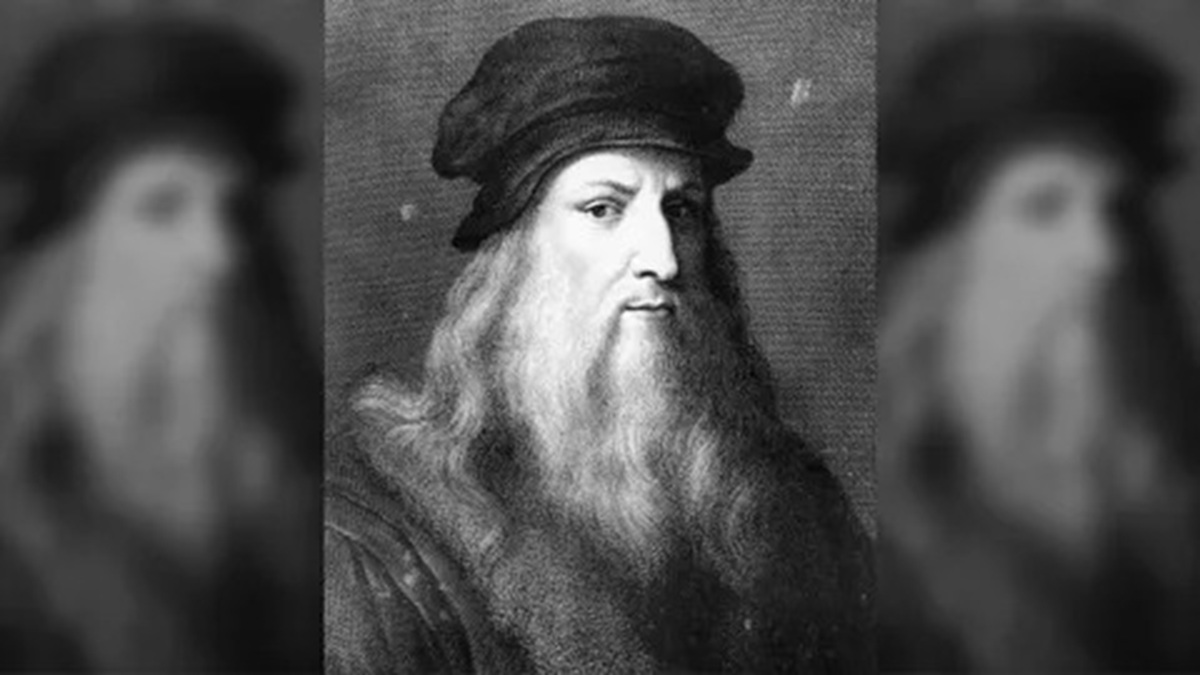
Leonardo da Vinci’s DNA may be present in one of his works of art, according to scientists who claim to have extracted genetic material from a drawing attributed to the Renaissance period, opening new possibilities for the authentication of historical works and genetic reconstruction of the artist.
The trace of DNA was identified in a red chalk sketch known as “Holy Child,” attributed by some experts to Leonardo da Vinci. According to the researchers, the genetic material extracted from the drawing bears similarities to the DNA recovered from a letter written in the 1400s by Frosino di ser Giovanni da Vinci, a distant relative of the artist.
The findings were published on Tuesday, January 6, in a paper made available in the bioRxiv preprint database, which means that the results have not yet undergone peer review, a fundamental step in the scientific process.
-
Seven-Year-Old Nicknamed Hulk Wins Gold in Brazilian Jiu-Jitsu After Defeating South American Competitors

-
Once Burdened by $90,000 in Debt and a Divorce, Now Leads a Beauty Group Targeting $150 Million by 2026
-
Ice Cream Shop Grows from 39 Square Meters to $19 Million Revenue with Popsicles Sold at 20 Cents in Brazil
-
Rural Worker Spotted “Flying” on a Drone in Brazil





Genetic Traces And Connection To Tuscany
According to the study, both the drawing and the historical letter contain Y chromosome sequences that correspond to the same genetic haplogroup. This lineage features a common ancestor associated with the Tuscany region, Leonardo da Vinci’s birthplace.
The scientists explain that the Y chromosome is passed down almost unchanged from father to son, a trait that makes it especially useful for tracking male lineages over multiple generations. For this reason, the recovery of these sequences is considered a relevant starting point for reconstructing the artist’s DNA.
Charlie Lee, a geneticist who heads the Jackson Laboratory for Genomic Medicine in Connecticut and did not participate in the research, told Science magazine that identifying the Y chromosome represents a promising start for genetic studies involving Leonardo da Vinci.
Questions About The Authorship Of The Analyzed Drawing
Despite the technical advance, experts warn of significant uncertainties. Some art historians question whether the sketch “Holy Child” was actually drawn by Leonardo da Vinci or if it was produced by one of his students.
According to Lee, it is “a matter of luck” to determine if the DNA found belongs to Leonardo himself. The identified genetic material may belong to an apprentice, an assistant from the workshop, or even curators who handled the drawing over the centuries and who also had Tuscan origins.
This uncertainty limits the degree of confidence in directly attributing the DNA to the Renaissance polymath, even though the sequences found are compatible with the family lineage documented in historical records.
Goal Of Reconstructing The Artist’s DNA
The researchers involved in the study aim to reconstruct Leonardo da Vinci’s DNA to assist in the authentication of works whose authorship is debated. Genetic analysis could become an additional tool to confirm the origin of drawings and manuscripts attributed to the artist.
Some experts also suggest that DNA could provide biological clues about Leonardo’s exceptional skills, including artistic abilities and specific physical characteristics, such as possibly above-average vision.
However, the authors of the study themselves acknowledge that these hypotheses face technical and ethical limitations, as well as a scarcity of reliable genetic material directly associated with the artist.
Historical And Archaeological Obstacles
One of the main obstacles to the research is the condition of Leonardo da Vinci’s tomb in France. The site was partially destroyed during the French Revolution, and the artist’s remains are thought to have been lost or mixed with others during the transfer to a new burial site at the Chapel of Saint-Hubert in Amboise.
Although the current tomb may contain bones potentially rich in DNA, scientists are not permitted to sequence this material until there is a reliable comparative sample obtained from another location, which prevents direct analysis.
This restriction has forced the researchers to look for alternatives, such as extracting DNA from works of art, a technically complex process subject to contamination accumulated over centuries.
Limitations Of Available Works
Not all works attributed to Leonardo da Vinci are suitable for genetic analysis. Some are inaccessible, while others do not show detectable traces of human DNA, such as the drawing “Study of the Front Legs of a Horse.”
So far, “Holy Child” is the only drawing attributed to the artist that has provided human DNA. Even so, its authorship is contested, further reinforcing caution in interpreting the obtained results.
Another complicating factor is the absence of known remains of Leonardo’s mother, Caterina di Meo Lippi, who is buried in an unknown location. If found, these remains could allow comparisons of mitochondrial DNA, passed from mother to child and generally more abundant in ancient artifacts.
Restrictions On Tombs And Absence Of Descendants
Scientists have also been denied access to the tomb of Leonardo da Vinci’s father, located in Florence. This site could provide Y chromosome DNA compatible with the material found in the analyzed drawing.
Moreover, Leonardo da Vinci has no known direct descendants, as he never married or had children, which eliminates one of the simpler means of genetic comparison.
Given these limitations, researchers are focusing efforts on identifying other male relatives of the artist whose lineages may provide genetic material comparable to that extracted from the works.
Analysis Of Bones, Hair And Historical Documents
One of the ongoing strategies involves analyzing three bones recovered from a family burial site in Italy, where Leonardo’s grandfather, Antonio da Vinci, is buried. At the same time, DNA samples are being collected from known living descendants of the family.
The teams are also sequencing the DNA of a lock of hair excavated in 1863 in Amboise, which may have belonged to Leonardo da Vinci’s beard, according to information disclosed by Science magazine.
Additionally, researchers are searching for letters and documents written by male relatives that may have preserved the DNA of their authors, such as the letter from Frosino di ser Giovanni da Vinci used in the current study.
Genetic Comparison And Identified Haplogroup
For the research, scientists compared the DNA extracted from the historical letter with about 90,000 known genetic markers, used to classify Y chromosome sequences into lineages called haplogroups.
The genetic material present in both the letter and the sketch “Holy Child” was classified in haplogroup E1b1b, to which Leonardo da Vinci and his extended family may have belonged, according to the authors.
The DNA from the drawing was obtained through a delicate procedure, in which the surface of the paper was gently rubbed with a cotton swab, a technique considered minimally invasive.
Assessment Of Experts And Next Steps
Experts consulted by Science magazine stated that the pre-published article is of high quality and employs cutting-edge materials and methods to reach the conclusions presented.
S. Blair Hedges, a professor and evolutionary biologist at Temple University in Pennsylvania, who did not participate in the study, described the work as excellent in its methodological approach.
The authors are now working on integrating the different available clues, including the lock of hair, possible direct evidence from the tomb, and, primarily, manuscripts and drawings that were definitively written by Leonardo da Vinci.
Prospects For New Authorizations
Scientists hope that the study’s results will help convince authorities and archivists to authorize the collection of genetic samples from other works attributed to Leonardo da Vinci.
Among the cited examples is the “Codex Leicester,” a 72-page notebook that contains a fingerprint considered almost certainly from the artist, making it a strong candidate for future analyses.
According to Domenico Laurenza, an art historian at the University of Cagliari, expanding access to this type of material could represent a decisive advance in the attempt to reconstruct Leonardo da Vinci’s DNA and clarify long-standing questions about the authorship of his works.