Portuguese
  Spanish


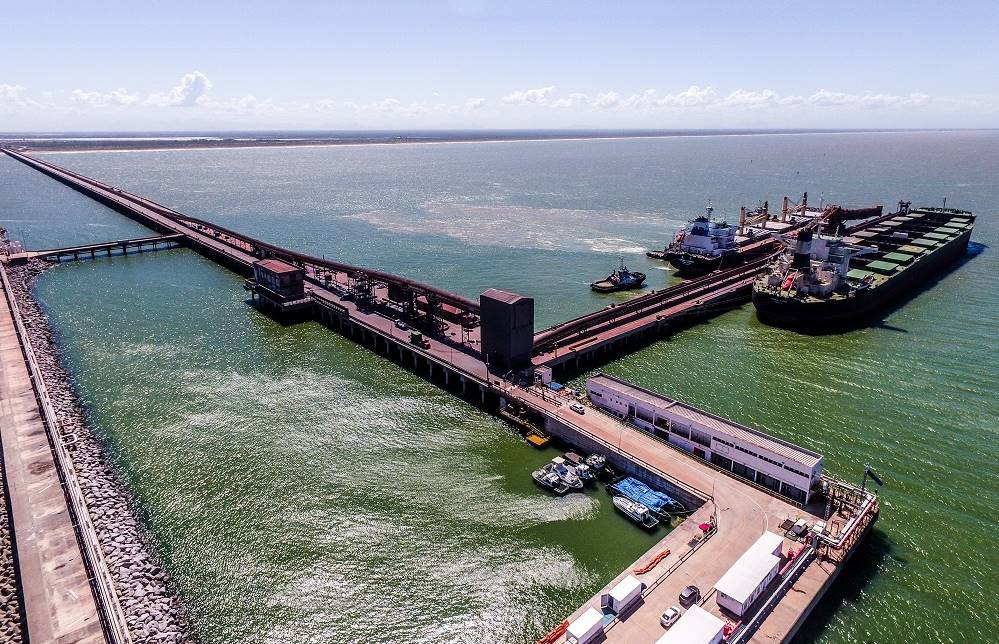

Ferroport Reaches Milestone of 85 Million Tons Moved in Six Years of Operations at Açu Port
Ferroport, responsible for the iron ore terminal at Açu Port, has moved 85 million tons as it completes six years of operations. Joint venture between Prumo and Anglo American, the company was the first to set up at the port project in São João da Barra, in Northern Fluminense. On October 22, 2014, the MV Key Light vessel docked at Açu and began its loading, marking the start of the terminal’s activities, which has the capacity to handle up to 26.5 million tons of ore per year.
Read Also
- Microsoft Aims to Train 25 Million Brazilians in Technology Courses in the Coming Years
- Huawei Advances in Solar Energy in Brazil, Becoming a Leader in Solar Inverter Supply
- Debt-Free and with Two Billion Reais in Cash, Brazilian Oil Company Enauta Wants to Make Acquisitions
With 20.5 meters of depth at its docking berths, the Açu mineral terminal can accommodate Panamax and Capesize vessels, with a capacity of up to 220,000 tons. At the six-year operational milestone, it has loaded more than 550 vessels. The product, extracted from a mine operated by Anglo American, reaches the port via the world’s largest pipeline, which stretches 529 km and crosses 33 municipalities in southeastern Brazil, starting from Conceição do Mato Dentro (MG).
“Undoubtedly, this has been the most challenging year, but also one where we were able to demonstrate our work capacity, engagement, and resilience. As an essential activity, we continued terminal operations during the pandemic, implemented strict protocols, and worked with all necessary safety measures. Even in an atypical year, Ferroport achieved a record loading of 2.4 million tons in a single month, in March,” says Carsten Bosselmann, CEO of Ferroport.
-
Abandoned Factory in Rio’s North Zone Becomes Urban Hazard with Standing Water and Debris

-
The U.S. Navy Conducts Submarine Tests in Idaho Lake to Detect Underwater Noises Hidden by the Ocean

-
British Factory Transitions from Mechanical Parts to Producing 420,000 Electric Power Units Annually, Supplying 70% of Ford’s Electric Cars Sold in Europe
-
France Launches Network to Recycle 20 Million Cookware Pieces by 2027, Accepting All Brands for Aluminum and Coating Separation


Measures Taken During the Pandemic
The preventive measures adopted by Ferroport included the establishment of a Crisis Group, which meets daily to align integrated actions to mitigate the impacts of the pandemic. In addition to adopting remote work to reduce the workforce on-site, all protocols recommended by the Ministry of Health and the Health Surveillance Agency were implemented, with an emphasis on sanitation and actions to avoid crowding, such as reducing the number of employees on chartered buses and staggered lunch breaks. The use and provision of masks for all employees were adopted, and donations of these items were also made to their families.
Ferroport has also collaborated with other companies located at the port to mitigate the effects of the pandemic on the surrounding community. This work has been carried out through the Açu Port Humanitarian Actions Committee, of which Ferroport is a part. The joint actions resulted in the donation of over 100,000 PPE items (gloves, masks, protective goggles, and gowns) to the health sector, recovery of 26 ventilators essential for patient rehabilitation, and support for the “Dados do Bem” program, which uses data intelligence for testing and analyzing the evolution of the pandemic.
For the local population, 14,000 fabric masks produced by local manufacturers were donated, along with approximately 6 tons of food purchased from small local producers and distributed to social institutions, benefiting around 4,500 people.