






 Portuguese
  Spanish
  4 min of reading
  0 comments


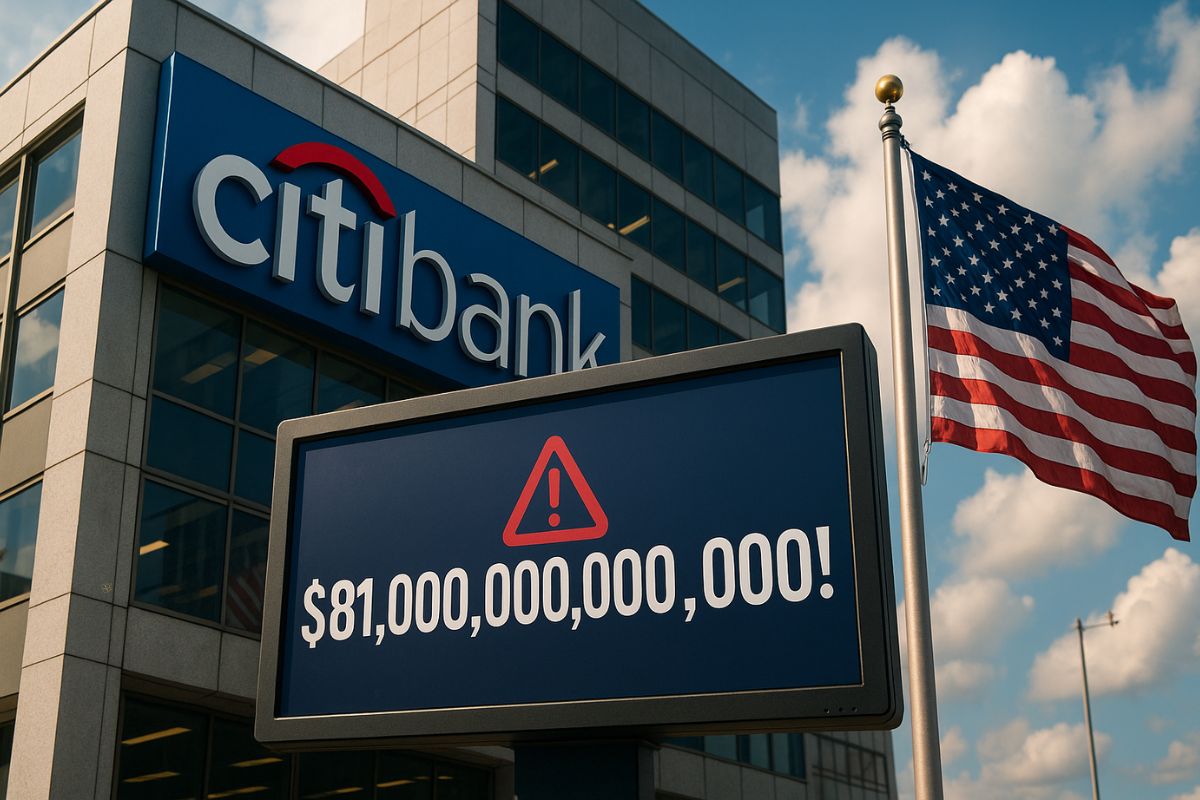
Citigroup Reported An Unprecedented Banking Error By Accidentally Crediting US$ 81 Trillion To An Account, Triggering Its Automated Detection Systems In Less Than Two Hours And Revealing The Operational Vulnerability Of Large Financial Institutions
A banking error of historic proportions put Citigroup at the center of a rare episode in the global financial system. The bank improperly credited US$ 81 trillion, nearly four times the GDP of the United States, to an account that was supposed to receive only US$ 280. The incident, which occurred in April, was quickly reversed after the automatic detection of the issue by the institution’s internal control mechanisms.
The episode, which took place in April 2025, although without actual financial loss, reignited the debate over operational risk, automation, and human oversight in large banks. The incident was classified as a “near miss” and reported to the Federal Reserve and the Office of the Comptroller of the Currency, regulatory agencies responsible for the stability of the U.S. banking system.
How The Banking Error Occurred
According to internal reports cited by specialized media, the failure began with a routine credit operation.
-
The European city hall that transformed an old urban avenue back into a canal, recovered a section that was filled in the 1970s, and delivered a new public space with water, vegetation, and pedestrian paths.

-
Buenos Aires and Montevideo are about 200 kilometers apart in a straight line, but the road trip can exceed 570 kilometers and take up to 8 hours and 30 minutes; see how long the journey takes by plane, ferry, car, and bus.
-
Couple sold house in São Paulo, resigned from their jobs, and paid R$ 15,780 to start over in Portugal, but the promised trip turned into a fraud complaint: suitcases remain packed, tickets were not delivered, and the European dream ended up stuck in a cramped rented room.

-
The world’s largest natural bridge cave is in China, impressing in Guizhou with almost 180 meters in height, a gigantic opening, and internal space used even for cars, becoming a cool tourist refuge within a monumental karst formation.




An employee improperly processed the amount, which should have been US$ 280, and the error was not identified in the secondary verification, allowing the transfer to be approved for execution at the beginning of the next business day.
The failure was only detected ninety minutes later, when another employee noticed a discrepancy in the internal balances.
The inconsistency detection system automatically triggered the reversal protocol, canceling the transaction before any amount left the bank.
No funds left Citigroup’s accounts, which prevented losses or direct impact on clients and counterparties.
What The Case Reveals About Operational Risk
Although the reversal occurred in record time, the episode illustrates how operational risk remains a sensitive issue in the financial sector, even with high levels of automation.
Citigroup acknowledged that the incident reinforces the need to eliminate manual processes and increase the use of automatic controls to reduce the margin for human error.
The institution itself admitted in an internal statement that, only in 2024, there were ten “near miss” occurrences above US$ 1 billion, a lower number than the thirteen reported the previous year.
Still, experts point out that the frequency of errors of this magnitude is rare and can affect market confidence, especially in a context of rigorous regulatory oversight and pressure for efficiency.
When Technology Corrects Humans
Citigroup’s response was cited by analysts as an example of technological resilience, showing that the automated transaction verification system was able to neutralize the error before generating a funds leak.
The identification occurred in less than two hours, a time considered remarkable for operations of this volume.
This type of rapid response, according to industry sources, is part of institutions’ efforts to meet stricter digital compliance and process audit standards.
S systemic-scale errors, if not contained, can generate liquidity panic, affecting not only the involved bank but also the entire interbank network and its derivatives.
Reputational and Regulatory Impact
Even without financial damage, the repercussions of a banking error of this magnitude force Citigroup to intensify governance reviews and internal reporting.
The episode was formally reported to the Federal Reserve and the regulatory agency overseeing currency control in the United States.
Internally, the bank implemented a new protocol to reduce dependence on manual checks and strengthen the integration between auditing systems and artificial intelligence.
Industry sources indicate that the case will be used as a study for prevention and response to critical processing failures.
What Lessons Does This Teach The Financial System
The Citigroup episode reinforces that, even in leading institutions, human error is still a vulnerable link in high-complexity operations.
The speed of the technical response prevented an accounting disaster, but also highlighted the need for continuous review of internal flows and a culture of control.
For analysts, the case serves as a warning.
Automation does not eliminate risk, it only shifts it.
When failures occur in systems that move trillions of dollars, the difference between a scare and a global crisis depends on seconds and algorithms functioning as they should.





Be the first to react!