






 Portuguese
  Spanish
  5 min of reading
  0 comments


The Vila Reencontro program, from the São Paulo City Hall, has already reached the 11th village and recorded 888 qualified exits from the street. Each of the 18 m² microhouses is a furnished social housing, with a bed, refrigerator, and stove, designed to return address, dignity, and autonomy to the homeless population.
For those who slept under a viaduct, the difference between the sidewalk and a room with a lockable door is everything. It is this door that the Vila Reencontro program, from the São Paulo City Hall, has been delivering to entire families who lived on the street, exchanging the marquee for the key to a microhouse of 18 m². And the data showing that the idea came off the paper is concrete: the program already totals 888 qualified exits, that is, 888 times someone truly left the street, heading towards their own home, family reintegration, or a job.
The most recent of the villages was inaugurated on December 1, 2025, in Cidade Tiradentes, in the East Zone, and is the 11th of the program, according to the São Paulo City Hall. The proposal is simple to explain and difficult to execute: instead of stacking people in crowded shelters, the city gives each family an individual microhouse and the social support to rebuild their lives. It is a social housing bet that directly targets the homeless population, and it has been growing with each inauguration.
What is inside each 18 m² microhouse
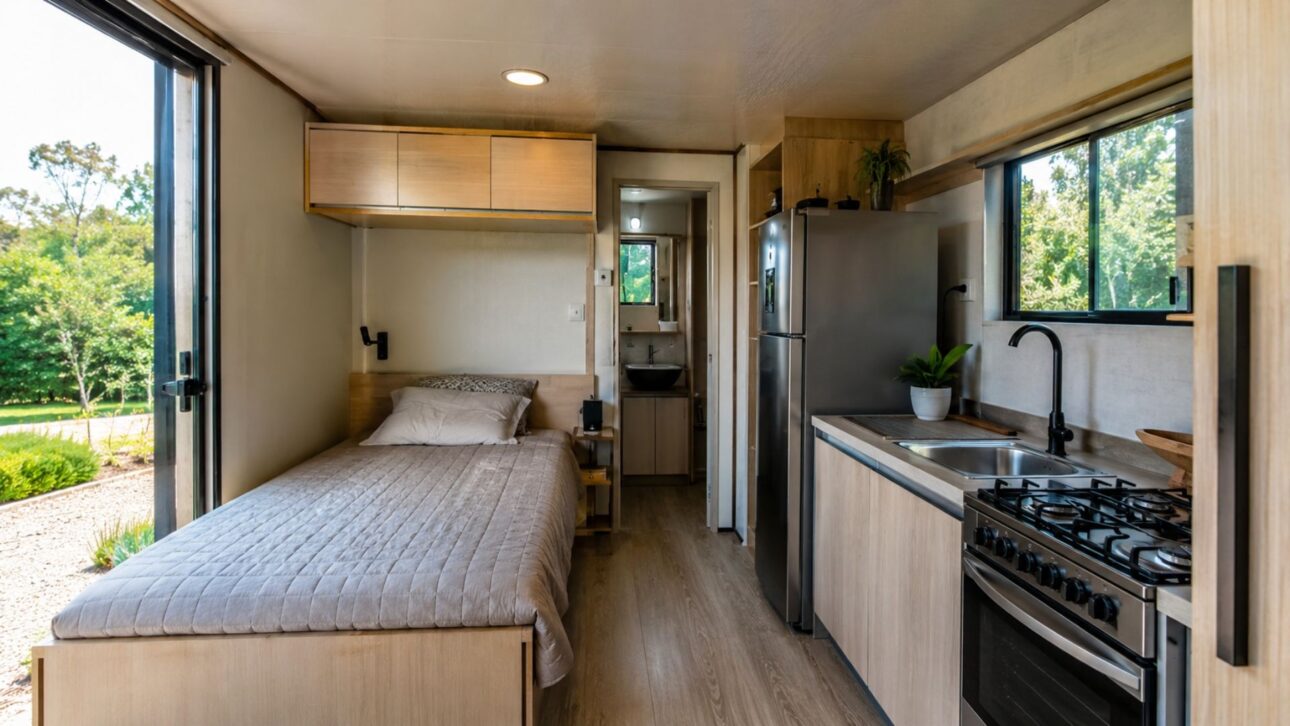
According to Metrópoles, each modular unit is 16 meters long by just over 3 meters wide, made of fiberglass panels with acoustic and fireproof treatment, and houses up to four people. It is not a reinforced tent; it is a module designed to last and provide privacy.
-
The hydroelectric plants on the Madeira River, like Jirau, came for the energy, but now the drought wave has reduced artisanal fishing by 39% and emptied the tables of the riverside communities in the Amazon.

-
The Zuluk road has 32 zigzag curves at 3,400 meters in the Himalayas, originated as the Silk Route in Sikkim and became a military border where foreigners cannot pass.
-
Rio de Janeiro receives more than R$ 5.5 billion in sanitation, includes almost 1 million residents from communities in the formal customer base, and brings water, sewage, and proof of residence to regions historically neglected by urban infrastructure.

-
Via Mar promises to relieve BR-101 in Santa Catarina, but it will be the state’s first toll state highway and faces soft soil and rice fields that threaten the timeline.


Inside, each microhouse comes furnished for the family to move in and live. The main room has a door, window, fan, and sink, and the furniture includes a bed, a mini-fridge, and a countertop stove, according to Metrópoles. The bathroom is private, with a shower, toilet, sink, and window. These are basic items, but they change the routine for those who previously had nowhere to store food or take a shower with a closed door.
This pattern is repeated in the 18 m² microhouses scattered throughout the villages, and there are also larger modules, 36 m², reserved for larger families or those with people with disabilities. Each microhouse, according to Metrópoles, cost about 69,000 reais, a modest amount compared to what it means to take a family off the street and give them a fixed address.
Housing First: the model that São Paulo imported from abroad
The logic behind the villages has an international name and surname. The concept is “Housing First,” which in Portuguese becomes Moradia Primeiro, and it starts from an idea that goes against common sense: first, you provide a roof, then you take care of the rest. Instead of requiring the person to “recover” before getting a house, the model delivers social housing right away, because it’s from the stability of having a place to live that it’s possible to solve work, health, and document issues.
São Paulo was inspired by those who have been running this model for years. According to Metrópoles, the city is looking at partnerships with Toronto and Vancouver in Canada, which have 17 years of experience in Housing First, as well as mirroring countries like Finland and Portugal. “We are inspired by this concept adopted in some countries like Finland and Portugal,” said Carlos Bezerra Júnior, municipal secretary of Social Development.
The size of the problem explains the urgency. The homeless population of São Paulo exceeded 31,000 people in 2022, a surge driven by the pandemic, according to Metrópoles. Given this number, offering a microhouse with social support instead of a spot in a collective shelter is the city’s attempt to break the cycle that makes people enter and leave the streets without ever settling.
The numbers that say if it’s working
Here lies the most unprecedented part of the story, because results can already be measured. The Vila Reencontro program was created in December 2022 and, in three years, according to the São Paulo City Hall, accumulated 3,370 attendances and 888 qualified exits, with 2,662 attendances and 540 exits in 2025 alone. A qualified exit, in the program’s jargon, is when the family leaves the village for autonomous housing, returns to live with relatives, or enters the job market.
The network keeps growing. Today there are 11 villages in operation, and the City Hall’s goal is to reach 20 units by 2028, expanding the offer of social housing for the homeless population in different regions of the capital. Each family usually stays in the microhouse for a transition period, enough time to gather the conditions to move on independently.
Mayor Ricardo Nunes ties the speech to the result. “It is a model of which I am immensely proud because it offers dignity and real conditions for families to rise,” Nunes said at the inauguration of the Cidade Tiradentes village. The phrase sums up the bet: dignity first, with the door that locks and the fixed address paving the way for the rest.
The kitchen-school that turns shelter into employment
The detail that most differentiates the Vila Reencontro from a common shelter might not even be the microhouse, but what happens around it. Within the villages operates the Kitchen School Project, which offers culinary training to residents and aims at insertion into the job market, according to the City Hall of São Paulo. The person who arrives without income learns a trade and leaves with a chance of employment.
It’s not the only path to requalification. The program also offers professional courses and continuous social support, so that social housing does not become an end in itself but a ramp for exit. It is this mechanism, which combines shelter, training, and employment, that helps explain the 888 qualified exits and separates Vila Reencontro from a mere shelter policy.
For those looking from the outside, it appears as a row of identical microhouses. For those living there, it’s the first time in a long time that life has an address, a fridge with food, and the prospect of a job. It’s the kind of turnaround that transforms the homeless population from statistics into people with names, routines, and futures.
The Vila Reencontro shows that getting people off the streets is not just a matter of goodwill, it’s a matter of method. São Paulo bet on the Housing First model, delivered the 18 m² microhouse with bed, fridge, and stove, added to this the kitchen-school and social support, and is already reaping 888 qualified exits and 11 villages in operation, heading to 20 by 2028. It’s social housing turning into concrete dignity for the homeless population.
And you, do you think every Brazilian city should copy this microhouse model, or do you still have doubts if the numbers add up? Share your thoughts in the comments.




Be the first to react!