






 Portuguese
  Spanish
  3 min of reading
  0 comments



The Famous Moore’s Law, Which Predicted That Computer Power Would Double Every Two Years, Is No Longer Valid. Understand Why We Are Hitting a Technology Limit and What Quantum Computing Really Means for the Future.
We live with the feeling that technology evolves at an increasingly accelerated pace. Faster cell phones, more powerful computers, artificial intelligence more present. But is this growth infinite? The truth is that, at its most fundamental level, we are reaching a technology limit that we know of.
According to analyses by computing experts, the golden age of exponential growth of processors, described by Moore’s Law, has come to an end. The industry is now racing against time to find new paths, such as quantum computing, to overcome the physical barriers that are starting to stifle innovation.
The Golden Age of Computing: Moore’s Law and Exponential Growth
In the 80s and 90s, we experienced a magical era in computing. Every two years, the processing capacity of chips doubled at the same price. This observation, made by Gordon Moore, one of the founders of Intel, became known as Moore’s Law.
-
Space technology used to search for water on Mars is now hunting for invisible leaks under the streets of São Paulo, using satellites, AI, and chlorine signals to help Sabesp recover up to 6.7 billion liters of water.

-
Japan sends ship to extract mud rich in rare earths at nearly 6,000 meters deep in the Pacific, attempts to lift 350 tons per day from the seabed, and transforms sediments near Minamitori Island into a strategic weapon to reduce dependence on China.
-
Venus Aerospace promises a rotating detonation hypersonic engine that takes the Stargazer to Mach 9 and crosses oceans in 1 hour, but the flight that made history barely surpassed the speed of sound.

-
Brazilian student creates a cheap formula that makes plants grow up to 90% faster and wins an award in a global scientific competition.





It was this “law” that took us from the 386 processor to the 486, to the Pentium, and so on. We went from 10 MHz processors to 1 GHz in about 20 years. The problem is that, since the early 2000s, this progression has stalled. Today, nearly 25 years later, the fastest processors still operate in the 5 to 6 GHz range.
The Physical Limit: Why Can’t We Shrink Chips Any Further?
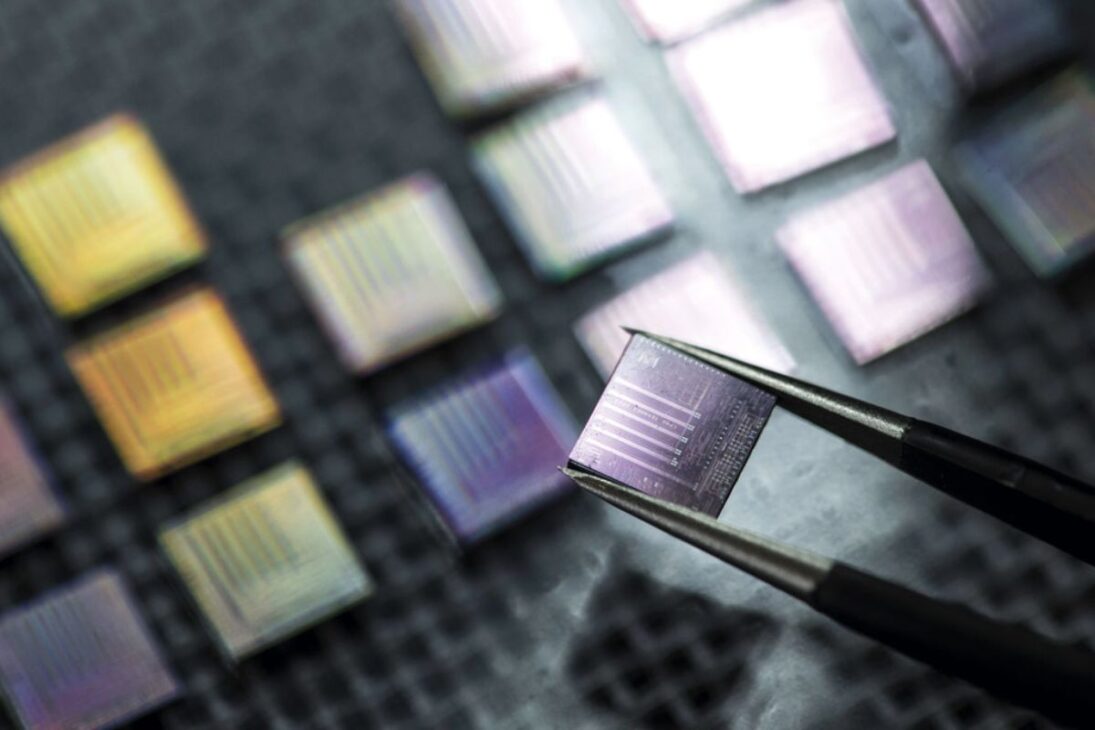
Moore’s Law was made possible by the engineering ability to shrink the size of transistors, the basic “bricks” of a chip. We went from transistors that could be seen with the naked eye to components on the scale of nanometers, a size smaller than a human hair’s diameter.
The problem is that we are reaching a physical limit. Components are becoming so small that they start to suffer from “quantum effects”. Electricity starts to “leak” from one transistor to another, causing errors. There isn’t much further we can shrink with current technology.
The Search for a New Path: Quantum Computing
It is in this technology limit scenario that quantum computing emerges. However, it is essential to understand that it is not a substitute for your computer or cell phone.
A quantum computer will not run Photoshop or your games. It is a highly specialized tool designed to solve problems that would take billions of years for a normal computer. One example is the pharmaceutical industry, which could use quantum computing to simulate interactions between molecules and create new medications much faster.
The “Hype” and the Reality: Beware of Sensationalist News
It is common to see news with headlines like “Quantum Computer Solves in Seconds a Problem That Would Take 10,000 Years.” We need to be cautious of this hype.
Often, as in the case of announcements from D-Wave or Google itself, these tests are merely a “proof of concept.” They solve a specific mathematical problem more quickly, but that doesn’t mean the technology is ready to solve all the complex problems in the world. It’s like a “Hello, World” to test whether the machine works.
The Future of Technology: The “S” Curve and New Paradigms


The truth is that all technology follows an “S” growth curve: it starts slowly, has a period of exponential growth, and then reaches a plateau and stagnates. This is what happened with processors.
We are living in the silicon technology plateau. The next big leap will only come with a new paradigm, a new way of computing. Quantum computing is a candidate, but others, such as analog computers, are also being explored. The current technology limit is real, but it is also the engine that drives the search for the next big revolution.
Do you believe that quantum computing will be the next big leap or will we find other paths? Leave your opinion in the comments!


Be the first to react!