Portuguese
  Spanish


The Flare Torch of an Oil Rig: The Flame That Burns 24 Hours a Day Atop Oil and Gas Facilities Is at Once an Essential Safety Device and a Blatant Symbol of Energy Waste and Environmental Pollution
On oil rigs in the middle of the ocean and large refineries on land, one image is constant: a solitary flame burning atop a tall tower. This is the flare torch of an oil rig, a piece of equipment that intrigues and raises many questions. On one hand, it is a silent guardian, a vital safety device that protects complex facilities from explosions. On the other, it is the visual representation of enormous waste and a serious environmental problem.
The practice of burning gas as waste has existed for over 160 years. Annually, the volume of gas burned worldwide contains enough energy to power the entire Sub-Saharan African continent, where millions still live without electricity. Understanding how and why this fire never goes out is crucial to grasping the challenges of the energy industry.
What Is and How Does a Flare System Work?
The flame at the top of the tower is just the final part of a complex engineering system. The primary function of a flare system is to act as the last line of defense against excess pressure in an industrial plant. If the pressure in a piece of equipment rises to a dangerous level, safety valves automatically open and direct the gas to the flare, where it is burned in a controlled manner.
-
15-Year-Old Entrepreneur Malu Lira Publishes 20 Children’s Books on Financial Education, Earns $500,000, and Expands Her Project to the Amazon Rainforest

-
Entrepreneur Turns Rio Cemetery Canteen into a Successful Snack Chain Generating $4.9 Million Annually and Expanding to Metro Stations

-
Rare fox feared “extinct” found alive on Caribbean island after over two decades without official sightings

-
21-Year-Old Brazilian Student Turns Homemade Popsicle Hobby into $100,000-a-Month Business





For this to work, the system relies on several components. One of the most important is the Separator (or “Knockout Drum”), a large tank that removes liquid droplets from the gas flow. This prevents flammable liquids from reaching the flame, which could cause dangerous fireballs. At the top of the tower, one or more pilots burn continuously, like the flame of a stove, ensuring that any released gas is immediately ignited and does not escape into the atmosphere.
Necessary Safety or Waste? The Two Types of Burning
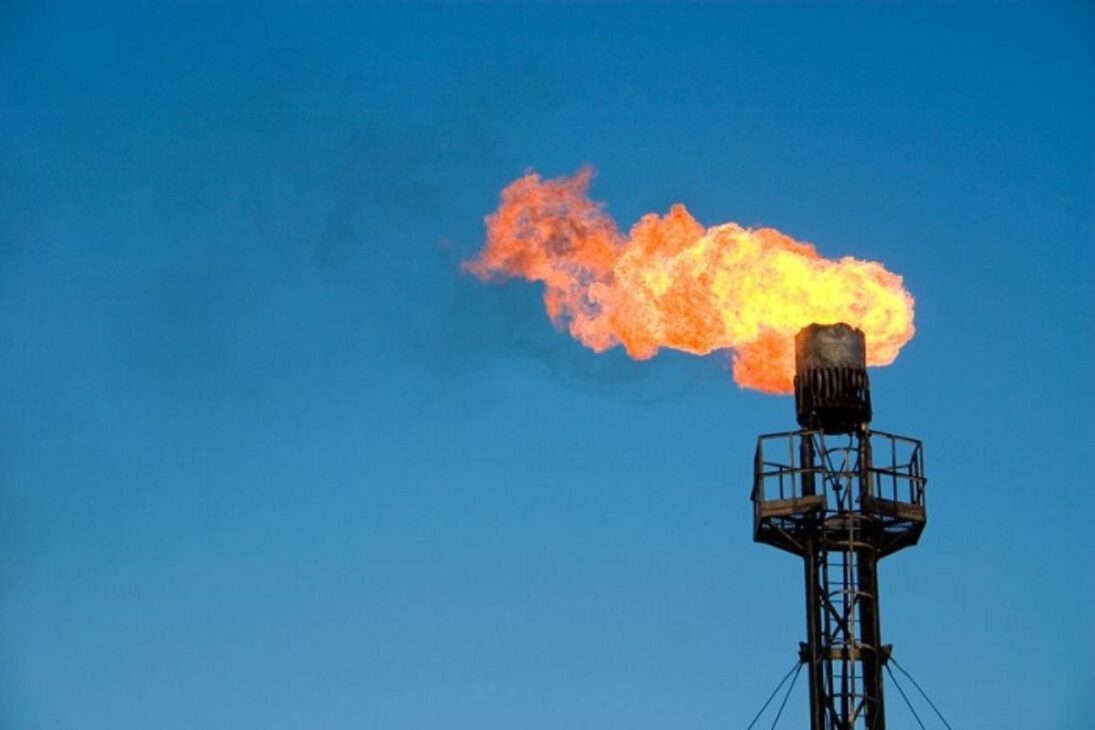
It is crucial to understand that there are different reasons for gas flaring. The first is safety flaring, which is essential and unavoidable. It occurs in emergencies, such as equipment failures or maintenance shutdowns, to safely relieve system pressure.
The real problem, however, is routine flaring. This involves the continuous burning of natural gas that rises with oil. The decision to burn it is purely an economic calculation: for companies in remote locations, it’s cheaper to treat the gas as waste than to invest in the infrastructure to utilize it. This practice is what the “Zero Routine Flaring by 2030” initiative of the World Bank and other environmental organizations aim to eliminate.
The Global Scale, How Much Gas Does the World Burn Per Year?
Thanks to satellite monitoring, the scale of the problem is known. According to the latest data from the World Bank, in 2023, 148 billion cubic meters of gas were flared — to give you an idea, this volume is almost five times greater than all of Brazil’s natural gas consumption in a year. worldwide. This volume represents a 7% increase compared to 2022, reversing a declining trend.
The problem is highly concentrated. Only nine countries are responsible for 75% of all global flaring: Russia, Iraq, Iran, the United States, Venezuela, Algeria, Libya, Nigeria, and Mexico.
The Emissions of the Flare Torch of an Oil Rig
The justification for burning gas instead of simply releasing it is that combustion transforms methane (the main component of gas) into CO₂. Methane is a greenhouse gas with a heating power more than 80 times greater than that of CO₂ over a 20-year period. The problem is that this burning is rarely perfect.
In practice, the burning is never perfect. Field studies show that the actual efficiency of the flare torch of an oil rig is only 91-92%, not the 98% reported in official calculations. This small difference on paper has a gigantic effect on the climate: a flare operating at this ‘real’ efficiency releases eight times more methane into the atmosphere, a super pollutant, than was previously thought. Additionally, incomplete combustion produces Black Carbon (soot), a pollutant that, when deposited in the Arctic, accelerates ice melt. The flame also releases other toxic compounds that affect the health of communities living near these facilities.
Is It Possible to Put Out the Flame? The Norwegian Model as a Solution
Norway is proof that eliminating routine flaring is possible. The country, a major oil producer, has the lowest flaring intensity in the world. The solution was not a miraculous technology, but a political and economic decision.
In 1971, the Norwegian government simply prohibited non-emergency gas flaring, treating associated gas as a valuable resource, not as waste. The most important measure, however, came in 1991, with the introduction of a heavy carbon emissions tax from burning. This measure changed the game: it became more expensive to pollute than to invest in the solution. The Norwegian case proves that the problem of the flare torch of an oil rig is not technical, but about political will policy. The flame only remains lit where burning the future is still free.