






 Portuguese
  Spanish


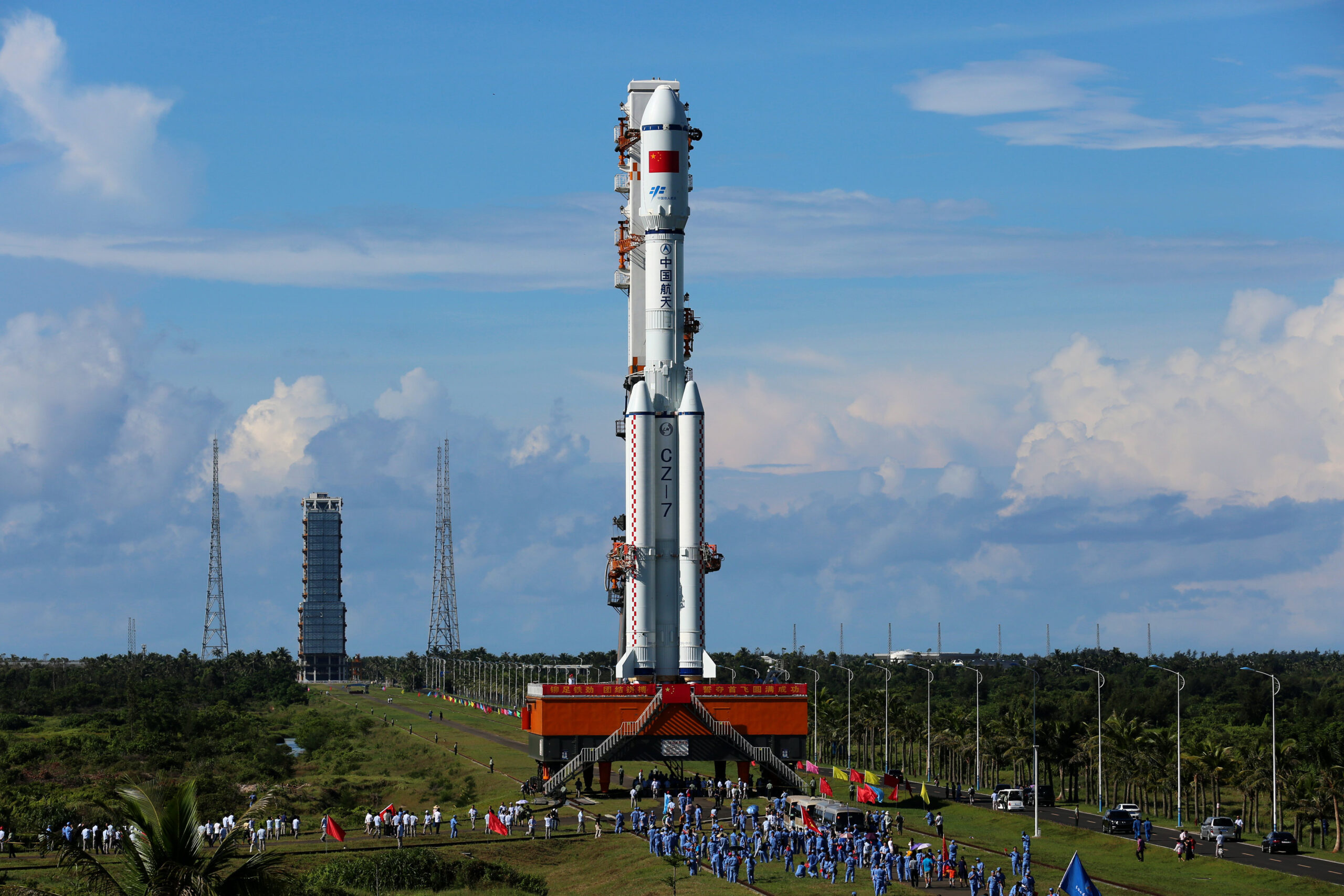

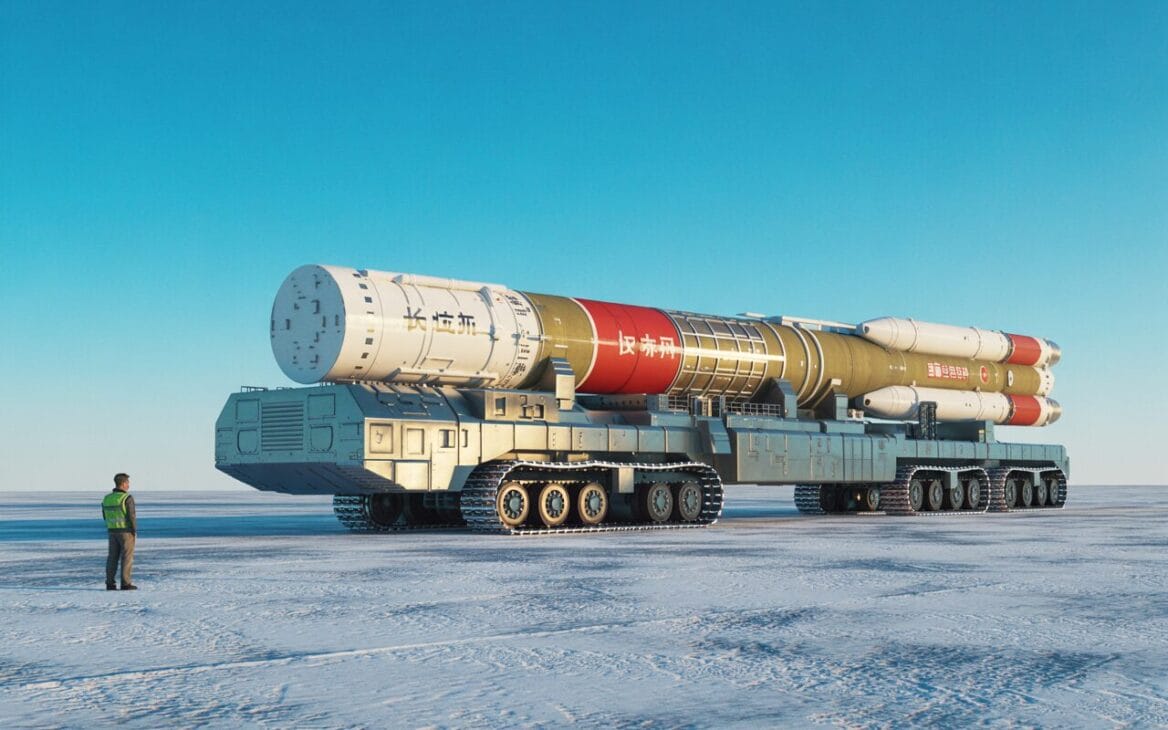
Inspired by the American NASA Model, China’s Mobile Launcher Has Become One of the Most Impressive Vehicles Ever Built. At Almost 50 Meters in Length, Hundreds of Tons and Capacity to Carry Entire Rockets to the Launch Pad, China’s Crawler Transporter Combines Brawn and Precision Technology.
Imagine a vehicle that moves rockets the size of entire buildings, weighs hundreds of tons and consumes 900 liters of diesel per kilometer. This is the reality of China’s Crawler Transporter, an unprecedented vehicle in the country, developed to safely transport the immense Long March rockets to the launch platforms. Officially known as Mobile Launcher for Long March rockets, the vehicle impresses not only with its size but also with the embedded engineering that allows for millimeter movements even with colossal loads. The Chinese crawler-transporter is an essential part of China’s space infrastructure, a country that seeks to lead the new space race alongside the United States, Russia, and Europe.
What Is a Crawler Transporter?
The term “crawler transporter” is used to designate self-propelled tracked vehicles, designed to move rockets, spacecraft, or entire structures with extremely high weight, typically over short distances within space centers. The concept was born in the United States in the 1960s, when NASA developed the first models for the Apollo program.
ARTICLE CONTINUES BELOWSee also
Asian fruit related to lychee gains popularity on a São Paulo farm, attracting attention for its sweet taste and unique appearance, turning a little-known crop in Brazil into a distinctive rural investment.

Xlinks Project to Lay 3,800 Kilometers of Cable Across the Atlantic to Export Solar Energy from Morocco Directly to UK Outlets Without Using a Single Turbine
Brazilian Company Known for Brooms Grew for 95 Years to Become One of Latin America’s Largest Brush Manufacturers, with Over 300,000 Sales Points and Revenue of $150 Million
World’s Largest Piano Manufacturer Produces Over 100,000 Units Annually in China, Each with 12,000 Parts


China followed the same path, adapting technology to its own space program. The Chinese crawler-transporter is now one of the largest and most advanced space transport vehicles in the world, rivaling NASA’s models used at the Kennedy Space Center.
China’s Mobile Launcher: How Does It Work?
The Crawler Transporter of China operates at the Wenchang Satellite Launch Center, located in Hainan Province. This base is used for launching heavy Long March 5 and Long March 7 rockets, responsible for carrying payloads to the Chinese Tiangong space station, as well as lunar probes and missions to Mars.
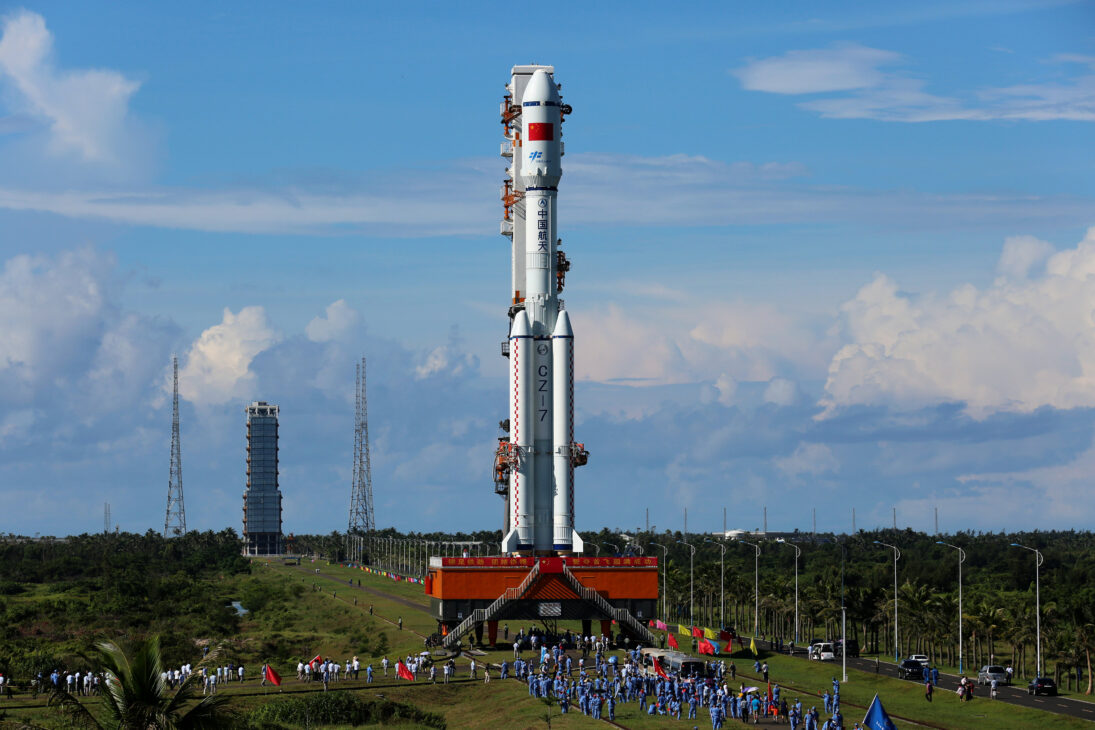
Among the most impressive technical features of the Chinese mobile launcher, the following stand out:
- Maximum Speed: about 1 km/h, reduced to less than 0.5 km/h when fully loaded
- Consumption: up to 900 liters of diesel per kilometer, depending on load and terrain slope
- Payload Capacity: supports rockets up to 100 meters tall and more than 800 tons
- Dimensions: about 47 meters long, 40 meters wide, and 7 meters tall
- Precision: control system allows positioning corrections with error of less than 1 centimeter
Why Did China Invest in This Type of Vehicle?
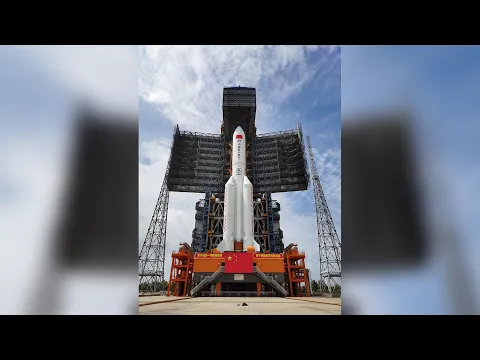

China’s decision to develop a national crawler-transporter was strategic. Unlike fixed tracks or conventional trucks, this type of transport drastically reduces the risk of oscillation and vibration, which can compromise the delicate structures of rockets and scientific payloads.
Additionally, the crawler allows for flexibility in launch positioning, even in bases installed close to the sea, such as Wenchang. By using tracks instead of tires, the vehicle distributes the weight evenly and avoids sinking or damaging the pavement.
Comparison with NASA’s Transporters
The NASA operates two of the most famous crawler transporters in the world: CT-1 and CT-2, developed by Bucyrus-Erie for the Apollo program in the 60s. They are still used today to transport the SLS (Space Launch System) rockets of Artemis, as well as structures from the Orion program.
Compared to the American model, the Chinese crawler-transporter has similar characteristics in size and performance. Both are capable of carrying loads exceeding 8 million kg (8,000 tons), although the Long March rockets are generally lighter than NASA’s Saturn V.
Commonly, both share the ability to operate with extreme precision, even with gigantic masses. The use of gyroscopes, tilt sensors, differential GPS, and hydraulic stabilization systems allows each movement to be calculated to the millimeter, ensuring maximum safety.
The Path to the Platform: A Slow but Essential Journey
The journey between the hangar and the launch pad may seem short—something between 2 and 5 kilometers—but it can take 3 to 6 hours to complete. The reason is the low speed of the vehicle and the need to check the stability of the load at every meter traveled.
During the journey, engineers monitor the displacement in real time, ready to intervene if any parameter goes off the expected path. The onboard systems analyze temperature, pressure, ground tilt, and vibrations, constantly adjusting the vehicle’s position.
This process is crucial to avoid risks of tipping, cracks in the structure, or launch pad failures. A single error can compromise millions of dollars in space technology and years of scientific research.
Missions That Have Already Used the Chinese Crawler
Since 2016, the China Crawler Transporter has been used in critical missions for the country’s space program, including:
- Long March 5B: responsible for carrying modules to the Tiangong station
- Tianwen-1 Mission: which launched China’s first rover to Mars
- Chang’e Lunar Missions: including launches of probes for lunar sample collection
- Testing of orbital payloads and commercial missions
With each new mission, the crawler confirms its importance not only as a logistical vehicle but also as a strategic piece for advancing China’s presence in space.
What Does “Mobile Launcher for Long March Rockets” Mean?
This is the technical English name given to the Chinese crawler-transporter, literally translated as “Mobile Launcher for Long March rockets”. The nomenclature is used in international documents from the CNSA (China National Space Administration), in collaborations with agencies such as ESA and Roscosmos.
In practice, it is the integrated transport and launch structure: the rocket is already transported in a vertical position, coupled to the mobile launcher, which positions it directly at the ignition base. This model reduces the time between transport and launch while simplifying logistics.
Cutting-Edge Chinese Engineering
The development of the China Crawler Transporter involved companies such as the China Aerospace Science and Technology Corporation (CASC), responsible for adapting infrastructure requirements to the standards of the Long March 5, the largest Chinese rocket.
Among the technological highlights:
- Smart electronic control with triple redundancy
- Alignment systems via laser and radar
- Hydraulic shock absorbers for real-time tilt control
- Ability to operate under rain, wind, and high salinity (coastal bases)
National engineering has succeeded in creating a machine that rivals the best ever produced in the West, with full technological autonomy and maintenance carried out in China.
A Symbol of the New Space Race
The Chinese crawler-transporter is more than a vehicle: it is a symbol of China’s new prominence in space. With it, the country demonstrates its ability to master heavy infrastructure technologies and develop its own solutions, without relying on imported models.
This independence is strategic. By controlling each step of the process—from rocket construction to transport, assembly, and launch—China ensures safety, confidentiality, and accelerated innovation capability.
Why Is China’s Crawler Transporter So Important?
What makes China’s Crawler Transporter so relevant is not only its size or impressive consumption of 900 liters of diesel per kilometer, but its fundamental role in the chain of space launches. Without it, it would not be possible to safely transport the immense Long March rockets to the platforms.
The Chinese mobile launcher is further proof that the country is determined to lead the aerospace sector in the coming decades. From a strategic, logistical, and technological standpoint, the Chinese crawler-transporter represents a significant advancement—and a direct challenge to the major space powers.


Matéria com erro de português em pleno 2025?
“mostro” : O que será??
Pensei a mesma coisa. Esse povo não Tem revisor de texto.